Part I: site details
Site name, address (town, city, state, postal code), site identification number (SIDN), site coordinator name, site contact name and contact phone number.
14446
Virtual VITA/TCE Taxpayer Consent (Japanese Version)
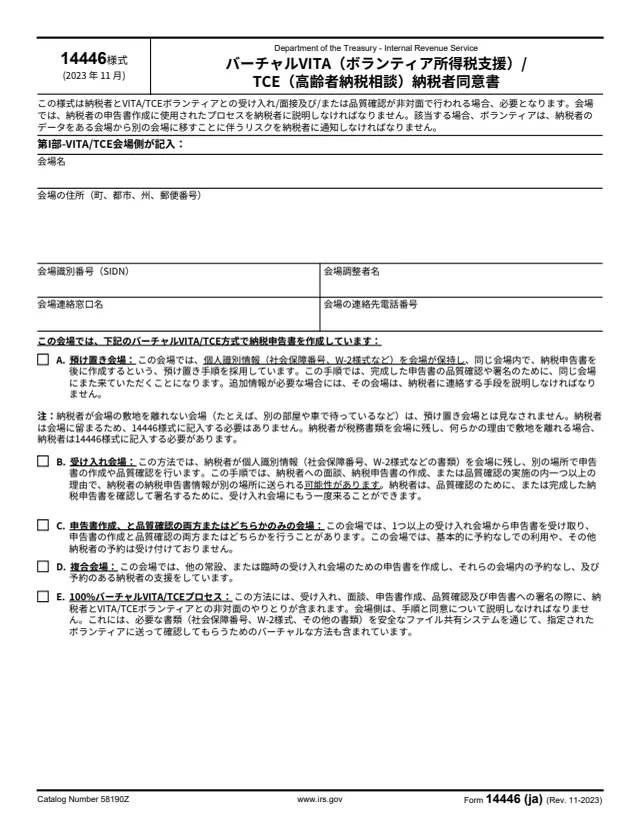
Form 14446 (ja) is the Japanese version of Form 14446, Virtual VITA/TCE Taxpayer Consent. The IRS made it for taxpayers who read Japanese and use Volunteer Income Tax Assistance (VITA) or Tax Counseling for the Elderly (TCE) sites. Its Japanese title spells out both program names in brackets. The English edition is Form 14446.
The Japanese text says the form is needed when the intake/interview and/or quality review between the taxpayer and the VITA/TCE volunteer is not face to face. The site explains to the taxpayer the process used to prepare the return, and where it applies, volunteers tell the taxpayer about the risk of moving data from one site to another. The site completes Part I (第I部) and Part II, and the taxpayer completes Part III and signs.
You can fill it out free in your browser on this page and download it without an account.
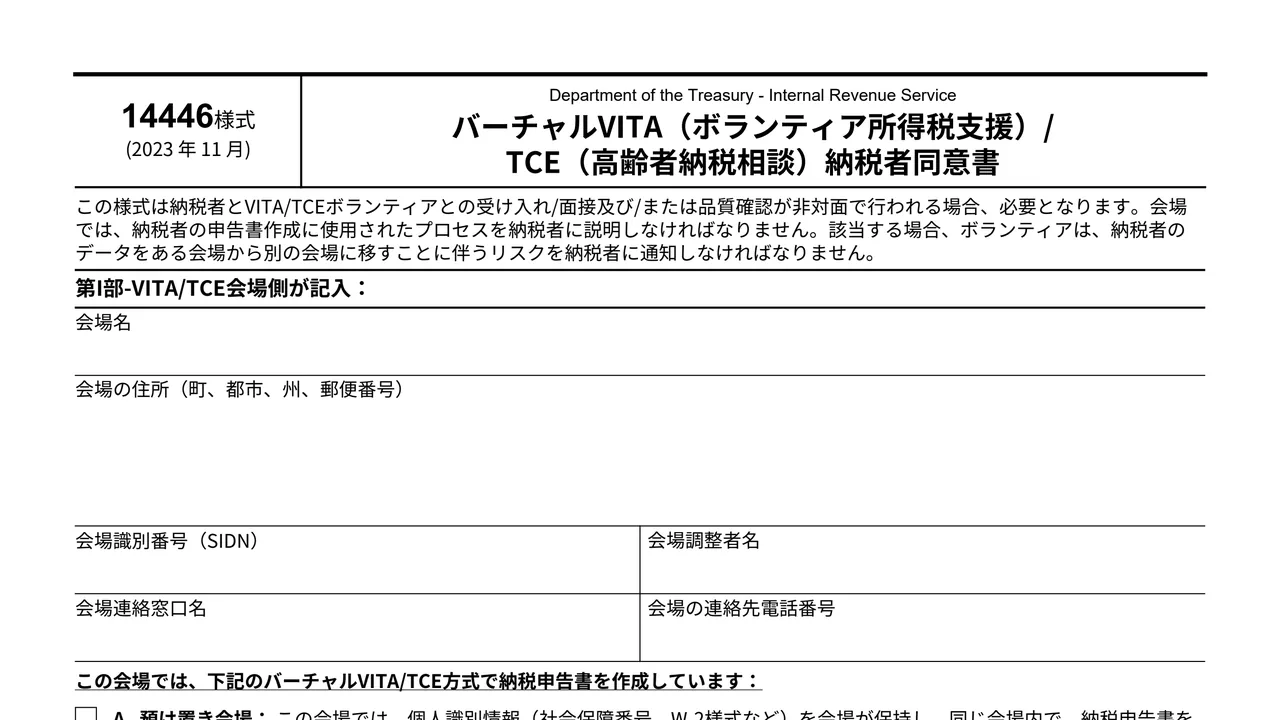
Site name, address (town, city, state, postal code), site identification number (SIDN), site coordinator name, site contact name and contact phone number.
Drop off site (預け置き会場), intake site (受け入れ会場), a preparation and/or quality review only site, combination site (複合会場), and the 100% virtual VITA/TCE process with contact that is not face to face.
Eleven numbered steps with guiding questions in brackets: scheduling, getting the consent, intake, checking photo ID, Social Security cards and ITINs, interview, preparation, contact, quality review, sharing, signing and e-filing.
The form says IRS employees pick free tax preparation sites at random for review, the site makes any needed fixes, and opting out of the review does not affect the services at the site.
Says federal law may not protect return information if the non-IRS virtual systems are hacked or breached without the site's knowledge, and that the sites are not always on federal property.
A Yes or No on using the site's virtual process, then printed name (印刷された氏名), date of birth, date, phone, email and an electronic or typed/printed signature, for taxpayer and spouse.
The site enters its name, address, SIDN, coordinator and contact, then checks each method, A to E, that it uses to prepare returns.
The site describes each of the 11 steps. Item 10 asks whether the taxpayer signs the return in person or electronically and, if electronically, which software is used.
Check はい or いいえ on letting an IRS employee check the return for accuracy if the site that prepares it is selected.
Check はい or いいえ on the site's virtual process, enter the printed name, date of birth, date, phone and email, then sign electronically or with a typed or printed signature.
On a married filing joint return, the spouse fills in the second column and signs and dates it.
You get the real form, filled in a browser tab, with nothing standing between you and the finished PDF.
The Japanese text says the third page of the form is kept at the site with all other required documents. No IRS mailing address is printed.
Consent is valid for the period the taxpayer specifies. If no period is set, the form says it is valid for one year from the date of signing.
The Japanese text says it may not be possible to prepare the return using this procedure.
The form names the Treasury Inspector General for Tax Administration (TIGTA), by phone at 1-800-366-4484 or by email at [email protected].
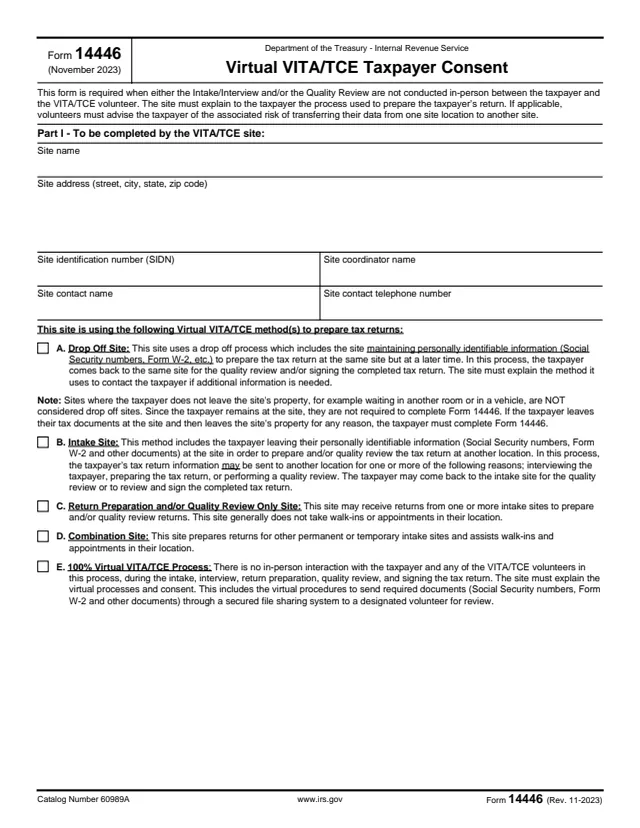
Form 14446 is the English edition, with the same Rev. 11-2023 date. The Japanese version keeps the form number, with (ja) in its footer.
14446
41 fields, 3 pages
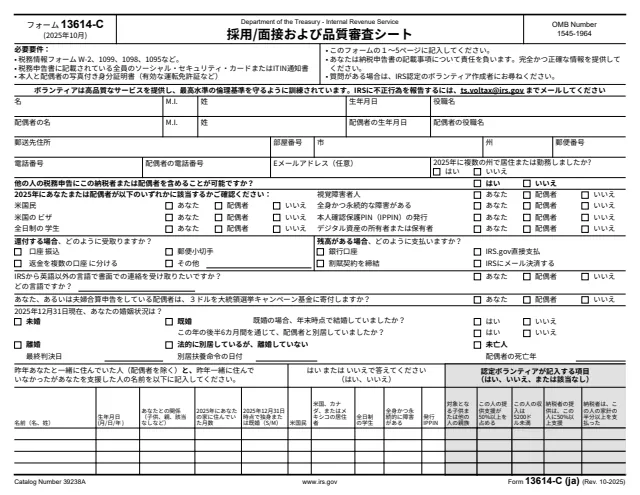
13614-C
297 fields, 6 pages
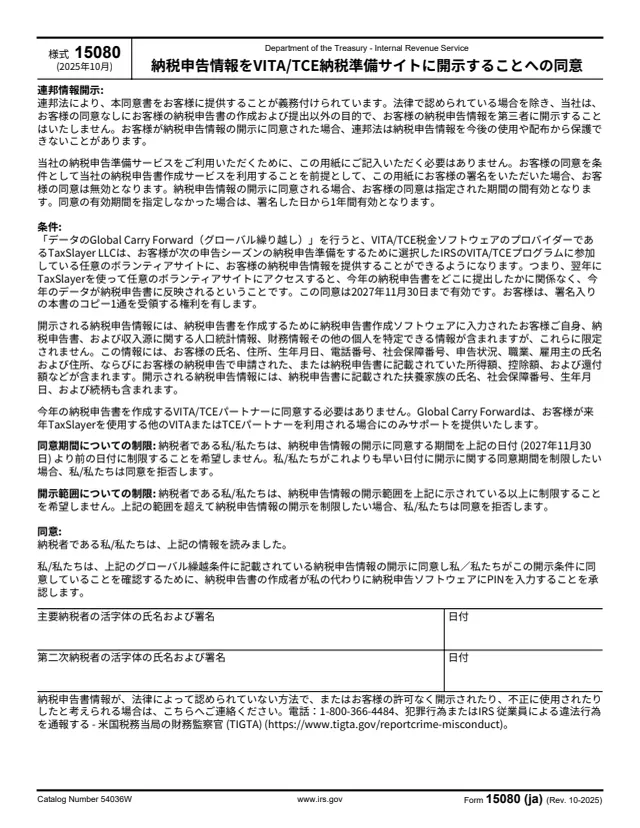
15080
5 fields, 1 page
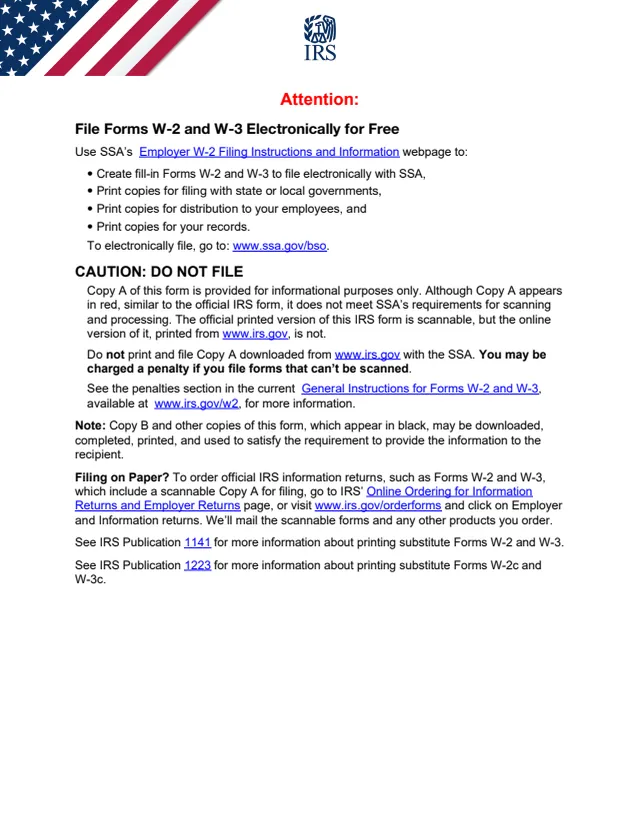
W-2
568 fields, 11 pages
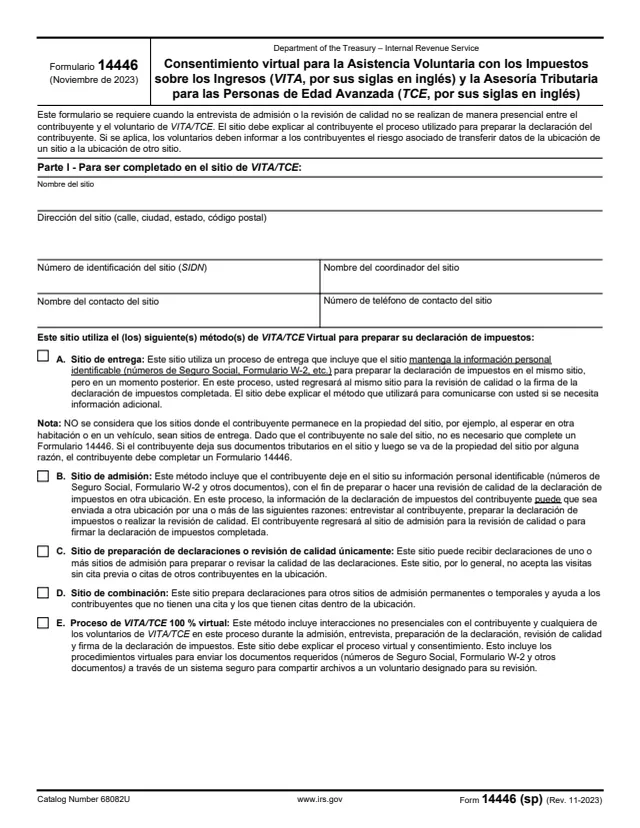
14446
41 fields, 3 pages
Parts I and II are the site's. Part III is the taxpayer's consent, with a second column for a spouse.
No tool matches that search.
Japanese. It is the Japanese version of Form 14446, Virtual VITA/TCE Taxpayer Consent, at Rev. 11-2023. Its header gives the date as 2023 年 11 月 (November 2023).
The title spells them out in brackets: ボランティア所得税支援 for Volunteer Income Tax Assistance and 高齢者納税相談 for Tax Counseling for the Elderly.
The VITA/TCE site. Part I asks for the site's details and methods, and Part II asks how the site handles 11 steps.
The form says the third page is kept at the site with all other required documents. It prints no IRS address.
For the period the taxpayer specifies. If none is set, the form says the consent is valid for one year from the date of signing.
Each page footer prints Form 14446 (ja) (Rev. 11-2023) and Catalog Number 58190Z.