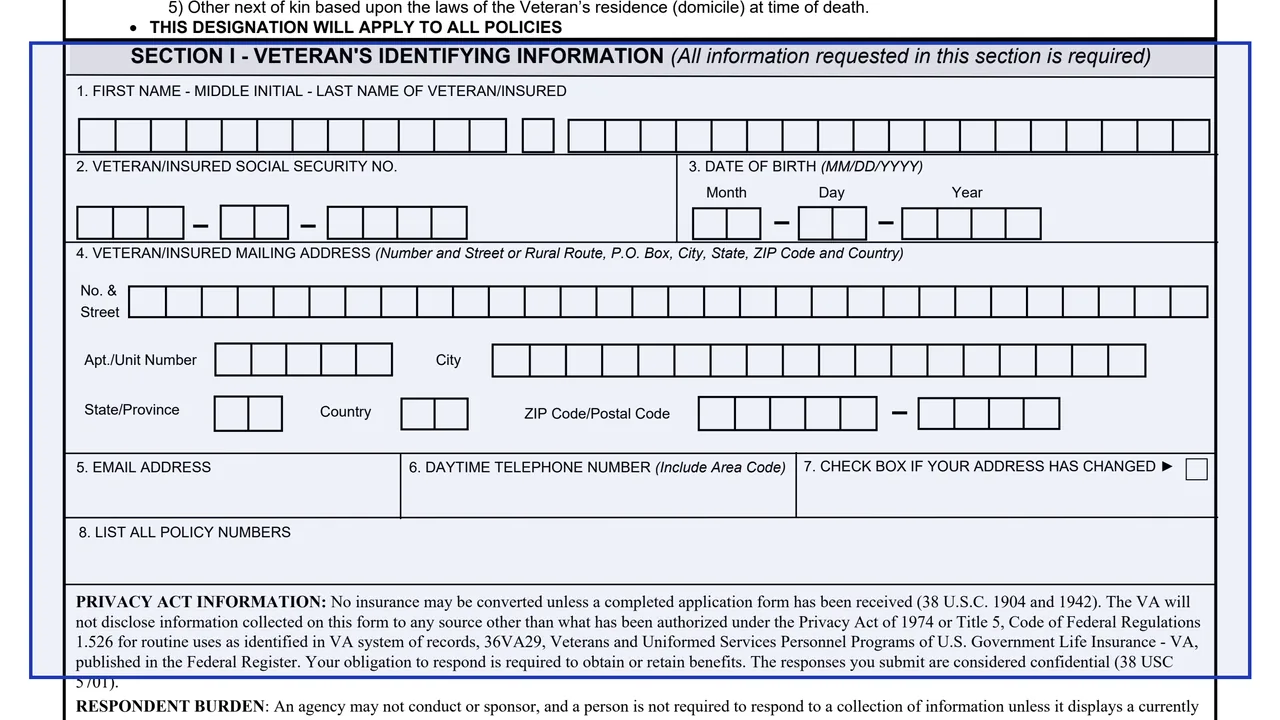
Section I: Veteran's identifying information
Name, Social Security number, date of birth, mailing address, email, daytime telephone number, a box for a changed address and a list of all policy numbers. The form says all of it is required.
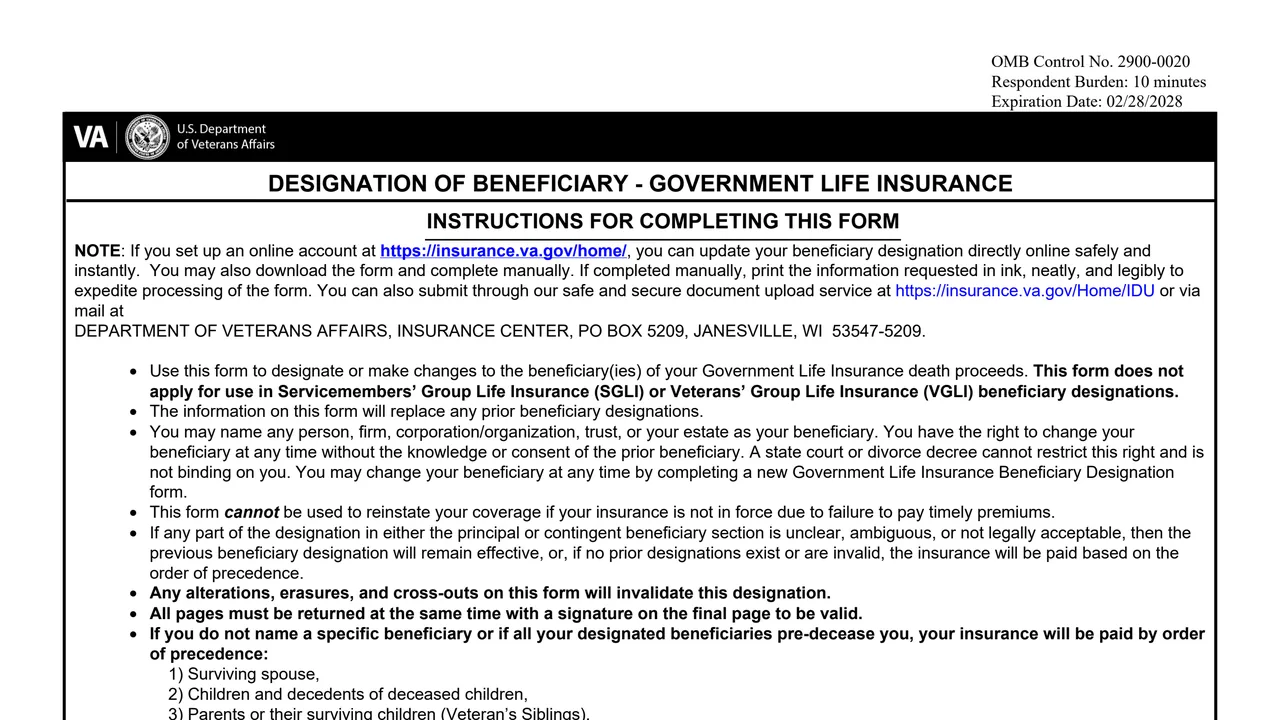
29-336
Designation of Beneficiary—Government Life Insurance
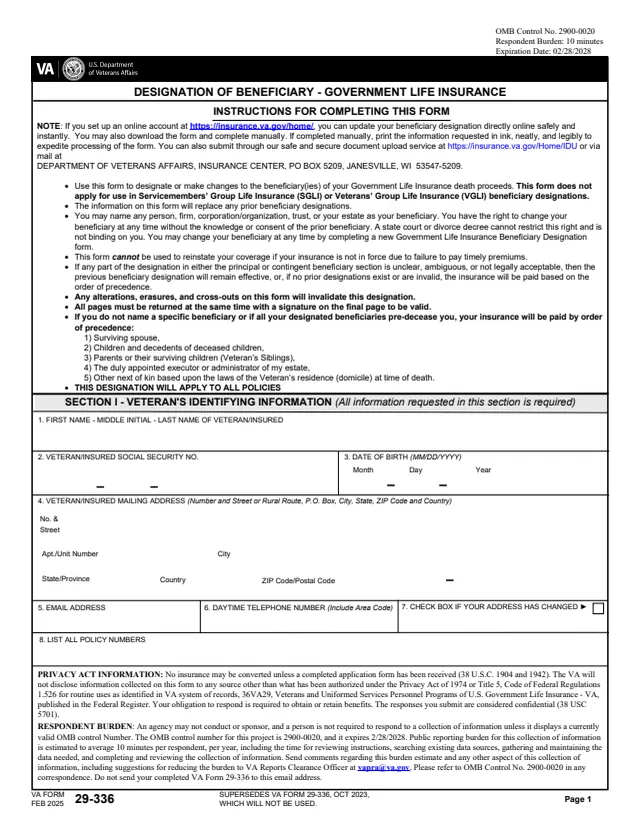
VA Form 29-336 is the U.S. Department of Veterans Affairs Designation of Beneficiary, Government Life Insurance. The form says to use it to designate or make changes to the beneficiaries of Government Life Insurance death proceeds. It does not apply to Servicemembers' Group Life Insurance (SGLI) or Veterans' Group Life Insurance (VGLI) beneficiary designations, and the designation applies to all policies.
The PDF is six pages: instructions and Section I for the Veteran's identifying information, Section II for up to three principal beneficiaries, Section III for up to three contingent beneficiaries, Section IV for trust designations and Section V for the certification and signature. The form says the information on it replaces any prior beneficiary designations. VA's page says the request can also be submitted online. You can fill out the PDF free in your browser on this page and download the result without an account.
Name, Social Security number, date of birth, mailing address, email, daytime telephone number, a box for a changed address and a list of all policy numbers. The form says all of it is required.
For each of up to three: type of beneficiary, name, Social Security number, date of birth, mailing address, email, phone and share as a percentage. The form says the shares total 100%.
The same details for up to three people or entities who receive the proceeds if the principal beneficiaries die before the insured, or if an organization named as principal dissolves first.
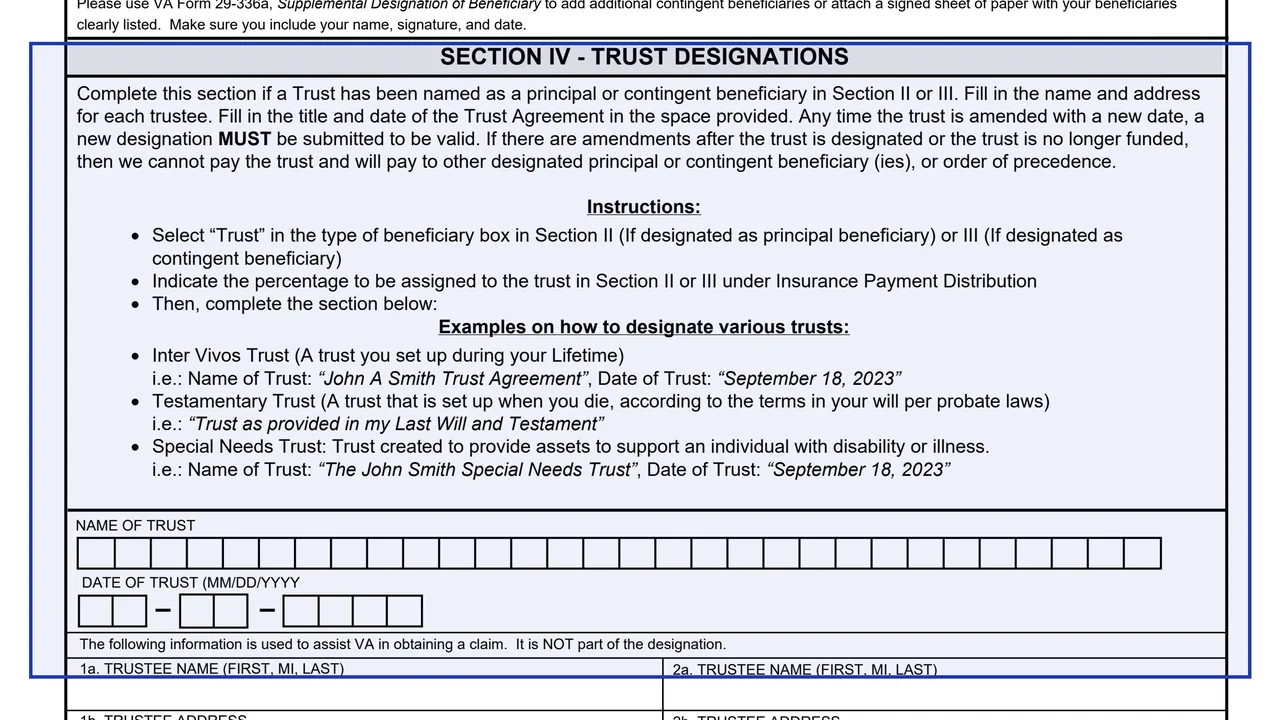
The name and date of the trust and up to two trustees' names, addresses, phone numbers and emails, with examples for inter vivos, testamentary and special needs trusts.
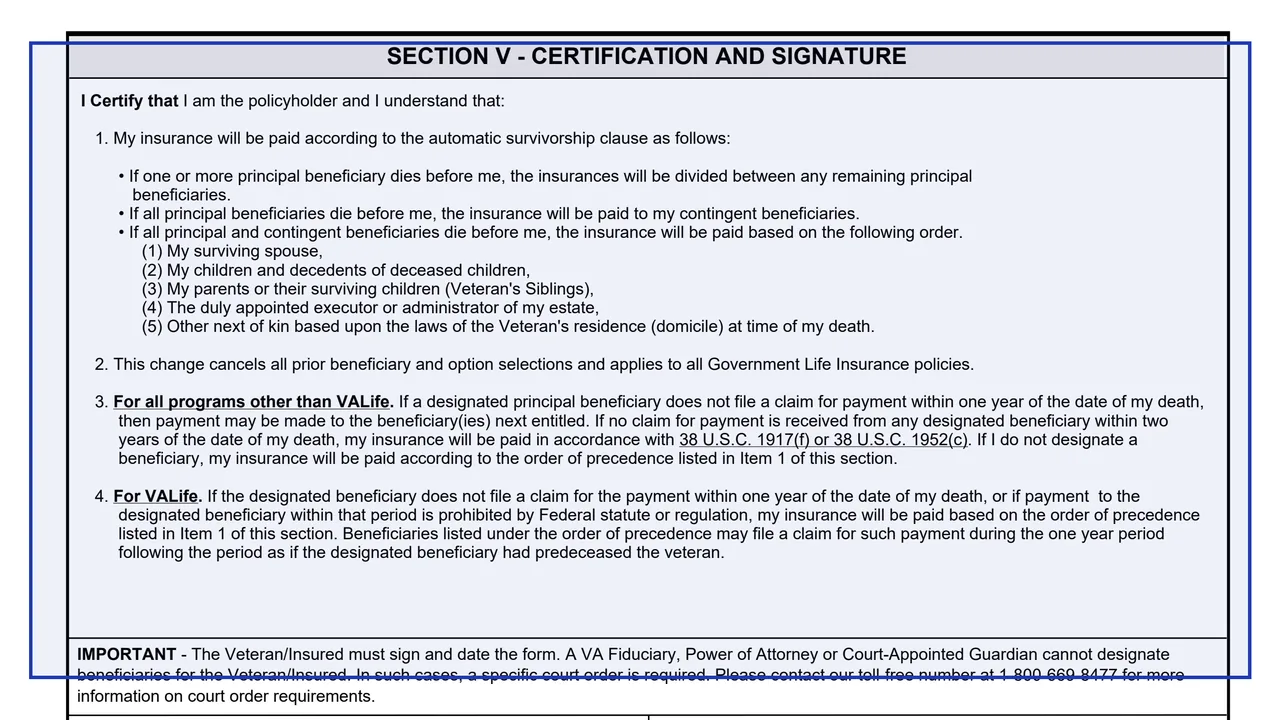
The automatic survivorship clause, the order of precedence, separate terms for VALife and for all other programs, the signature and date, and the witness block.
Page 2 shows how to name an individual, an estate, a funeral home, a charity or a trust. If completed by hand, the form asks for ink and neat, legible printing.
Enter the Veteran's or insured's details and list all policy numbers.
Fill in principal beneficiaries in Section II and contingent beneficiaries in Section III, using percentages. The form says that if the shares do not add up to 100%, equal shares will be paid.
Check Trust, give its share, then complete Section IV. The form says a trust designation without Section IV is invalid.
For more than three principal or three contingent beneficiaries, the form points to VA Form 29-336a or a signed sheet of paper listing them.
The form says all pages are returned at the same time with a signature on the final page, and that alterations, erasures and cross-outs invalidate the designation.
You get the real form, filled in a browser tab, with nothing standing between you and the finished PDF.
VA's page says you can submit your request online instead of filling out and sending the paper form. The form points to Online Policy Access at https://www.insurance.va.gov/home.
Upload the form through VA's secure website at https://insurance.va.gov/home/IDU.
Department of Veterans Affairs, Insurance Center, PO Box 5209, Janesville, WI 53547-5209.
The form gives the toll-free number 1-800-669-8477 for payment options other than a lump sum and for court order requirements.
The FEB 2025 edition supersedes the OCT 2023 edition, which will not be used. It carries OMB Control No. 2900-0020, which expires 02/28/2028.
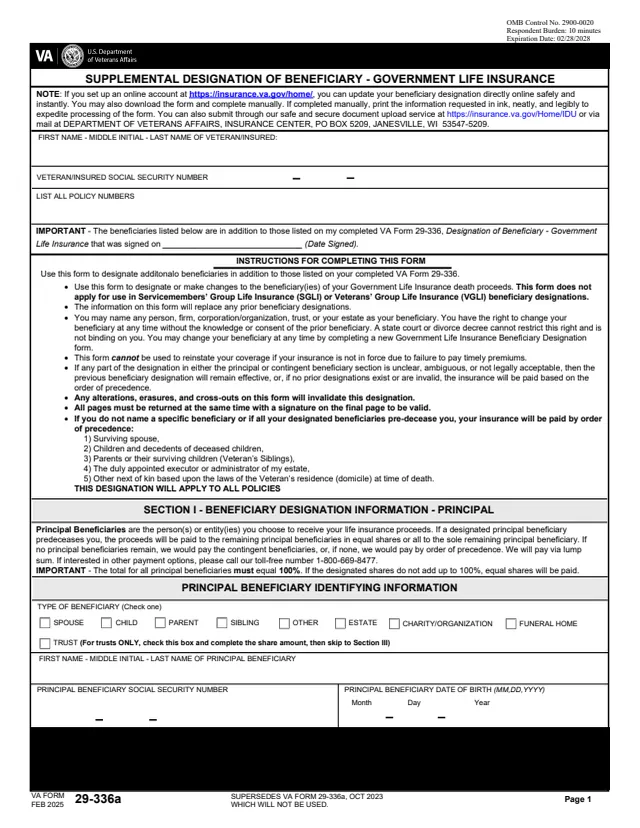
29-336a
169 fields, 5 pages
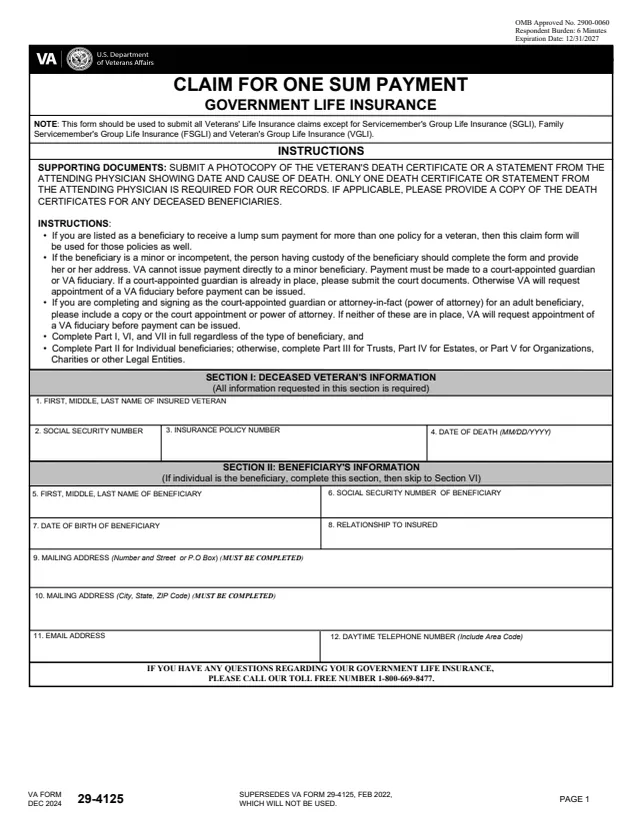
29-4125
48 fields, 3 pages
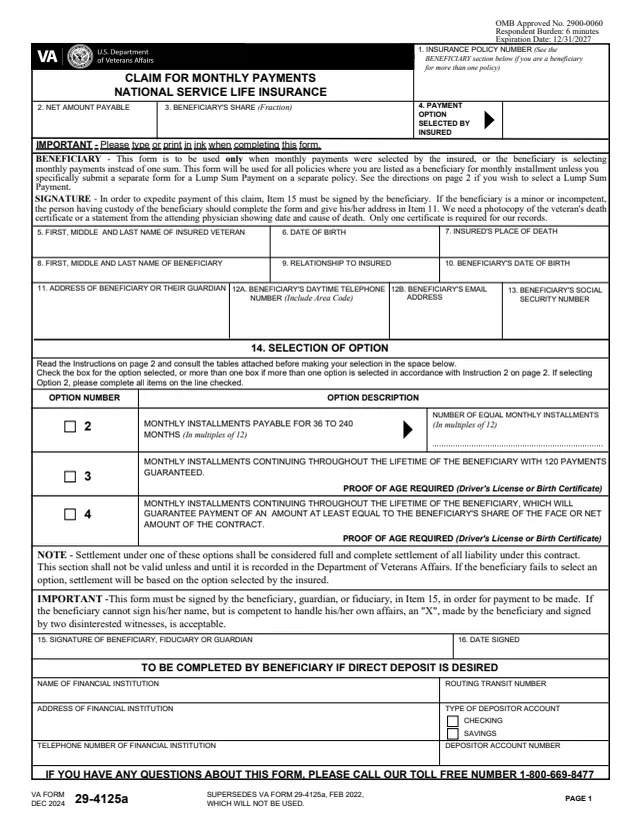
29-4125a
27 fields, 2 pages
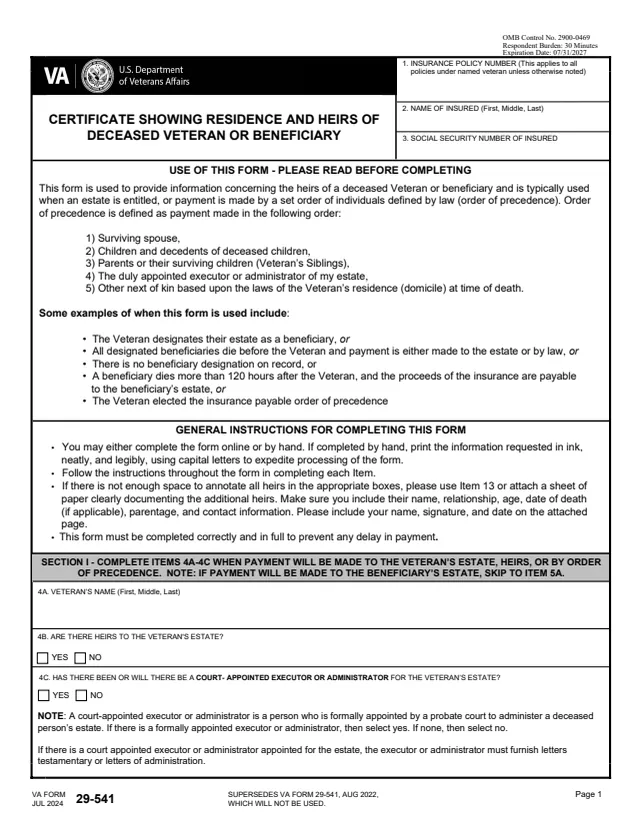
29-541
179 fields, 5 pages
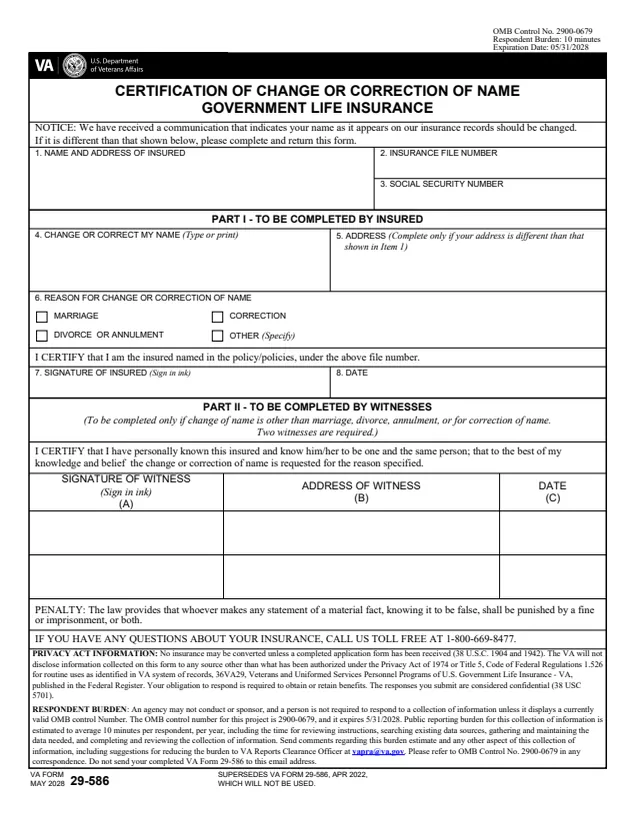
29-586
18 fields, 1 page
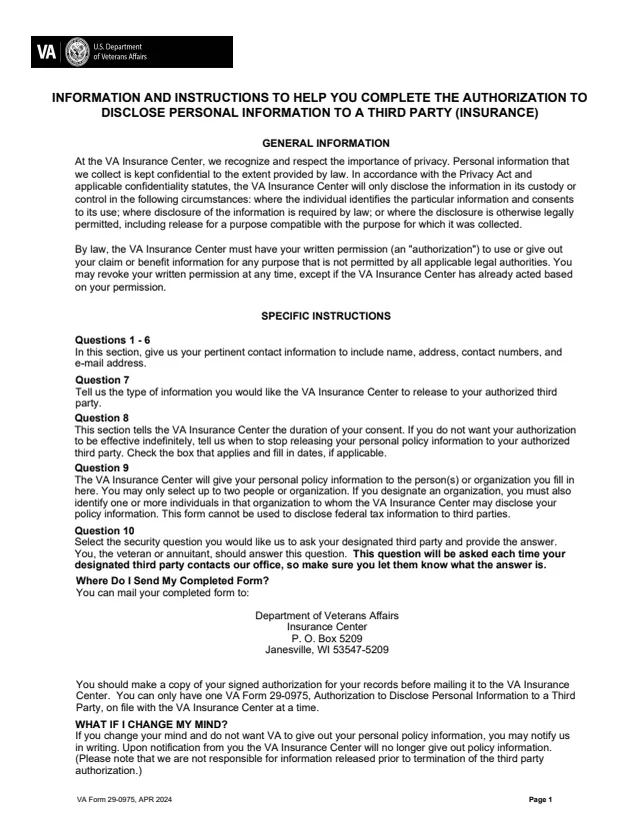
29-0975
37 fields, 2 pages
The form and its instructions describe who signs it and who can be named.
No tool matches that search.
The form says to use it to designate or make changes to the beneficiaries of Government Life Insurance death proceeds.
No. The form says it does not apply to Servicemembers' Group Life Insurance (SGLI) or Veterans' Group Life Insurance (VGLI) beneficiary designations.
Up to three principal and three contingent beneficiaries. The form points to VA Form 29-336a, Supplemental Designation of Beneficiary, or a signed sheet of paper for more.
The form says that if the designated shares do not add up to 100%, equal shares will be paid.
The form lists an order of precedence: surviving spouse, children and decedents of deceased children, parents or their surviving children, the executor or administrator of the estate, then other next of kin.
The form says a VA Fiduciary, Power of Attorney or Court-Appointed Guardian cannot designate beneficiaries for the Veteran or insured, and that a specific court order is required in such cases.
Yes. VA's page says you can submit your request online instead of filling out and sending the paper form.