Part 1: The employer
Name, primary office address in the CNMI or a location description with a map, trade name, contact details, taxpayer numbers, the nonprofit question, USCIS online account number and E-Verify information.
I-129CW
Petition for a CNMI-Only Nonimmigrant Transitional Worker
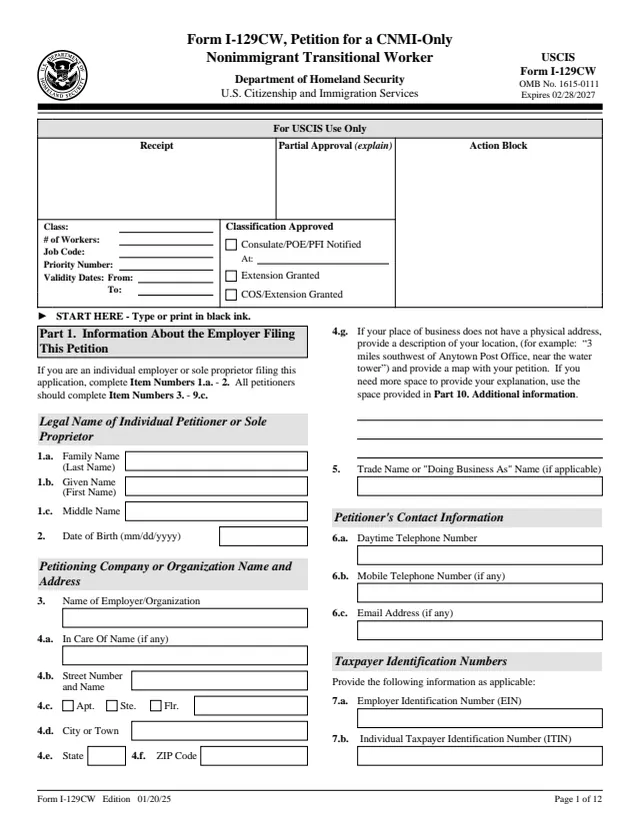
Form I-129CW, Petition for a CNMI-Only Nonimmigrant Transitional Worker, is the form an employer uses to petition USCIS for an alien employee who is ineligible for another employment-based nonimmigrant classification to work temporarily in the Commonwealth of the Northern Mariana Islands (CNMI) as a CW-1, CNMI-only transitional worker. The instructions say the same form is used to request an extension of stay or change of status for a CW-1 worker.
The instructions say the CW-1 classification always requires a petition and is only available during the transition period, which runs from November 28, 2009, to December 31, 2029, with a numerical limit (cap) on CW-1 workers each year. Form I-129CW consists of the basic petition plus an Additional Worker Attachment for each additional named worker. According to the instructions, only employers who participate in good standing in the E-Verify program may file it.
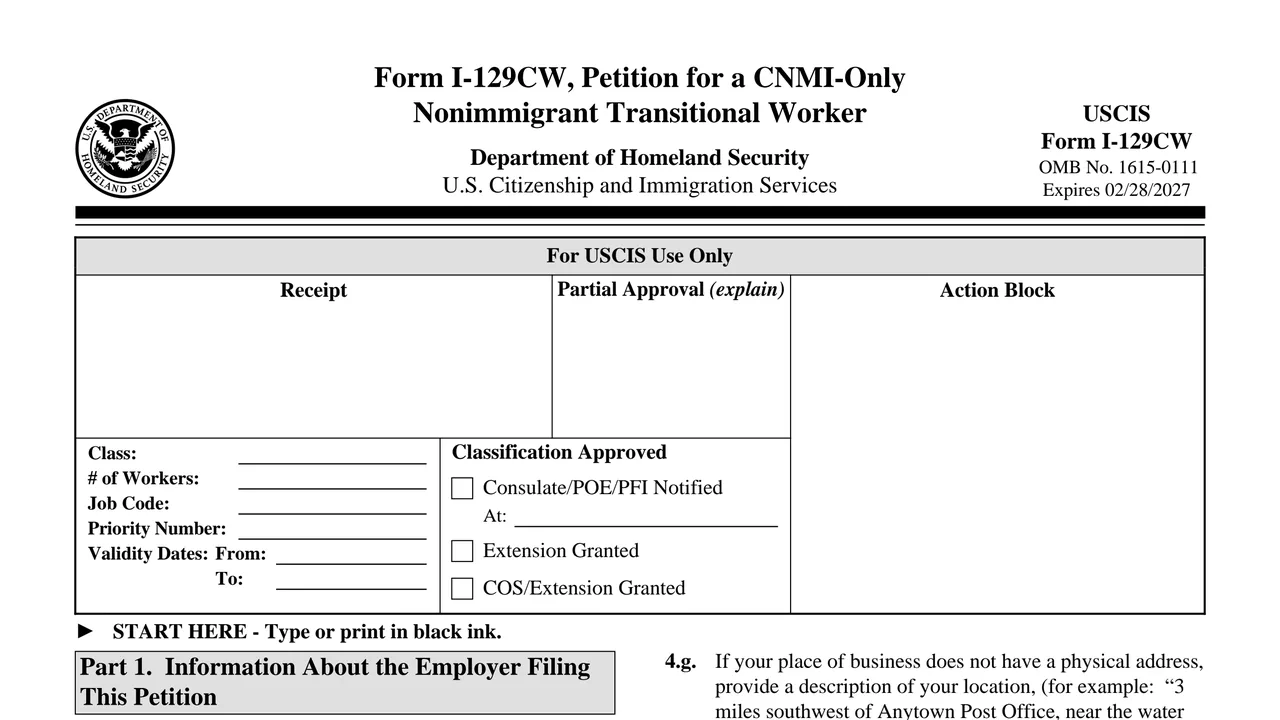
Name, primary office address in the CNMI or a location description with a map, trade name, contact details, taxpayer numbers, the nonprofit question, USCIS online account number and E-Verify information.
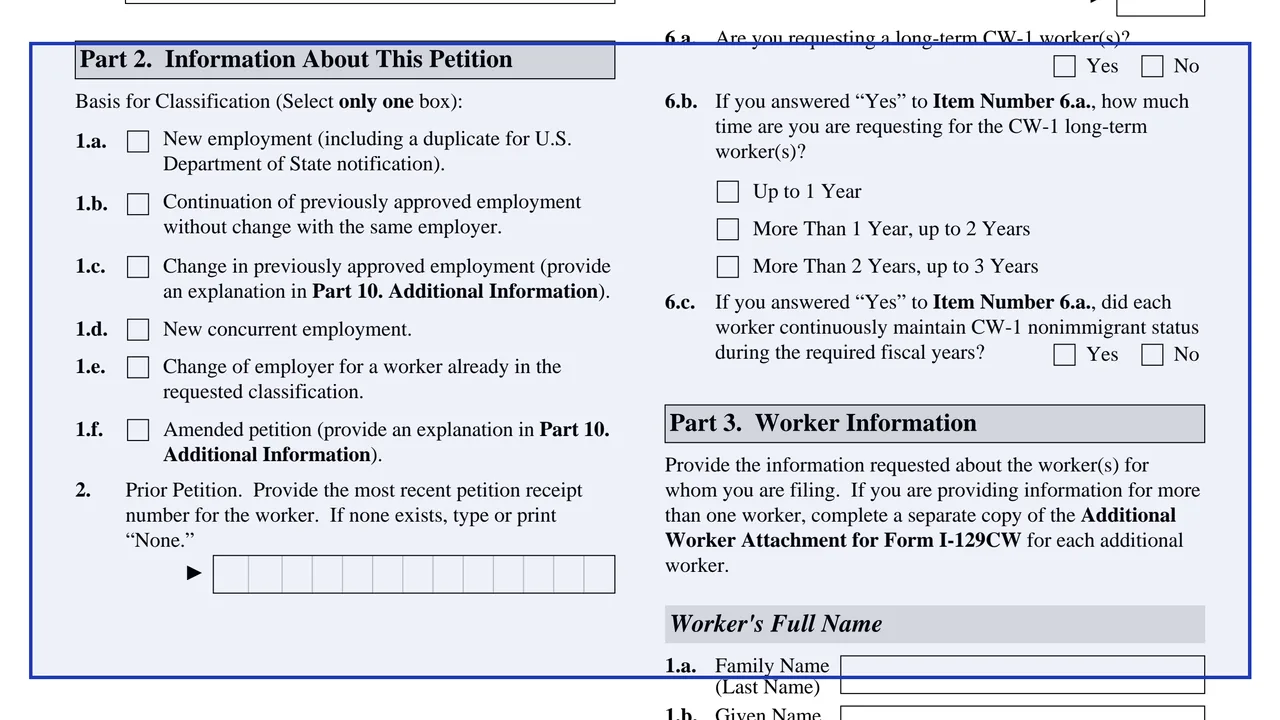
Basis for classification 1.a. to 1.f., prior petition receipt number, requested action 3.a. to 3.d., type of status change, total number of workers and the long-term CW-1 questions.
Names, birth details, A-Number, foreign address, last arrival and Form I-94, passport, current status, CNMI residential address, earlier petitions and CW-1 periods of stay for the last three years.
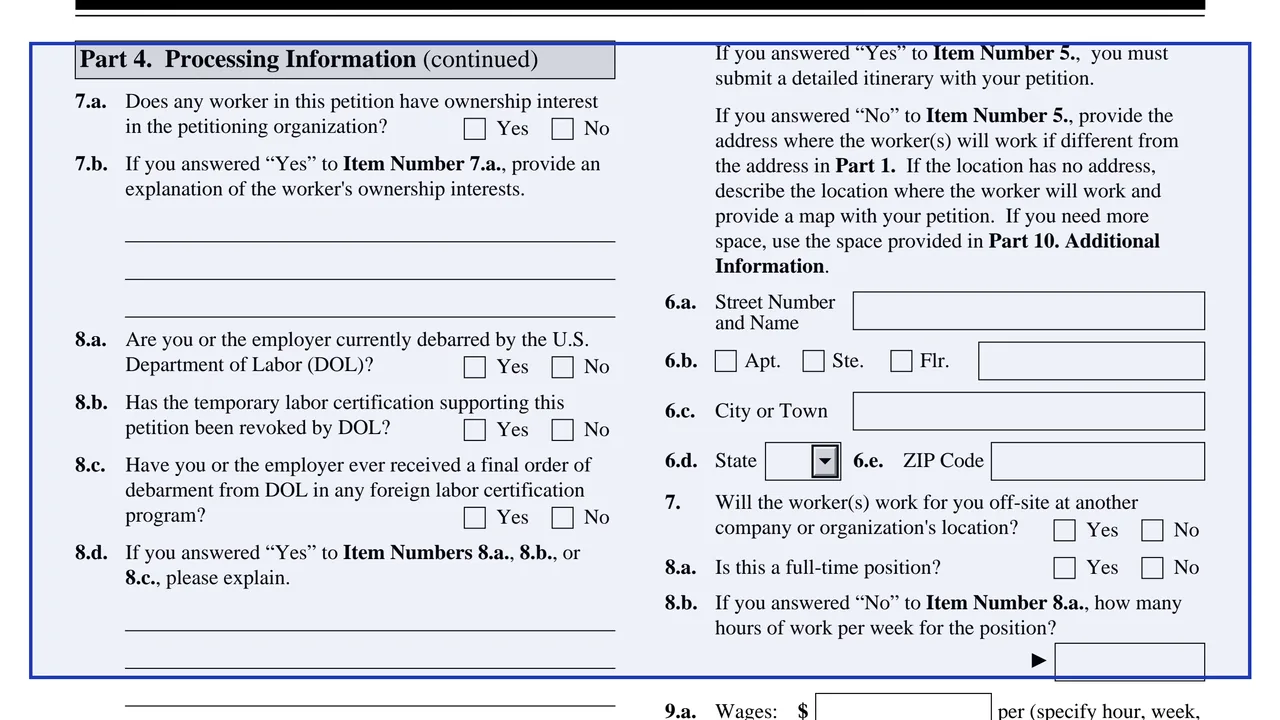
The consulate or CBP office to notify, passports, other petitions, dependents, removal proceedings, ownership interest, Department of Labor debarment, cap exemption and the governor's cap reservation.
Job title, ETA case number, SOC code, job description, worksites, hours, wages, dates and business details, then the attestation statements, occupational category and the employer's signature.
The petitioner's statement and signature, interpreter and preparer sections, additional information space, and an attachment for each additional worker.
For a start date on or after October 1, 2019, the instructions ask for a single, valid temporary labor certification approved by the U.S. Department of Labor, and say not to file before it is approved.
Part 2 takes one basis for classification and one requested action. The instructions say including more than one requested action may delay the petition.
The USCIS page says to list the CNMI P.O. Box when asked for a street or physical address. Without a physical address, Item 4.g. takes a location description and a map.
The instructions say SOC codes come from bls.gov/soc and go left to right, one digit in each of the six boxes. A governor's cap reservation request is supported by that SOC code.
Each additional worker gets a separate Additional Worker Attachment. The instructions say not to include the worker already named in Part 3, and unnamed beneficiaries are not permitted.
The authorizing official signs the employer's attestation and the petitioner signs Part 7. The form notes the petition is filed while in the United States. A stamped or typed name is not accepted. This page lets you fill the form online free, then print it for signature.
You get the real form, filled in a browser tab, with nothing standing between you and the finished PDF.
The USCIS page lists mail (USCIS, Attn: Form I-129CW, 10 Application Way, Montclair, CA 91763, for USPS, FedEx, UPS and DHL) or online through a USCIS online account. Its Forms Available to File Online page says when online filing applies.
The instructions say an extension may be filed up to 180 days before the current CW-1 petition expires, and a petition for a new worker up to 120 days before the start date, in both cases not before the labor certification is approved.
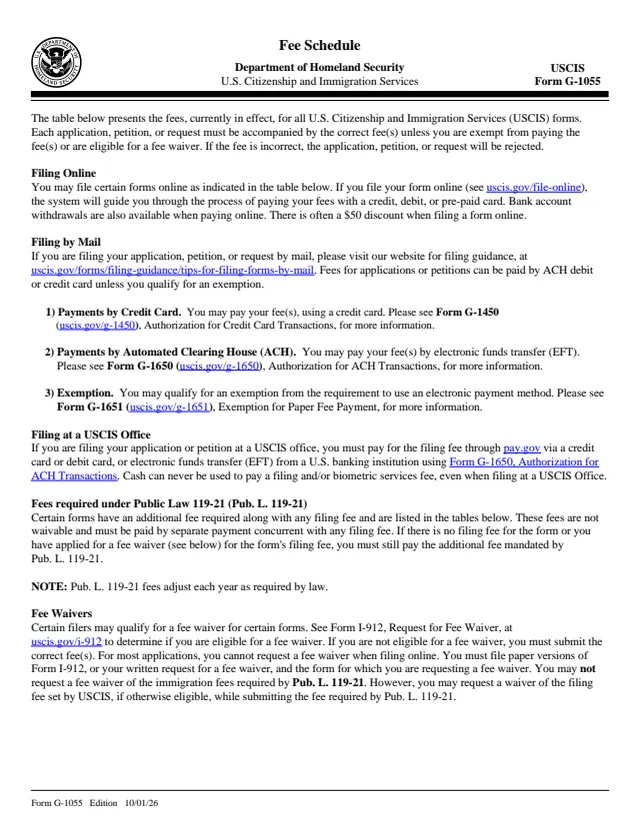
The fee is on the USCIS Fee Schedule page (Form G-1055), which can change. The instructions also describe a CNMI education fee per worker, per year, and reduced fees for employers with 25 or fewer full-time equivalent employees and for certain nonprofits.
The labor certification, proof each worker meets the job requirements, proof of the employer relationship, support for the attestation, any required license, and proof the job vacancy was posted on the CNMI Department of Labor website.
A copy of the worker's Form I-94, passport, travel document or Form I-797, the last two pay stubs and most recent W-2 if applicable, and licensing evidence. An extension also shows the worker maintained status and remains admissible and eligible.
The USCIS page says premium processing is not available for Form I-129CW. After approval, employers with a validity period of six months or more file Form I-129CWR, Semiannual Report for CW-1 Employers.
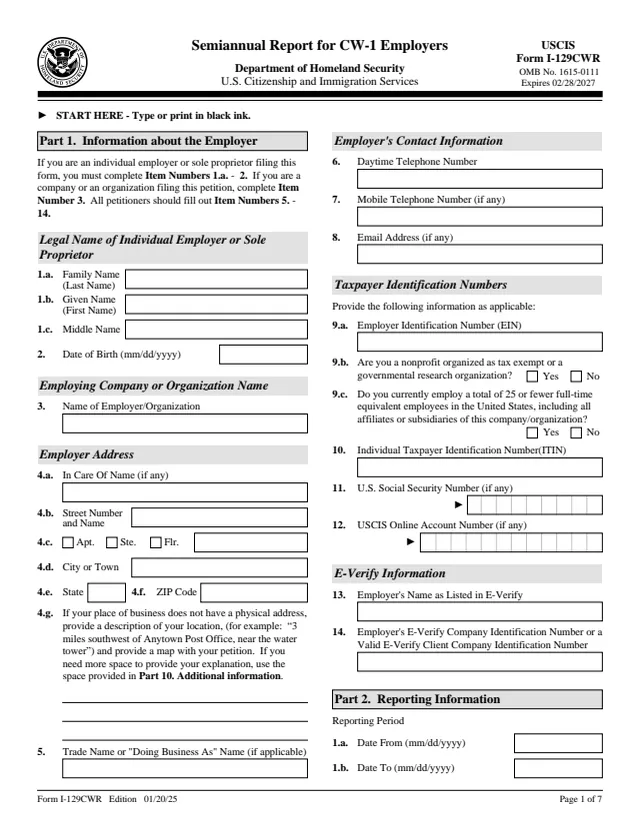
I-129CWR
187 fields, 7 pages
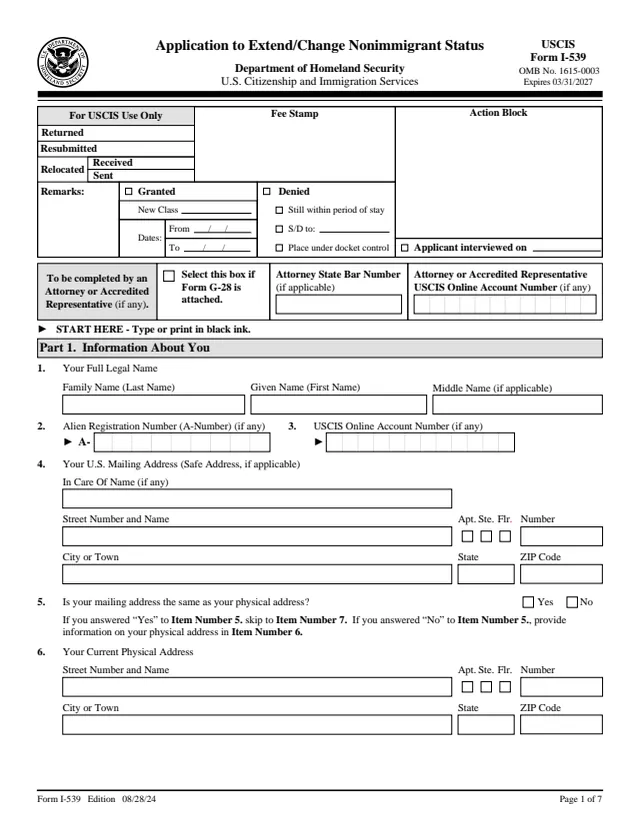
I-539
159 fields, 7 pages
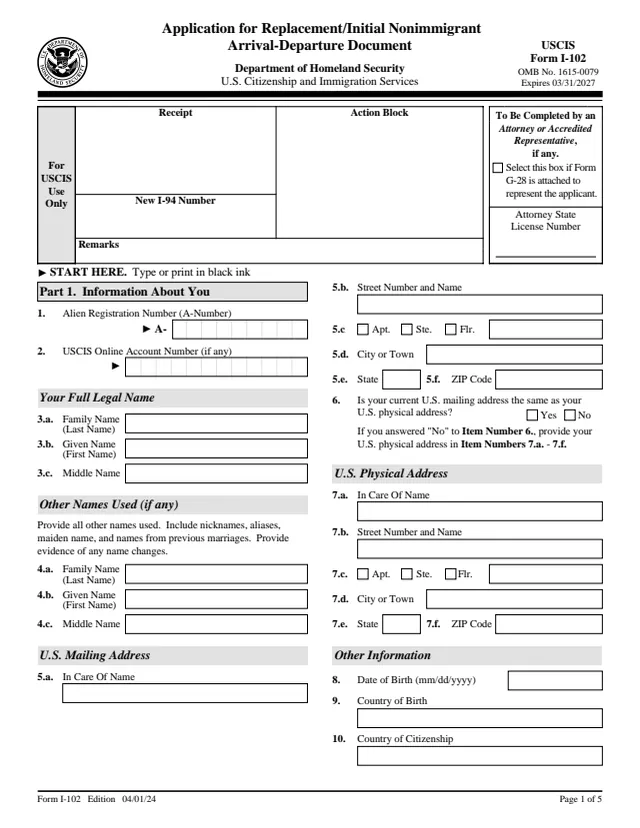
I-102
115 fields, 5 pages
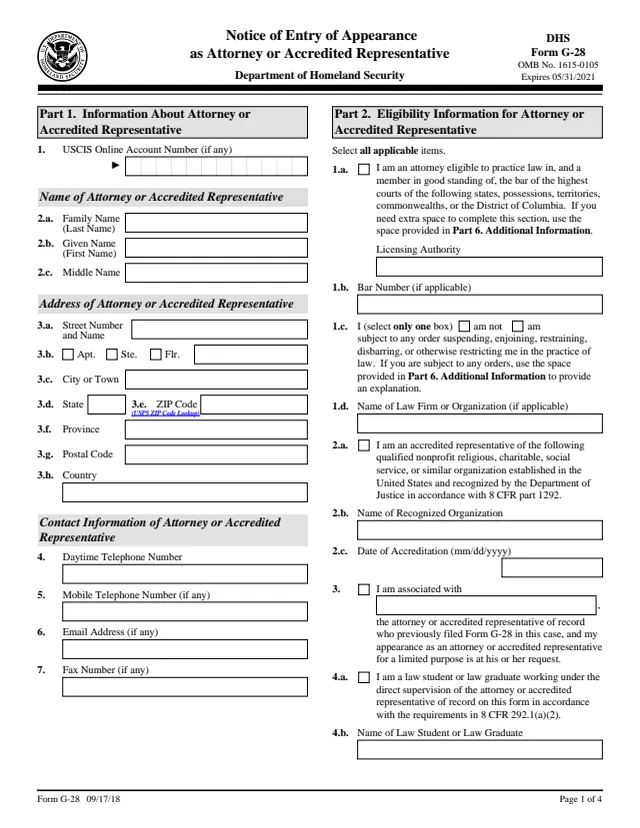
G-28
101 fields, 4 pages
G-1055
64 fields, 58 pages
I-9
128 fields, 4 pages
No tool matches that search.
Yes. The USCIS page lists online filing through a USCIS online account, and its Forms Available to File Online page explains when a petitioner or accredited representative can use it. Mail filing is also listed.
No. The USCIS page says Premium Processing Service is not available for Form I-129CW filings.
The instructions say dependent family members, generally spouses and children under 21, use Form I-539, Application to Extend/Change Nonimmigrant Status, for CW-2 status.
The instructions say a long-term CW-1 worker may be granted up to 3 years, and other CW-1 workers up to 1 year. Other workers are limited to three consecutive validity periods unless they stay outside the United States for at least 30 days after the third one.
The instructions say USCIS stops accepting petitions on December 31, 2029, or once the first-quarter cap for fiscal year 2030 is reached, whichever comes first. Petitions not approved before December 31, 2029, will be denied and fees not refunded.
Yes. The USCIS page says employers whose petition is approved for six months or more file Form I-129CWR to certify the continued employment and payment of each worker.
USCIS fees change, so this page does not list one. The I-129CW page points to the USCIS Fee Schedule, and the instructions point to Form G-1055.