Name and identifying number
The name(s) shown on the income tax return and the identifying number, which the form says is the EIN or SSN shown on the return Form 8302 is attached to.
8302
Electronic Deposit of Tax Refund of $1 Million or More
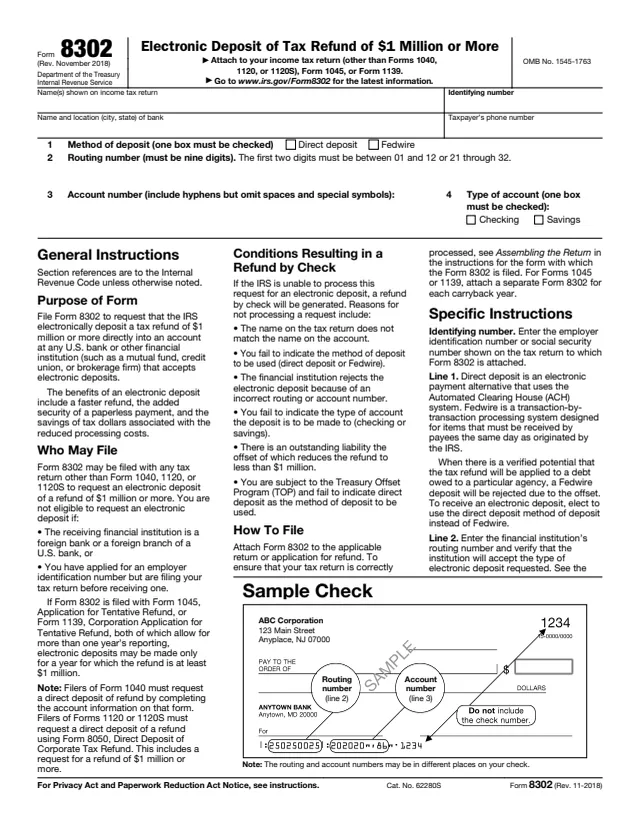
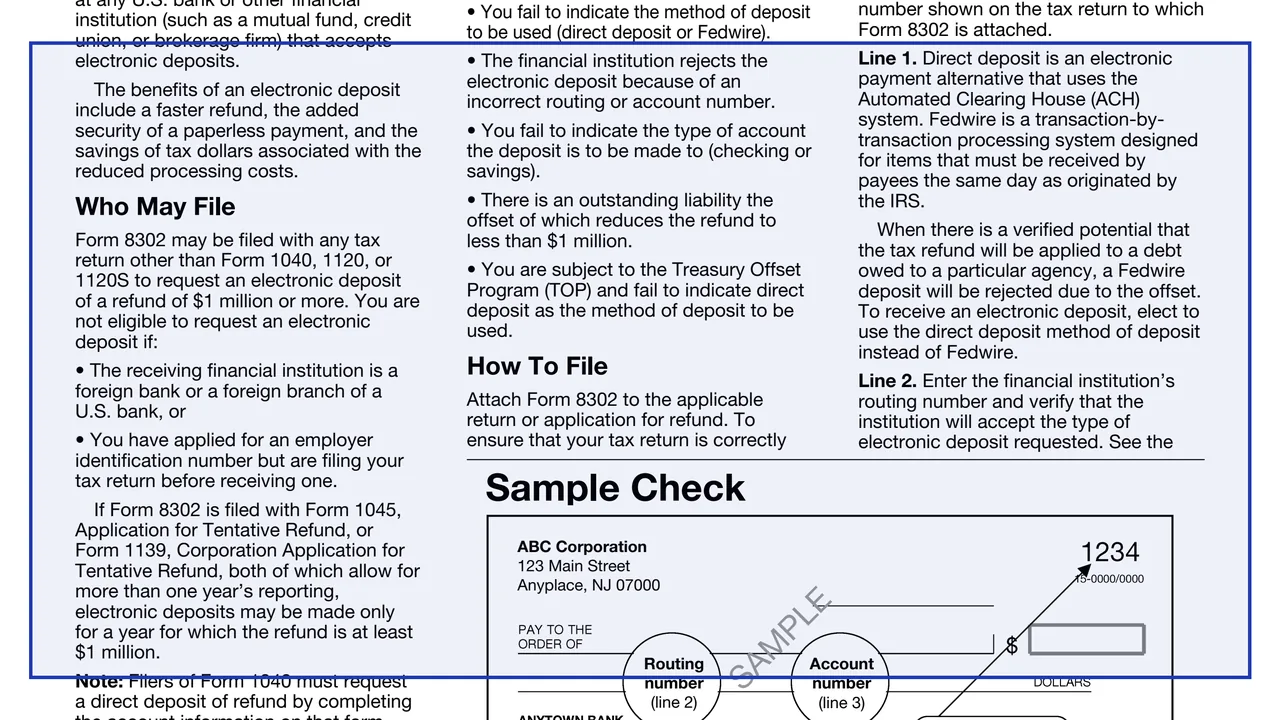
Form 8302, Electronic Deposit of Tax Refund of $1 Million or More, is a request that the IRS electronically deposit a tax refund of $1 million or more directly into an account at any U.S. bank or other financial institution (such as a mutual fund, credit union, or brokerage firm) that accepts electronic deposits.
The form is attached to an income tax return other than Forms 1040, 1120, or 1120S, or to Form 1045 or Form 1139. It asks for the bank, the method of deposit (direct deposit or Fedwire), the routing number, the account number and the type of account. The form lists the benefits of an electronic deposit as a faster refund, the added security of a paperless payment, and the savings of tax dollars from reduced processing costs.
The IRS About page says Form 8302 is now historical, in a note dated 11-FEB-2026. This page hosts the November 2018 revision. You can fill it out free in your browser on this page and download the result without an account.
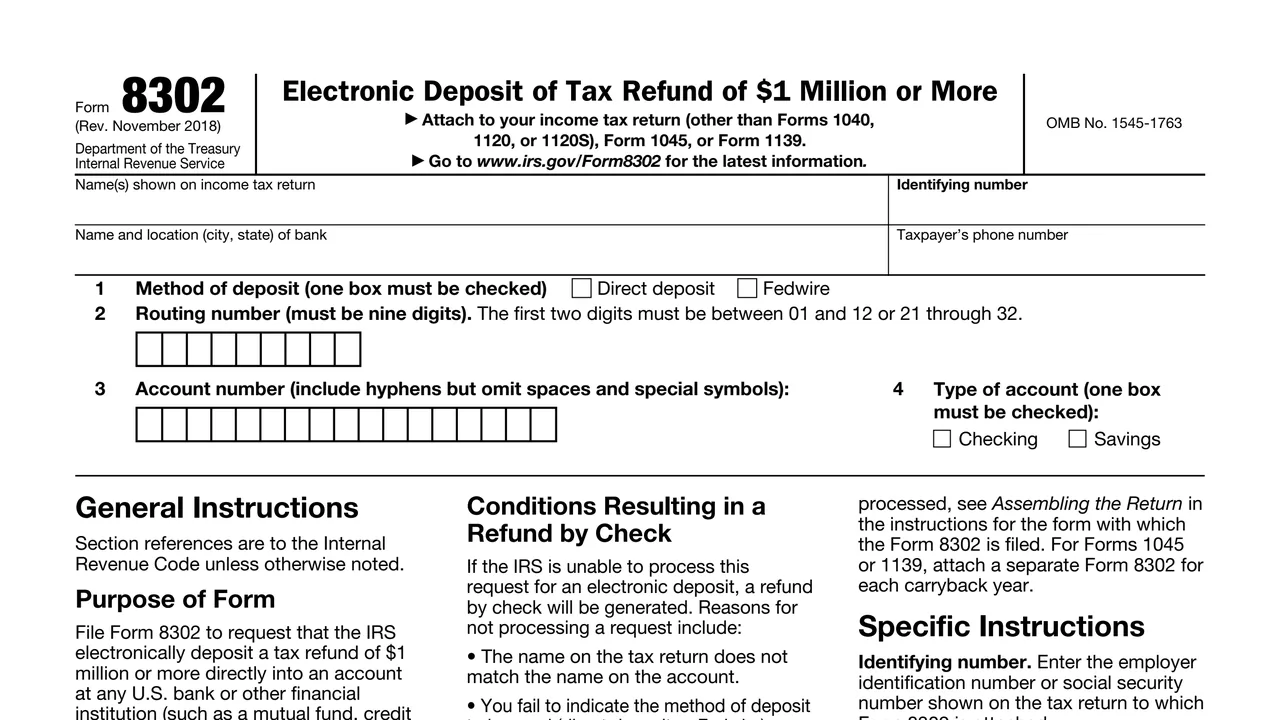
The name(s) shown on the income tax return and the identifying number, which the form says is the EIN or SSN shown on the return Form 8302 is attached to.
The name and location (city, state) of the bank, and the taxpayer's phone number.
Two boxes, direct deposit and Fedwire. The form says one box is to be checked.
Nine digits. The form says the first two digits are between 01 and 12 or 21 through 32.
The account number, including hyphens but omitting spaces and special symbols, and the type of account, checking or savings.
A sample check on page 1 shows where the routing number (line 2) and account number (line 3) may appear. The form notes they may be in different places on a real check.
Enter the name(s) and the EIN or SSN exactly as shown on the return the form is attached to. A name on the return that does not match the name on the account is one reason the form gives for a refund by check.
Check direct deposit or Fedwire. The instructions say direct deposit uses the Automated Clearing House (ACH) system, and Fedwire is a transaction-by-transaction system for items payees receive the same day as originated by the IRS.
The instructions say that when there is a verified potential that the refund will be applied to a debt owed to a particular agency, a Fedwire deposit will be rejected, and to elect direct deposit instead.
Enter the financial institution's routing number and verify that it accepts the type of deposit requested. The instructions say not to use a deposit slip to verify the routing number.
Enter the account number from left to right and leave any unused boxes blank. Then check checking or savings.
Attach Form 8302 to the applicable return or application for refund. The form points to Assembling the Return in the instructions for the form it is filed with.
You get the real form, filled in a browser tab, with nothing standing between you and the finished PDF.
The IRS About page says Form 8302, Electronic Deposit of Tax Refund of $1 Million or More, is now historical, in a recent developments note dated 11-FEB-2026.
The form is attached to the return or application for refund it relates to. It is not filed on its own.
With Forms 1045 or 1139, the form says to attach a separate Form 8302 for each carryback year, and electronic deposits may be made only for a year with a refund of at least $1 million.
The form says a check is issued if the request cannot be processed, for example when names do not match, the method or account type is not marked, the routing or account number is wrong, or an offset brings the refund under $1 million.
The form lists one more reason for a check: the filer is subject to the Treasury Offset Program (TOP) and does not mark direct deposit as the method.
The form gives a Tax Forms and Publications address for comments on the form only, and says not to send Form 8302 to that address.
8050
7 fields, 1 page
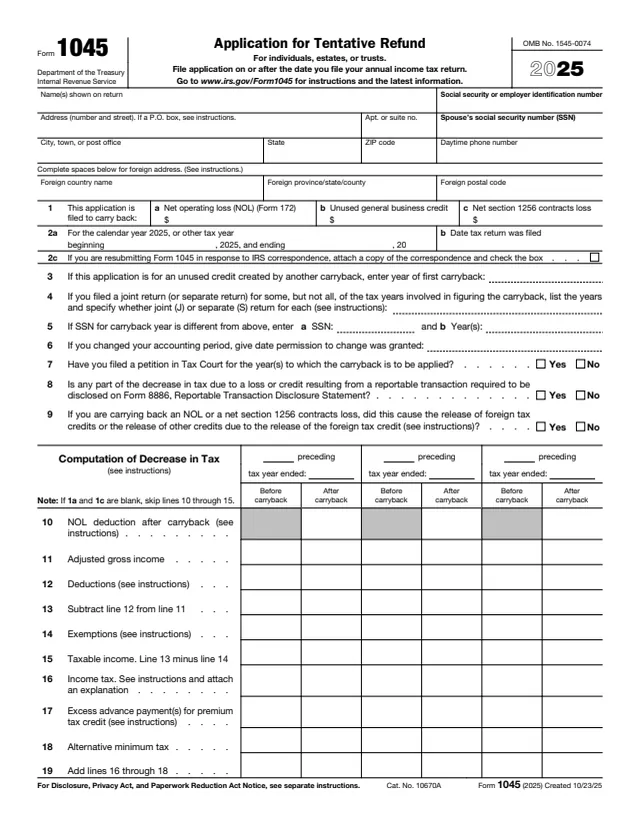
1045
193 fields, 2 pages
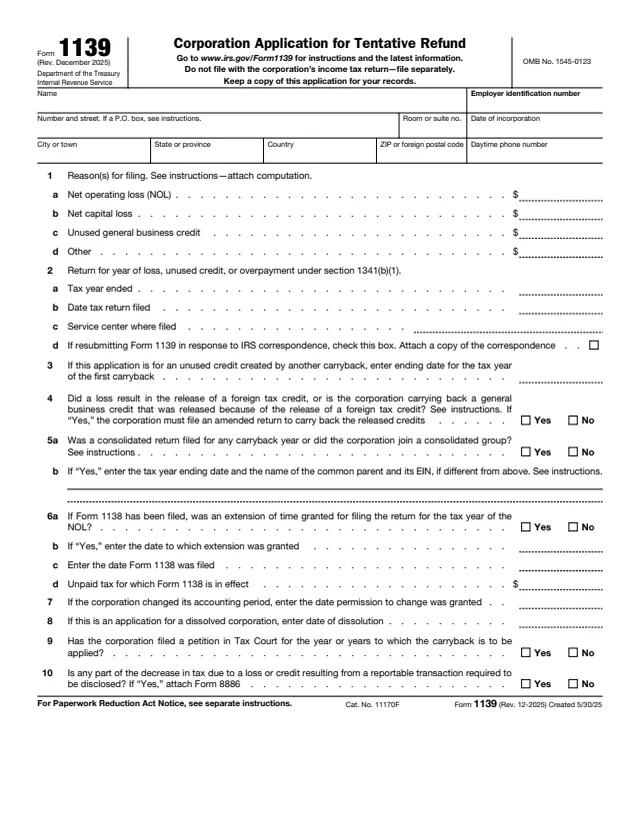
1139
162 fields, 2 pages
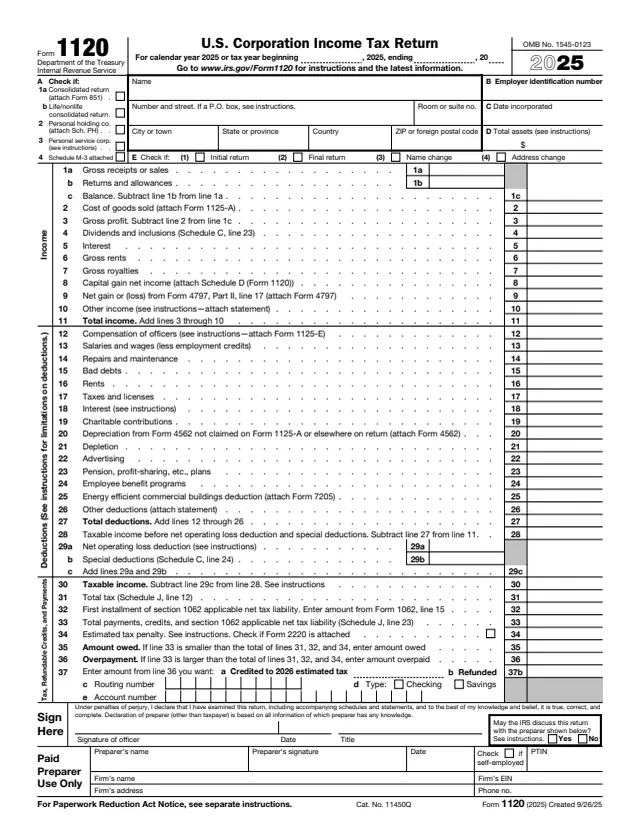
1120
481 fields, 6 pages
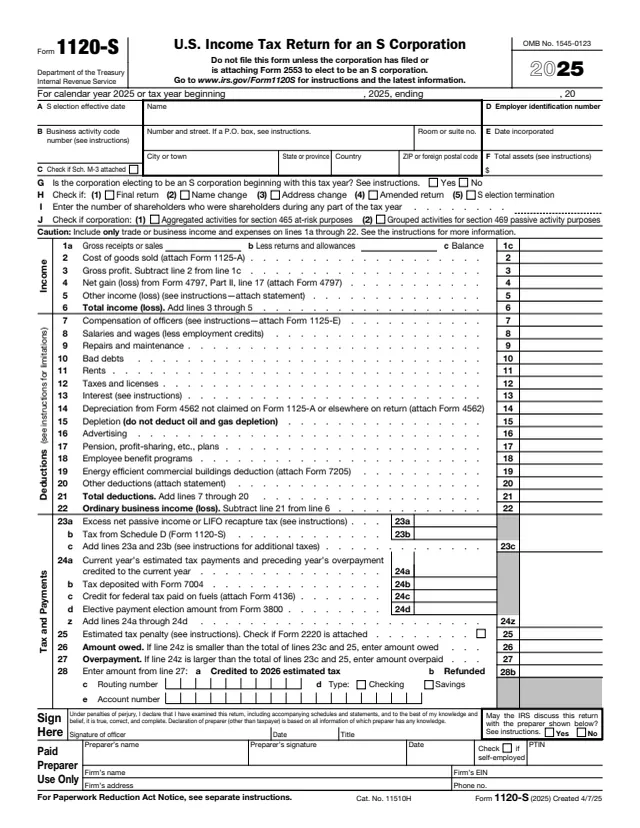
1120-S
390 fields, 5 pages
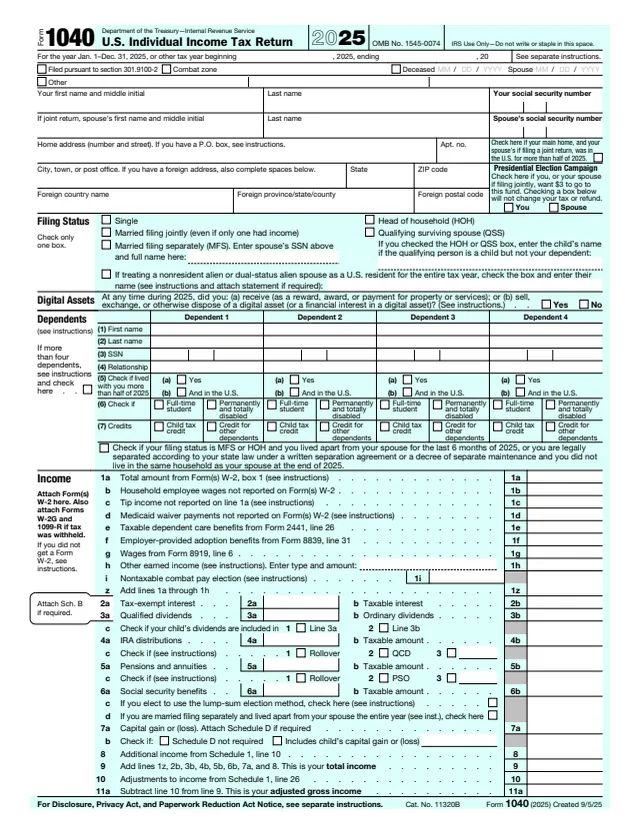
1040
199 fields, 2 pages
The form says it may be filed with any tax return other than Form 1040, 1120, or 1120S to request an electronic deposit of a refund of $1 million or more.
No tool matches that search.
The IRS About page says Form 8302 is now historical, in a note dated 11-FEB-2026. This page hosts the November 2018 revision.
The form says filers of Form 1040 request a direct deposit of refund by completing the account information on Form 1040.
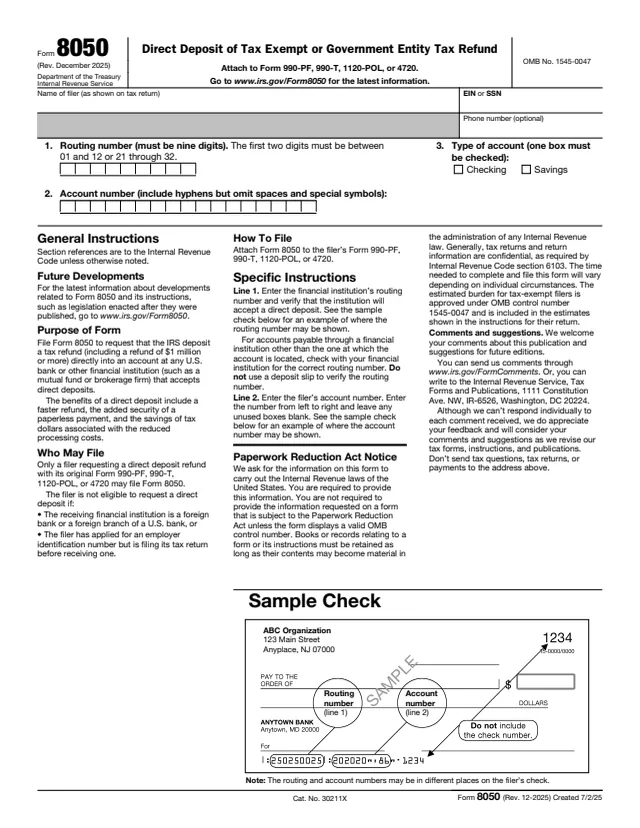
The form says those filers request a direct deposit of a refund using Form 8050, including a refund of $1 million or more.
The instructions say direct deposit uses the Automated Clearing House (ACH) system, and Fedwire is a transaction-by-transaction system for items payees receive the same day as originated by the IRS.
No. The form says a request is not eligible if the receiving institution is a foreign bank or a foreign branch of a U.S. bank.
The form says a refund by check will be generated, and lists reasons such as a name mismatch, a rejected routing or account number, or an offset that brings the refund under $1 million.