Header
Name, address, employer identification number, the month and year of the return, and boxes for a final return or address change.
730
Monthly Tax Return for Wagers
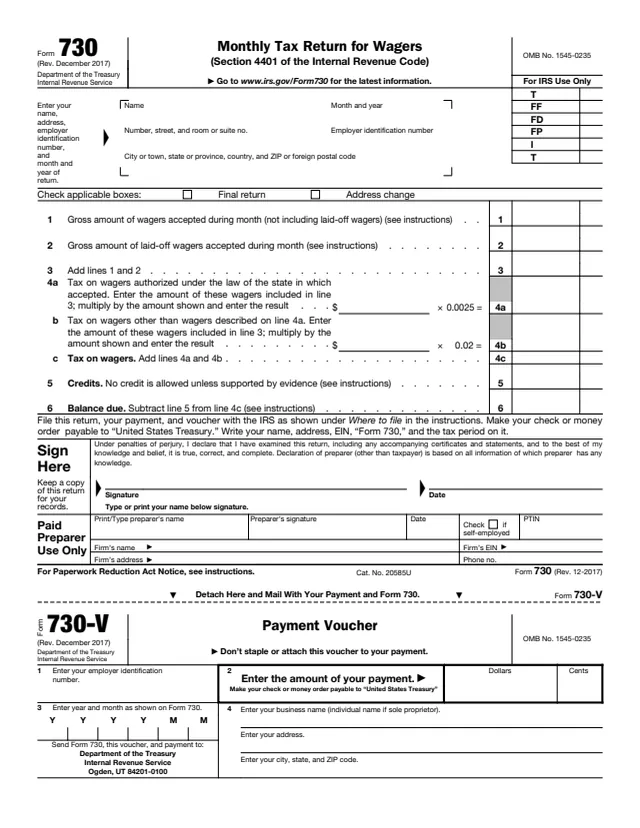
Form 730, Monthly Tax Return for Wagers, reports the tax on wagers under section 4401 of the Internal Revenue Code. The About page says it is filed, with the tax paid, by those who are in the business of accepting wagers, conduct a wagering pool or lottery, or are required to be registered and received wagers for or on behalf of another person without reporting that person's name and address.
The form figures the tax on the gross amount of wagers accepted during the month, including laid-off wagers, at the two rates printed on lines 4a and 4b. It includes Form 730-V, a payment voucher for paying by check or money order. Registration uses a separate form, Form 11-C.
The instructions are printed in the same PDF. You can fill out the PDF free in your browser on this page and download it without an account.
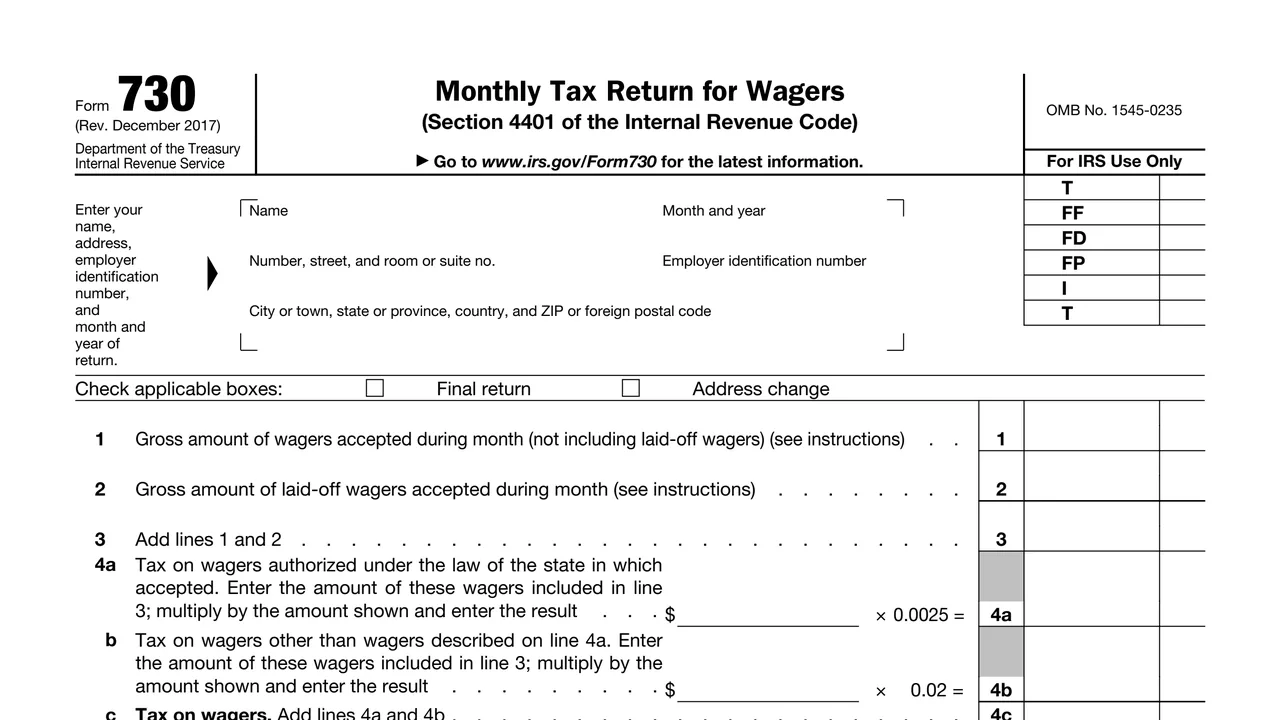
Name, address, employer identification number, the month and year of the return, and boxes for a final return or address change.
Gross wagers accepted during the month, gross laid-off wagers, and their total.
Tax on wagers authorized under state law at 0.0025, tax on other wagers at 0.02, and the total tax on wagers.
Credits supported by evidence, and the balance due after subtracting them.
Signature under penalties of perjury, and the paid preparer's name, signature, PTIN and firm details.
The payment voucher with the EIN, payment amount, year and month, and business name and address.
Enter the name shown on the most recently filed federal income tax return, the address, the EIN, and the month (MM) and year (YYYY). Check the final return box when the business stops accepting wagers.
Enter gross wagers accepted during the month, both authorized and not authorized by the state. The instructions say to include all charges connected with placing the wager and to leave out laid-off wagers.
Enter gross laid-off wagers accepted during the month, authorized and unauthorized, then add lines 1 and 2 on line 3.
Split the line 3 amount by whether state law authorizes the wager and multiply by the rate shown. The instructions say the lower rate applies to wagers authorized by state law.
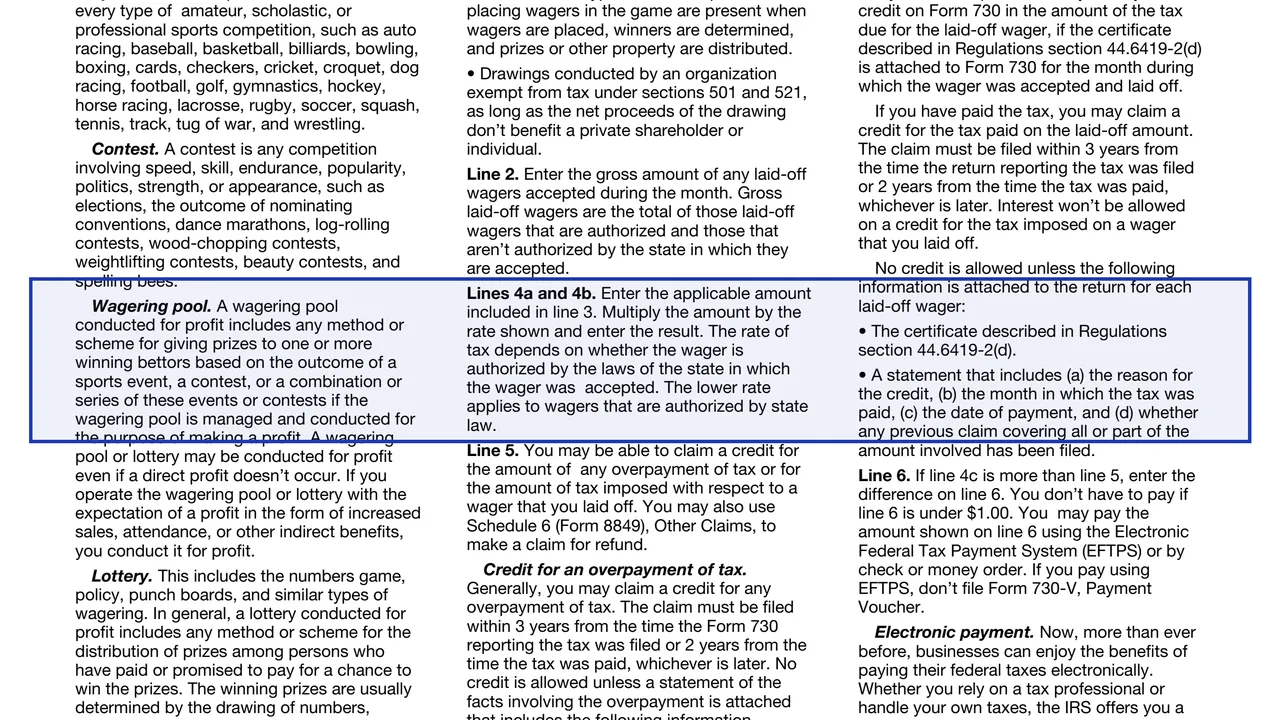
Enter any credit for an overpayment or for tax on a laid-off wager. The instructions say no credit is allowed unless the required statement or certificate is attached.
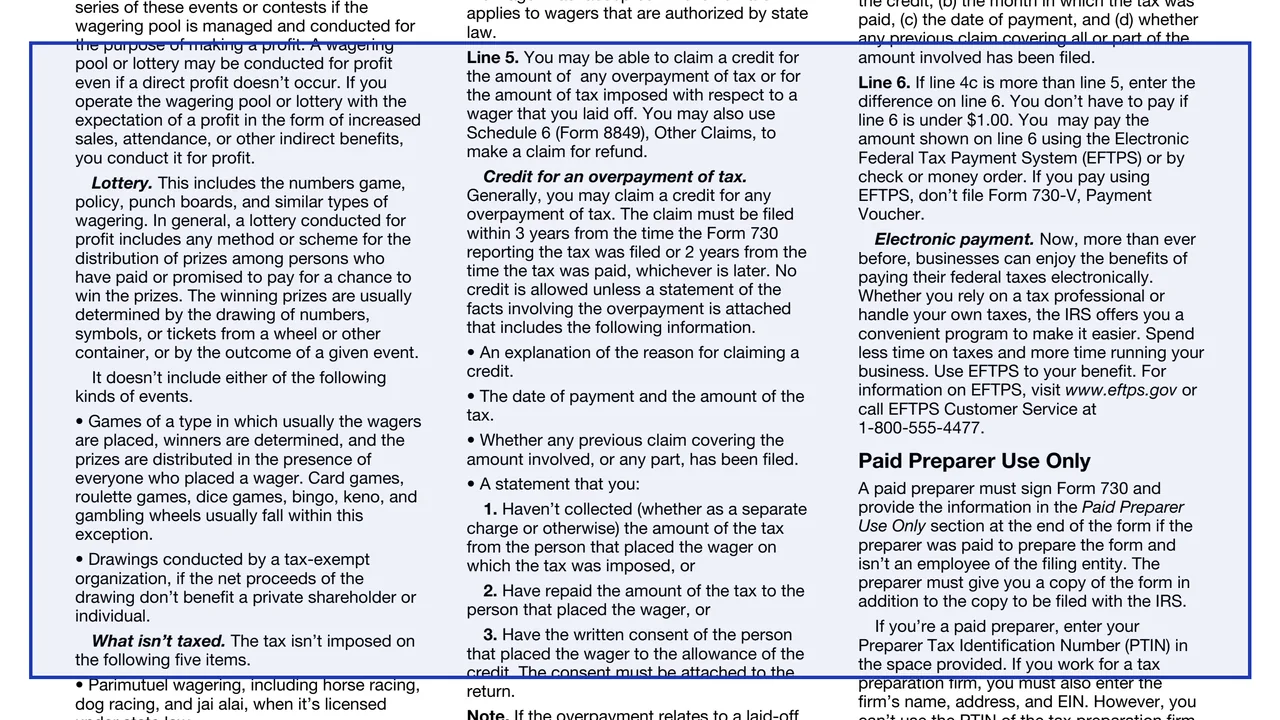
Subtract line 5 from line 4c. The instructions say no payment is needed if line 6 is under $1.00, and to write None on line 6 when there is no tax to report.
You get the real form, filled in a browser tab, with nothing standing between you and the finished PDF.
The instructions say Form 730 is filed for each month by the last day of the following month, whether or not there are taxable wagers. The IRS won't send a notice that a return is due.
The instructions give Department of Treasury, Internal Revenue Service, Ogden, UT 84201-0100. The return, payment and voucher go together.
Pay through EFTPS or by check or money order payable to United States Treasury. The instructions say not to file Form 730-V when paying through EFTPS.
The instructions list five items, including state-licensed parimutuel wagering, coin-operated devices such as slot machines, and state-run sweepstakes, pools or lotteries.
The instructions say a credit for an overpayment is claimed within 3 years from when the Form 730 was filed or 2 years from when the tax was paid, whichever is later.
The instructions say to keep records supporting adjustments and exemptions at least 4 years from the latest of the dates they list, and to keep them available for IRS inspection.
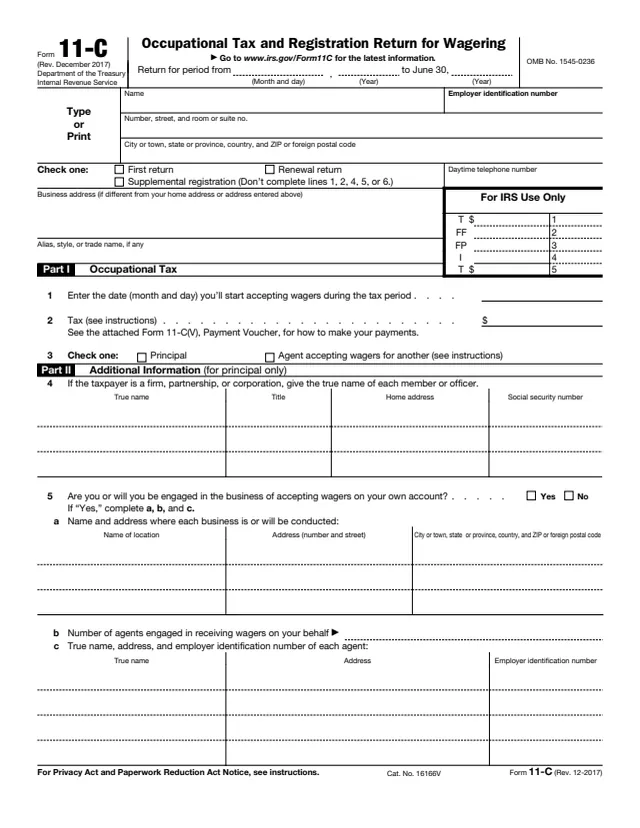
11-C
105 fields, 6 pages
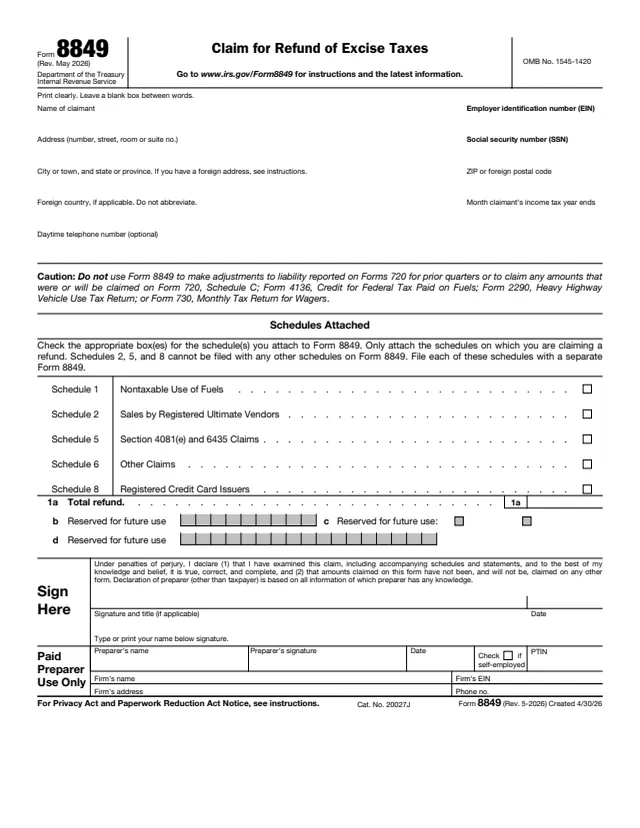
8849
27 fields, 4 pages
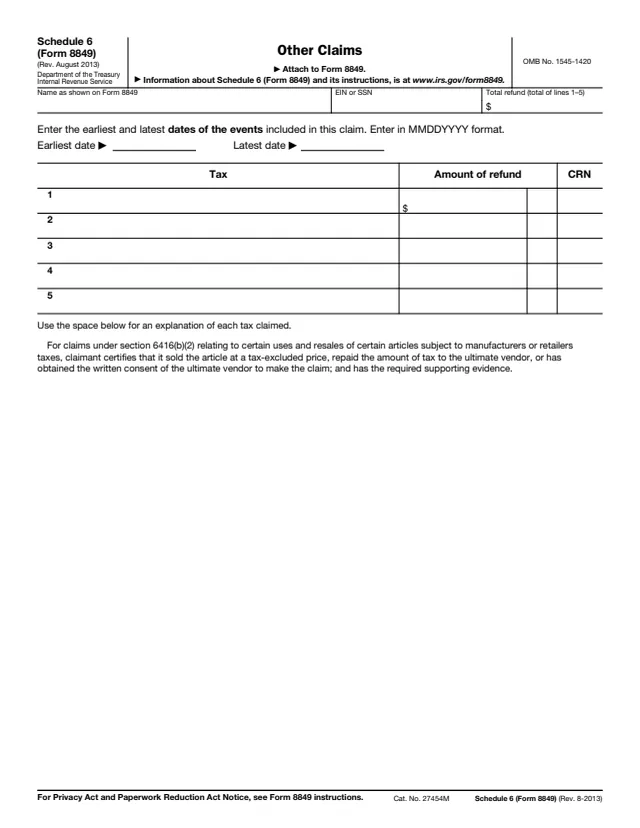
8849 Sch. 6
26 fields, 1 page
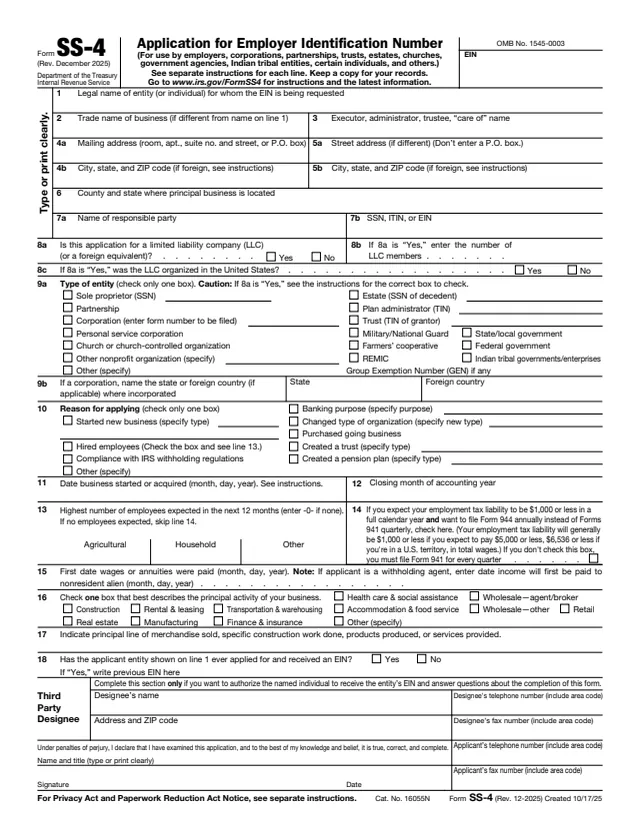
SS-4
89 fields, 2 pages
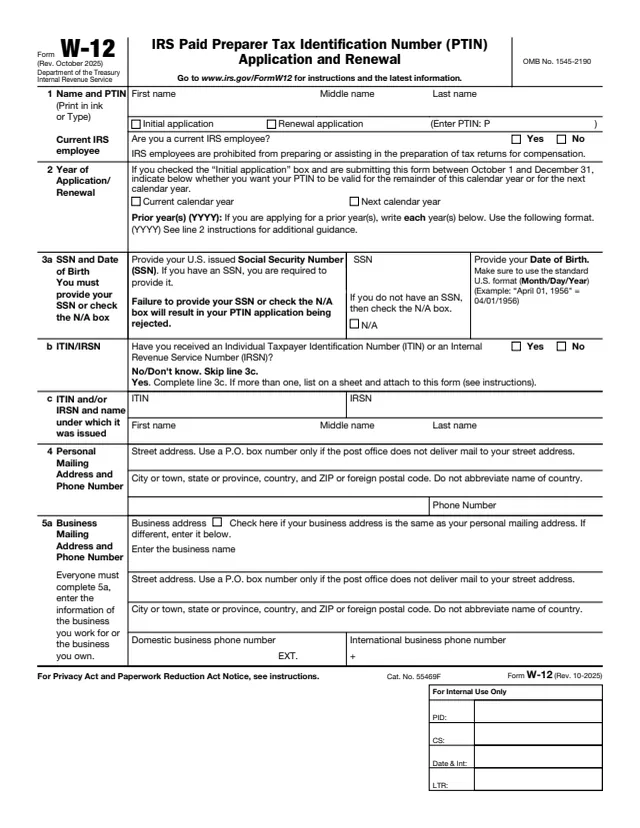
W-12
85 fields, 3 pages
Form 730 is filed by businesses and operators that accept wagers, not by people who place them.
No tool matches that search.
The instructions say to file a return each month whether or not there are taxable wagers. With no tax to report, write None on line 6 and sign and date the form.
Line 4a multiplies wagers authorized under the law of the state where accepted by 0.0025. Line 4b multiplies other wagers by 0.02.
The instructions give Department of Treasury, Internal Revenue Service, Ogden, UT 84201-0100. Their What's New note says this address applies from January 2018.
The instructions point to Form 11-C, Occupational Tax and Registration Return for Wagering.
The instructions say the tax is not imposed on coin-operated devices, such as slot machines, pinball machines, or video games.
No. The instructions say to complete it when paying by check or money order with Form 730, and not to file it when paying the line 6 balance through EFTPS.