Certification box
A box to check to certify that the filer is a member of the Armed Forces on active duty who, due to a military order, moved, or whose spouse or dependents moved, because of a permanent change of station.
3903
Moving Expenses
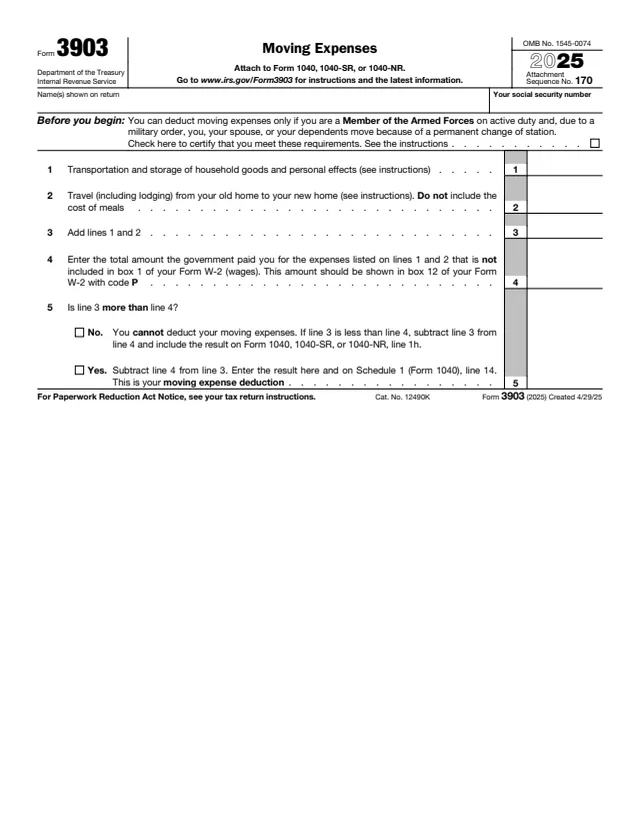
Form 3903 is used to figure the moving expense deduction. The instructions say to use it if you are a member of the Armed Forces on active duty and, due to a military order, you move because of a permanent change of station. They also say that for tax years beginning after 2017 the moving expense deduction is eliminated, except for certain Armed Forces members.
The 2025 form starts with a box to certify that these requirements are met, then has five lines: household goods and personal effects, travel, their total, government payments not included in box 1 of Form W-2, and the deduction. The form says to attach it to Form 1040, 1040-SR or 1040-NR, and the deduction on line 5 also goes on Schedule 1 (Form 1040), line 14.
You can fill out Form 3903 free in your browser on this page and download the result without an account.
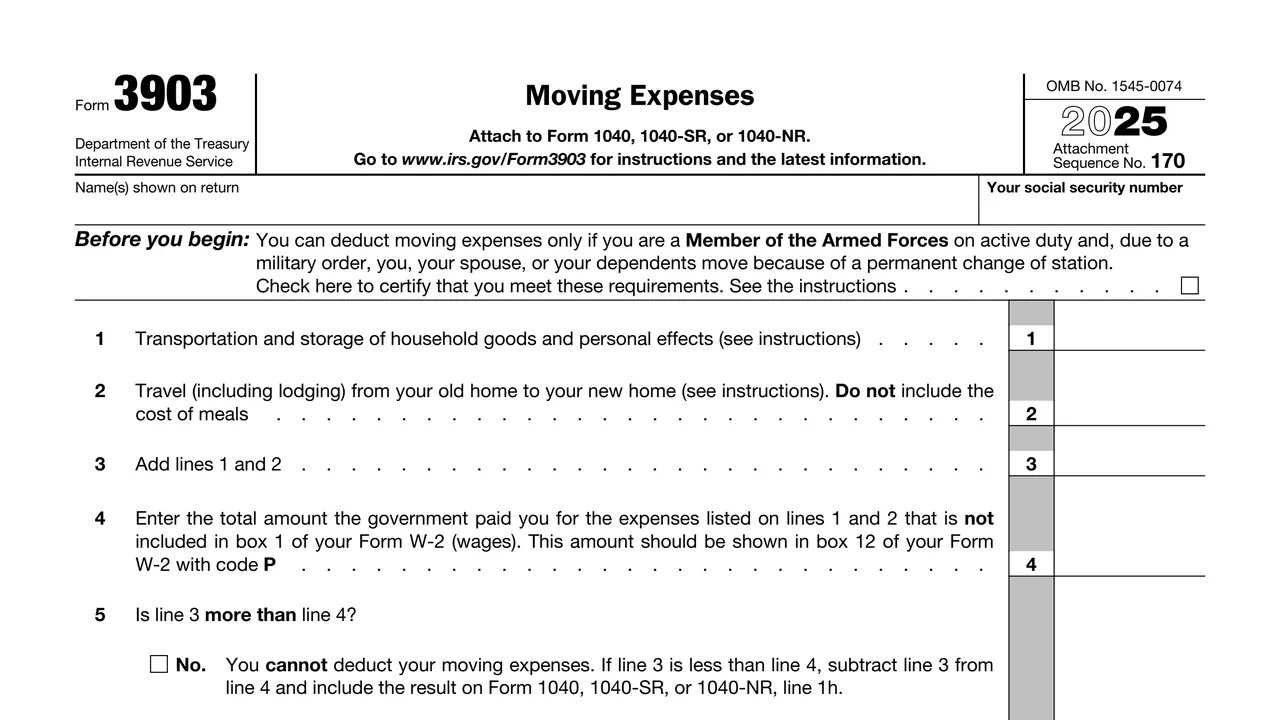
A box to check to certify that the filer is a member of the Armed Forces on active duty who, due to a military order, moved, or whose spouse or dependents moved, because of a permanent change of station.
Transportation and storage of household goods and personal effects.
Travel, including lodging, from the old home to the new home. The form says not to include the cost of meals.
Line 3 adds lines 1 and 2. Line 4 is the total the government paid for those expenses that is not included in box 1 of Form W-2, which the form says should be shown in box 12 with code P.
Asks whether line 3 is more than line 4. If yes, the difference is the moving expense deduction and also goes on Schedule 1 (Form 1040), line 14.
The instructions say to check the box to certify that the requirements to claim moving expenses are met. They also say not to deduct any expenses for moving or storage services provided by the government.
Enter the amount paid to pack, crate and move household goods and personal effects. For moves within or to the United States, storage and insurance count only within any period of 30 days in a row after the items left the old home and before delivery to the new one.
Enter travel and lodging from the old home to the new home, one trip per person, with no house hunting expenses. For a personal vehicle, use actual gas and oil costs or 21 cents a mile, plus parking fees and tolls.
Enter the reimbursements and allowances received from the government for lines 1 and 2. The instructions say not to include government moving or storage services, or dislocation, temporary lodging or move-in housing allowances.
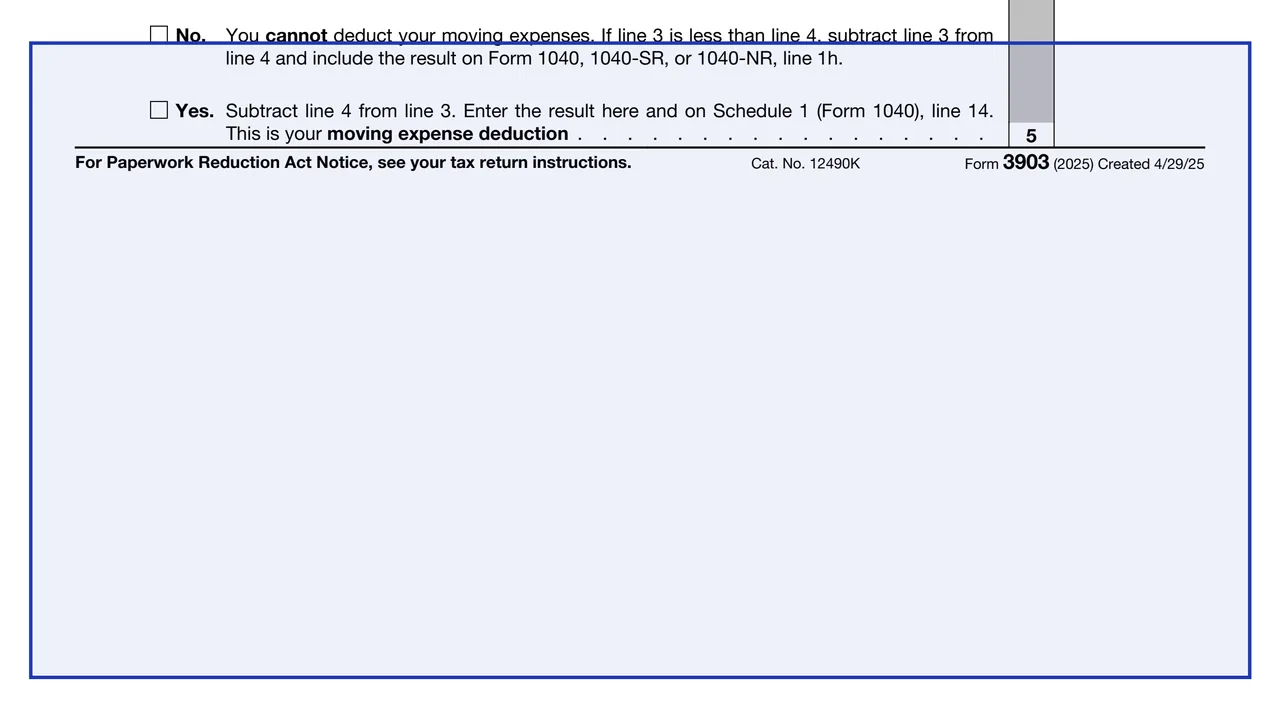
If line 3 is more than line 4, subtract and enter the result on line 5 and on Schedule 1 (Form 1040), line 14. If not, the instructions say to subtract line 3 from line 4 and enter any result above zero on Form 1040, 1040-SR or 1040-NR, line 1h.
You get the real form, filled in a browser tab, with nothing standing between you and the finished PDF.
The form says to attach it to Form 1040, 1040-SR or 1040-NR.
The form and instructions say not to include the cost of meals.
The instructions list items that are not moving expenses, including any part of a new home's purchase price, closing costs, lease costs, real estate taxes, security deposits and return trips to the former residence.
The instructions say not to file Form 3903 when the move was in an earlier year, only storage fees during an absence from the United States are claimed, and the government payment for them is in box 1 of Form W-2. Those fees go on Schedule 1 (Form 1040), line 14.
For a move from the United States or its territories to a foreign country, or between foreign countries, the instructions add moving goods to and from storage and storing them while the new job location outside the United States remains the main one.
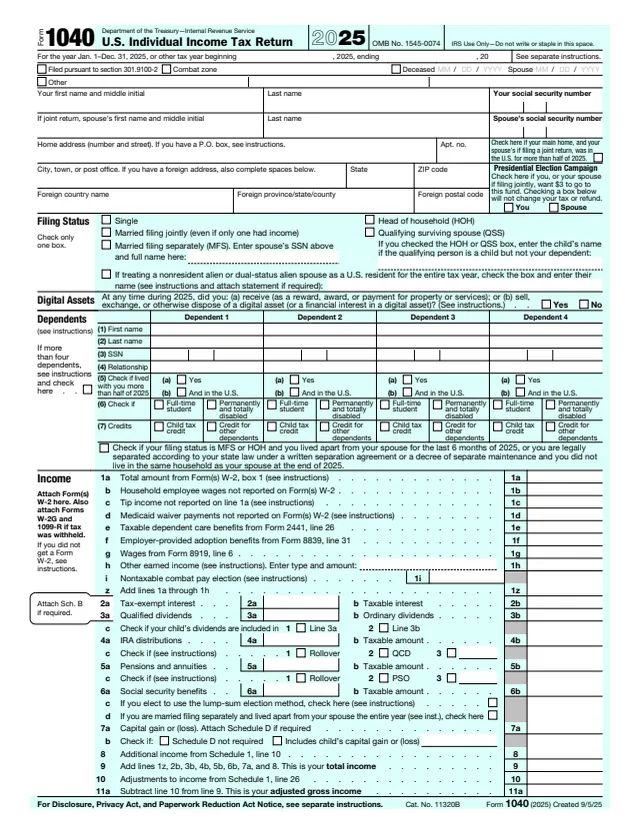
1040
199 fields, 2 pages
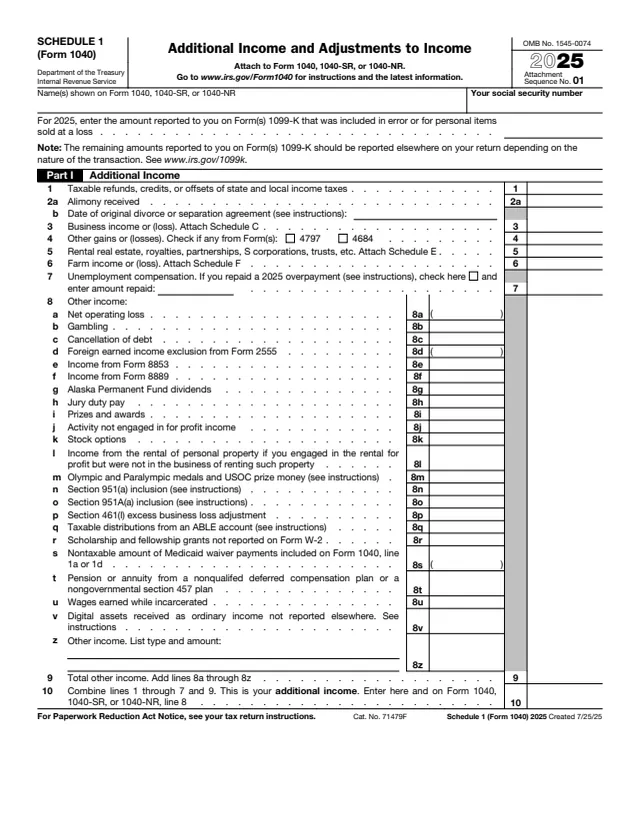
1040
73 fields, 2 pages
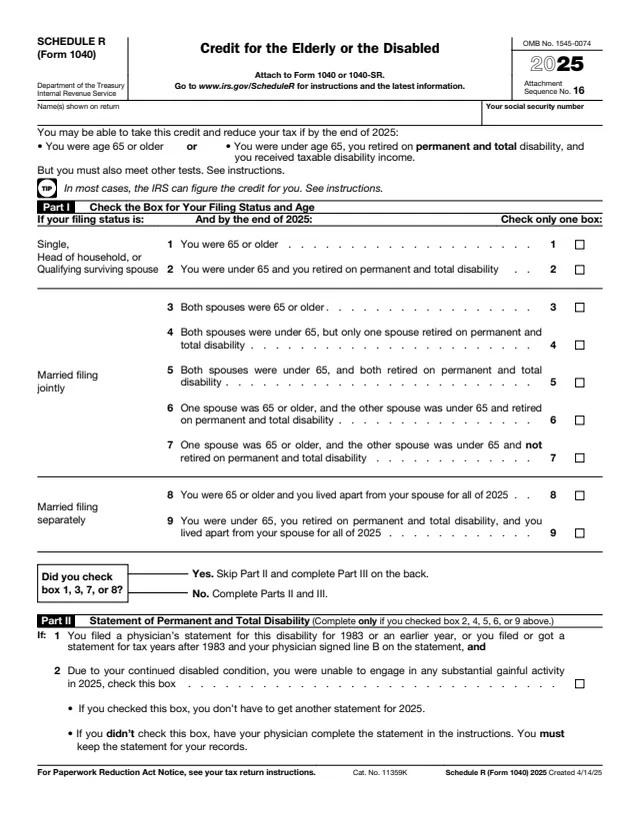
1040
27 fields, 2 pages
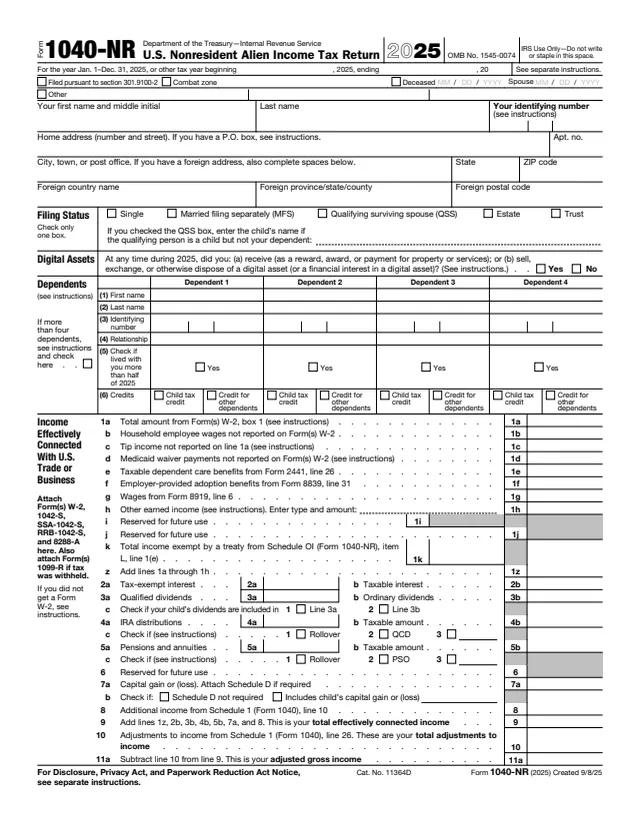
1040-NR
171 fields, 2 pages
W-2
568 fields, 11 pages
2555
160 fields, 3 pages
The form and instructions limit the deduction to members of the Armed Forces on active duty who move because of a permanent change of station.
No tool matches that search.
The instructions say it is for members of the Armed Forces on active duty who move, or whose spouse or dependents move, due to a military order because of a permanent change of station.
The instructions say that for 2025 the standard mileage rate for using a vehicle to move to a new home is 21 cents a mile.
No. The form says not to include the cost of meals on line 2.
The form says the amount on line 5 also goes on Schedule 1 (Form 1040), line 14.
The form says that if line 3 is less than line 4, subtract line 3 from line 4 and include the result on Form 1040, 1040-SR or 1040-NR, line 1h.
Yes. The instructions say to use a separate Form 3903 for each move when more than one move qualifies.