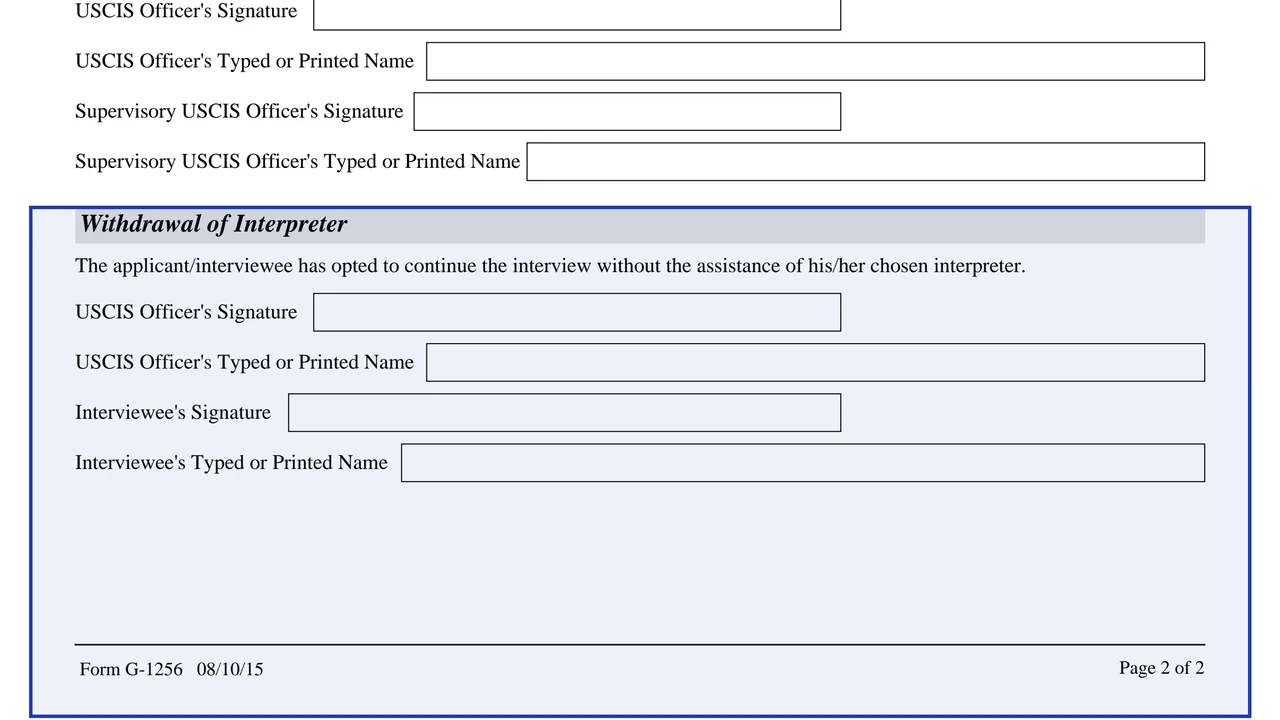
Interviewee and interpreter details
The interviewee's name, A-Number and native languages, the interpreter's name, address and telephone number, whether a copy of the interpreter's identity document is attached, and the languages used.
G-1256
Declaration for Interpreted USCIS Interview
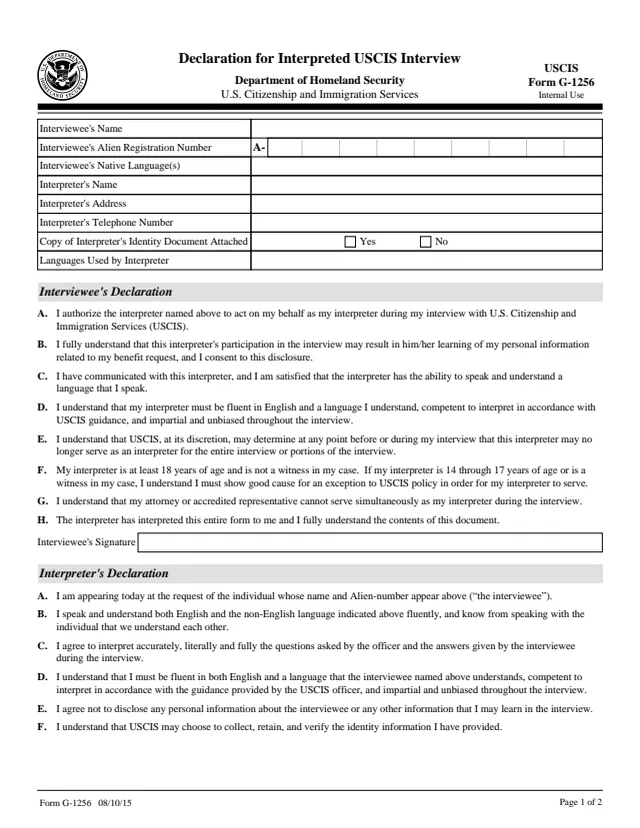
Form G-1256, Declaration for Interpreted USCIS Interview, is used when an interviewee brings their own interpreter to a scheduled domestic interview with USCIS. The instructions say it documents that the interviewee provided the interpreter and is satisfied with the interpreter's ability to interpret from English to a language the interviewee speaks and understands, and from that language back to English.
The form also tells the interviewee that the interpreter may learn confidential information during the interview, and records that the interpreter understands the role: to interpret accurately, literally and fully for both the interviewee and the officer. The form is marked Internal Use. The instructions say the officer completes it and places it in the interviewee's file.
The USCIS page says not to sign the form before the interview. The interviewee and the interpreter sign it in the presence of the interviewing officer.
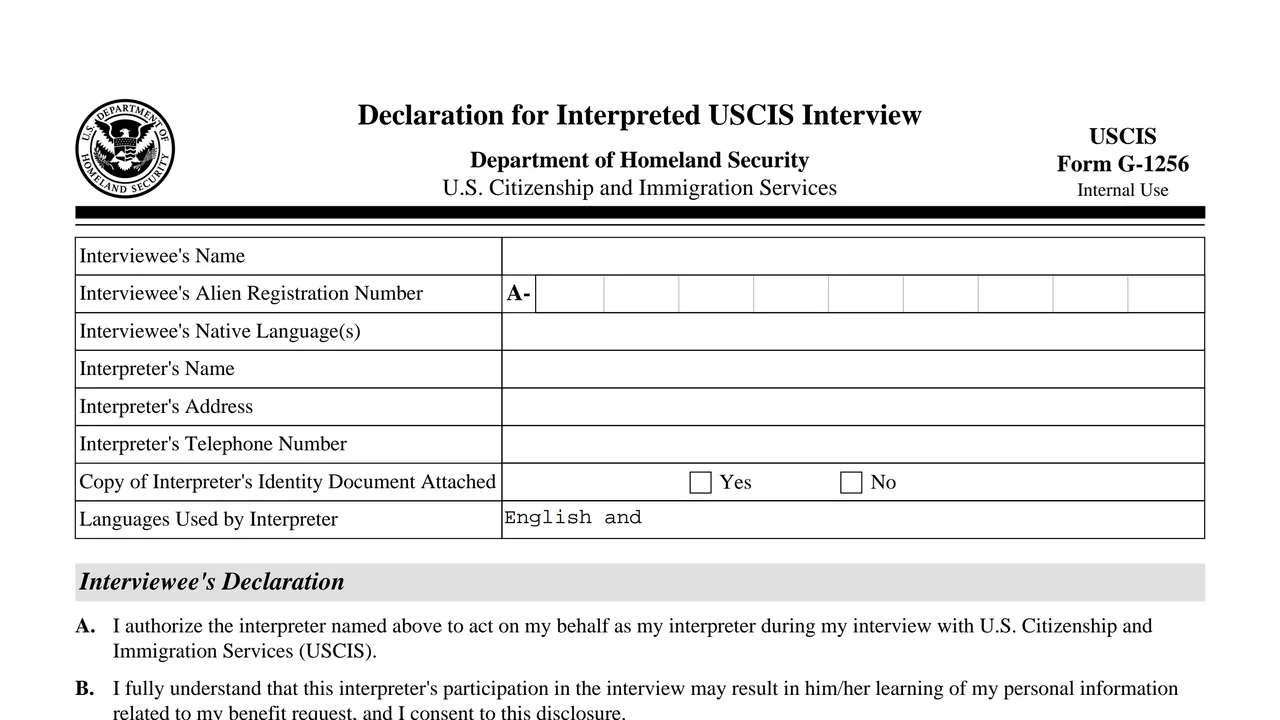
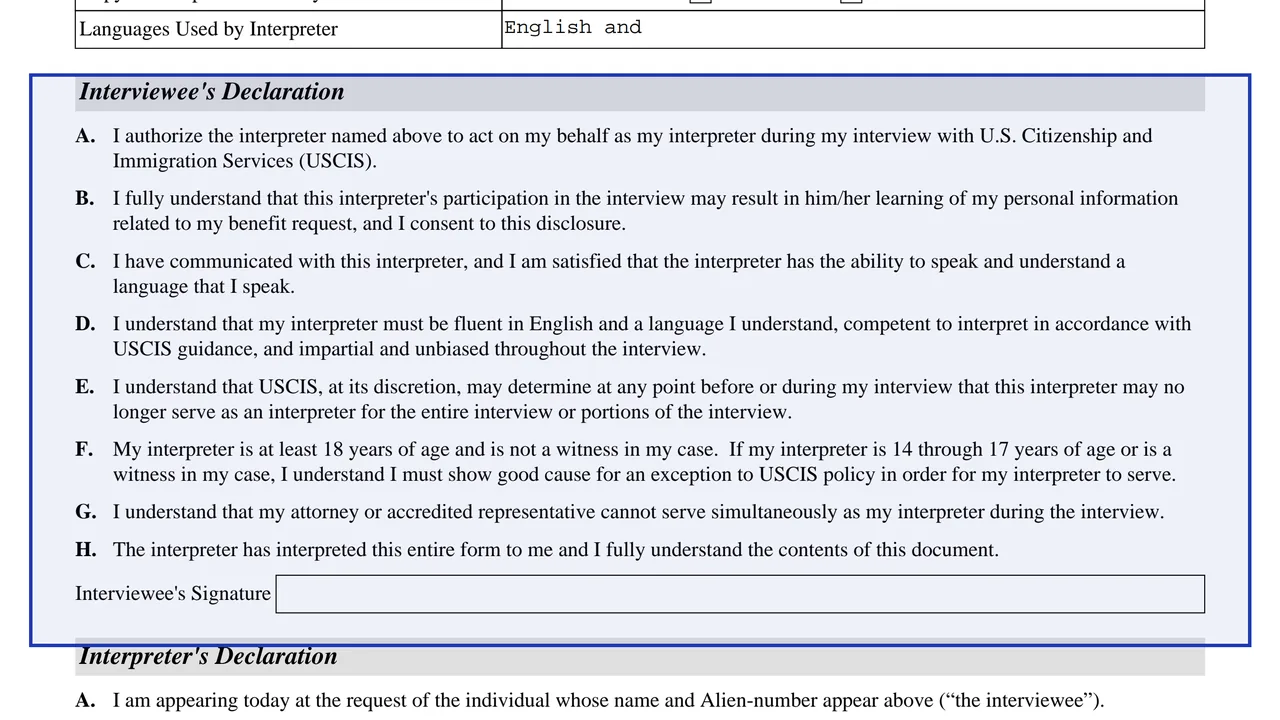
The interviewee's name, A-Number and native languages, the interpreter's name, address and telephone number, whether a copy of the interpreter's identity document is attached, and the languages used.
Statements A to H authorizing the interpreter, consenting to the interpreter learning personal information, confirming they share a language, and noting USCIS may stop the interpreter, then the interviewee's signature.
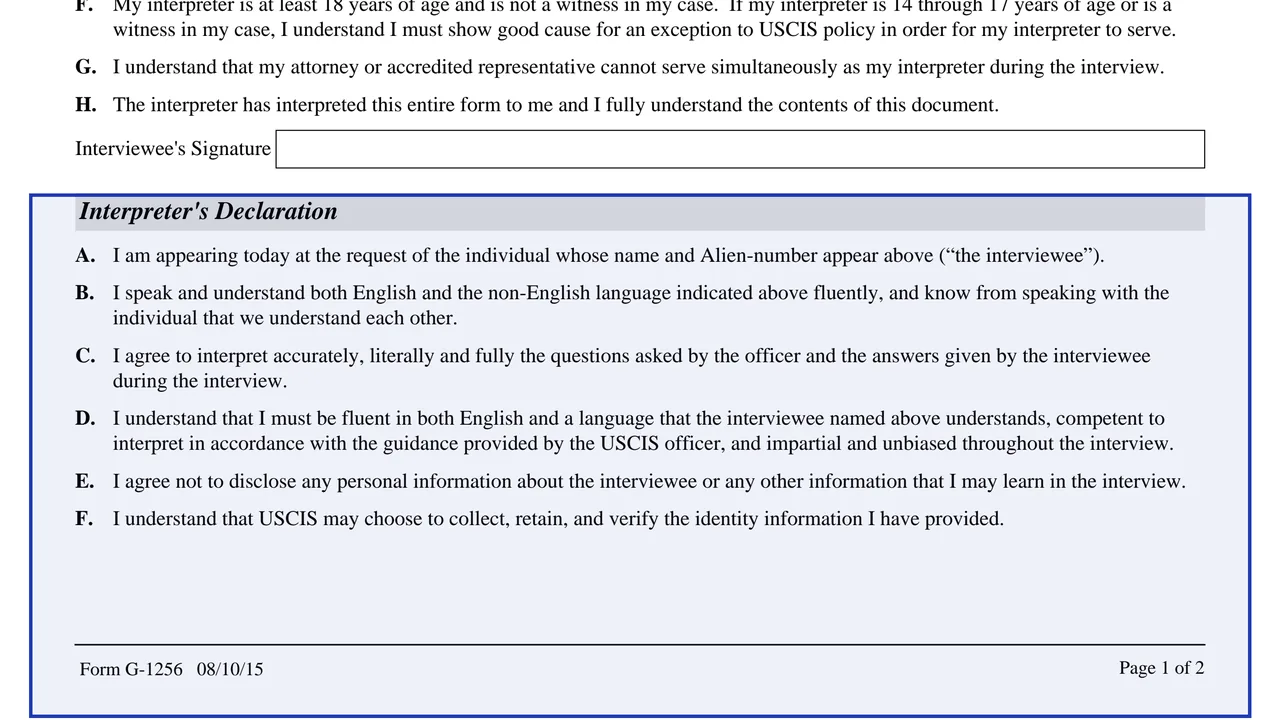
Statements A to H in which the interpreter agrees to interpret accurately, literally and fully, not to disclose personal information, and certifies being qualified, then signs and dates.
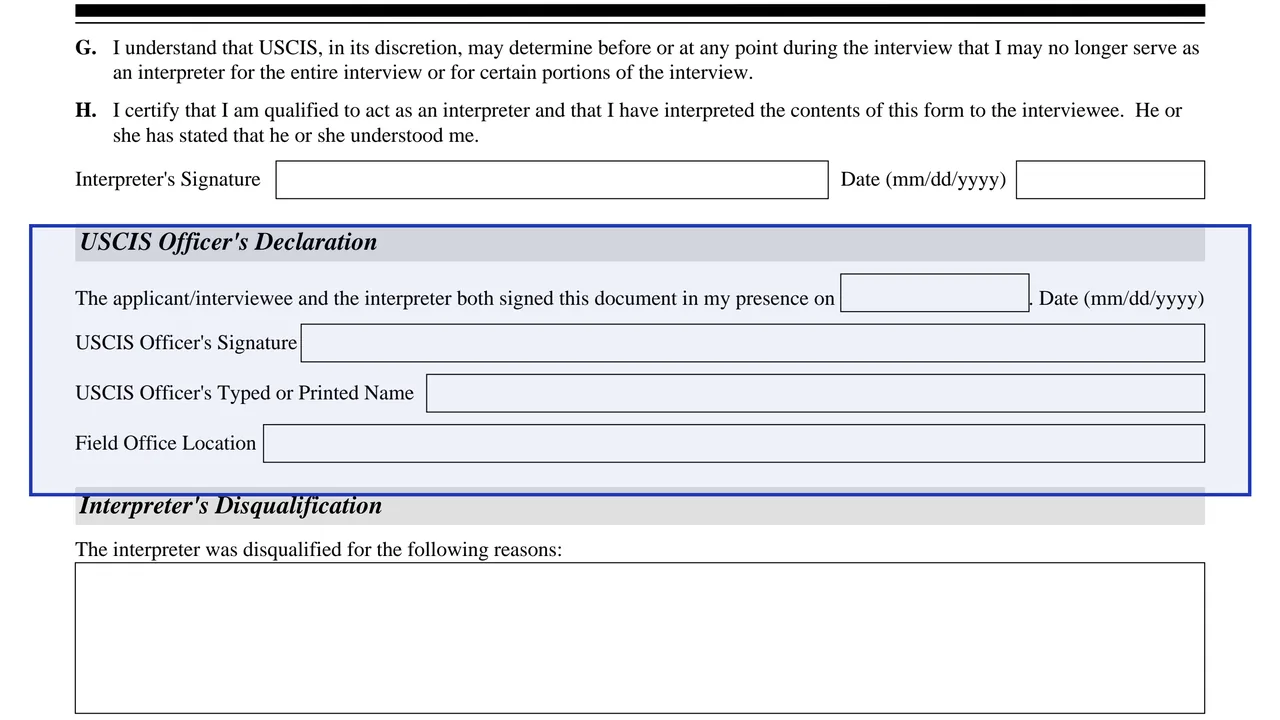
The date both people signed in the officer's presence, with the officer's signature, printed name and field office location.
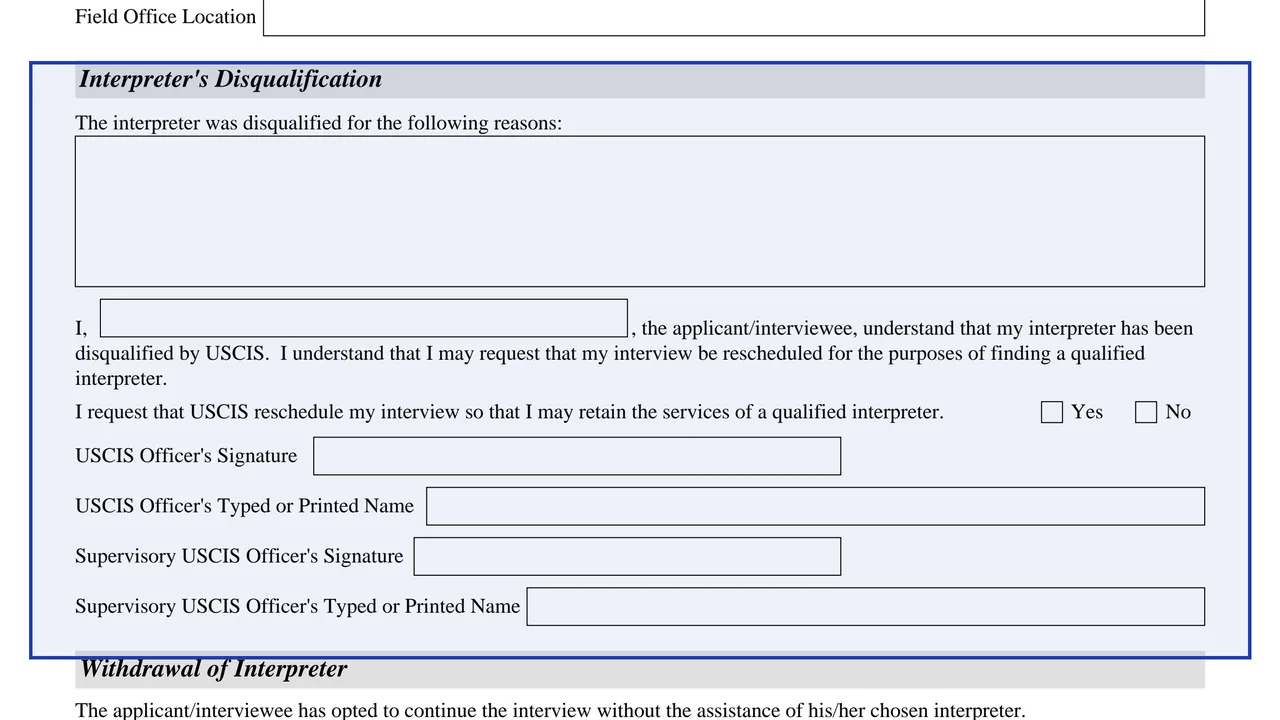
Space for the reasons an interpreter was disqualified, a Yes or No choice to ask that the interview be rescheduled to find a qualified interpreter, and officer and supervisory officer signatures.
Records that the interviewee chose to continue the interview without the chosen interpreter, signed by the officer and the interviewee.
The form is two pages.
The instructions say Form G-1256 may be obtained online before the interview or from the USCIS officer at the interview. This page lets you fill in the details online free, then print it.
Enter the interviewee's name, A-Number and native languages, and the interpreter's name, address, telephone number and the language used with English. Mark Yes or No for an attached copy of the interpreter's identity document.
The instructions say that before the interview begins, the interpreter interprets the contents of Form G-1256 to the interviewee. The officer then confirms the interviewee fully understands it.
The USCIS page says not to sign the form before the interview. The interviewee and the interpreter sign it in the presence of the interviewing officer.
The officer's declaration, the disqualification section and the withdrawal section are filled in at the interview, only when they apply.
You get the real form, filled in a browser tab, with nothing standing between you and the finished PDF.
The USCIS page says to bring the form to your scheduled domestic interview. The instructions say the officer places the completed form in the interviewee's file.
The G-1256 page lists no filing fee for this form. Fees for the underlying application or petition are on the USCIS Fee Schedule (Form G-1055), which can change.
The edition date is 08/10/15, printed at the bottom of each page. The USCIS page says to keep the edition date and page numbers visible on a printed copy, with all pages from the same edition.
The form asks whether a copy of the interpreter's identity document is attached, and the interpreter's declaration says USCIS may collect, retain and verify that identity information.
The instructions say the interviewee is offered the chance to proceed with another acceptable interpreter, reschedule to obtain one, or proceed voluntarily without an interpreter.
The instructions say the information is voluntary, but not providing it may delay a final decision or result in disqualification of the interpreter.
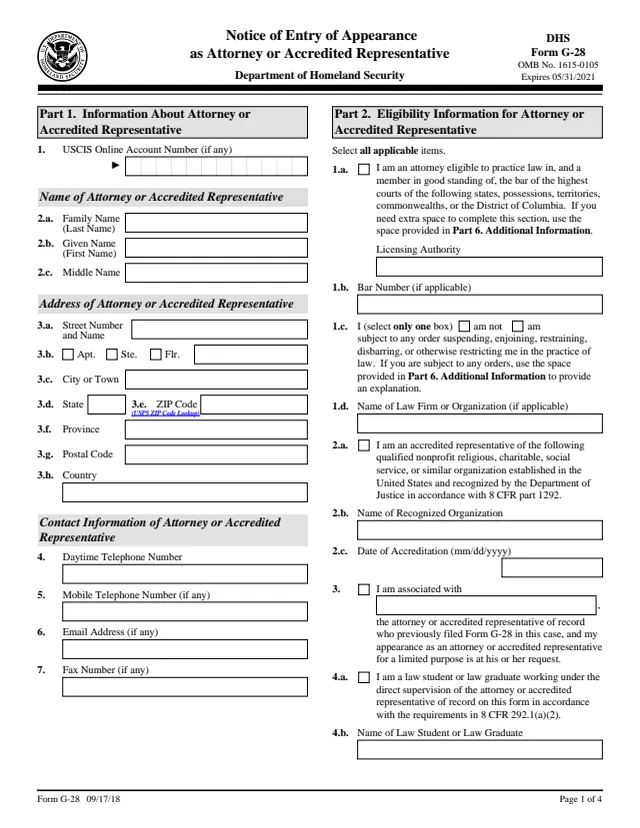
G-28
101 fields, 4 pages
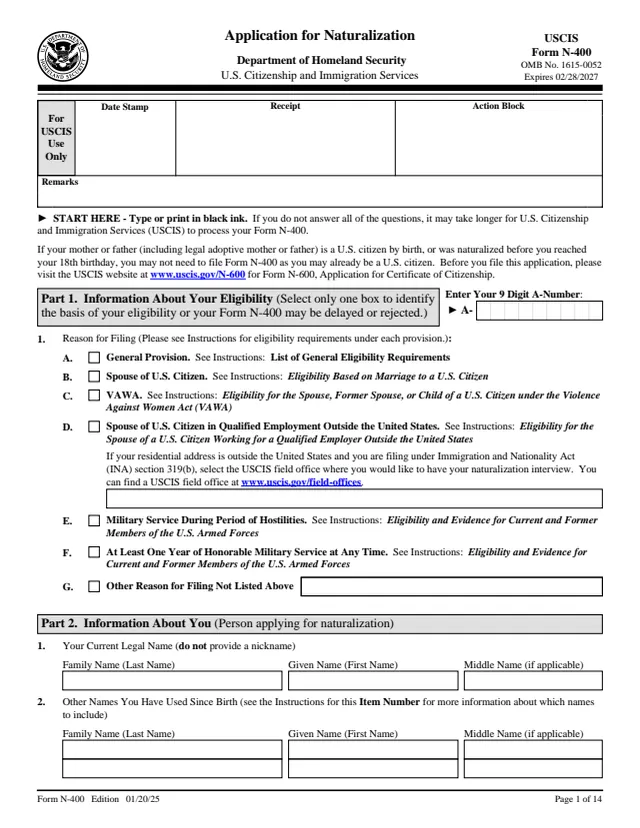
N-400
440 fields, 14 pages
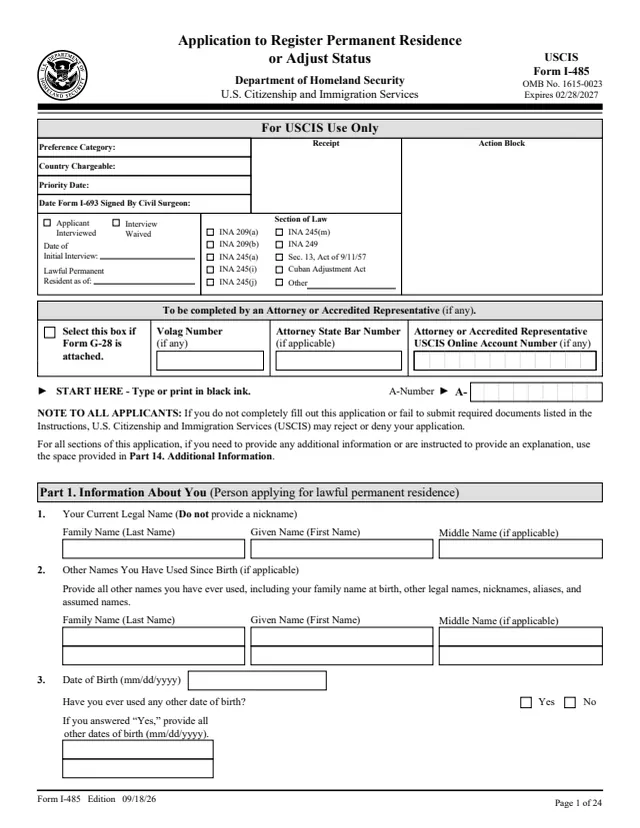
I-485
730 fields, 24 pages
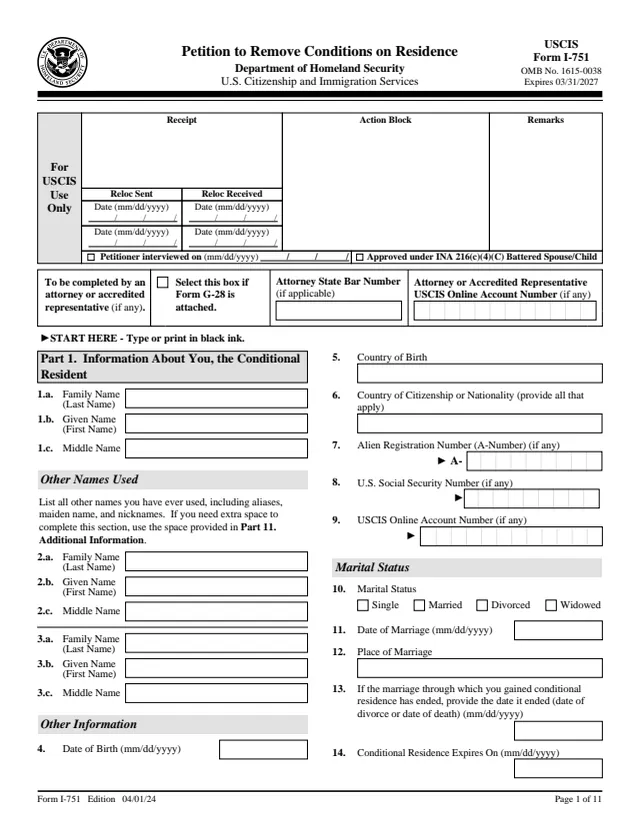
I-751
329 fields, 11 pages
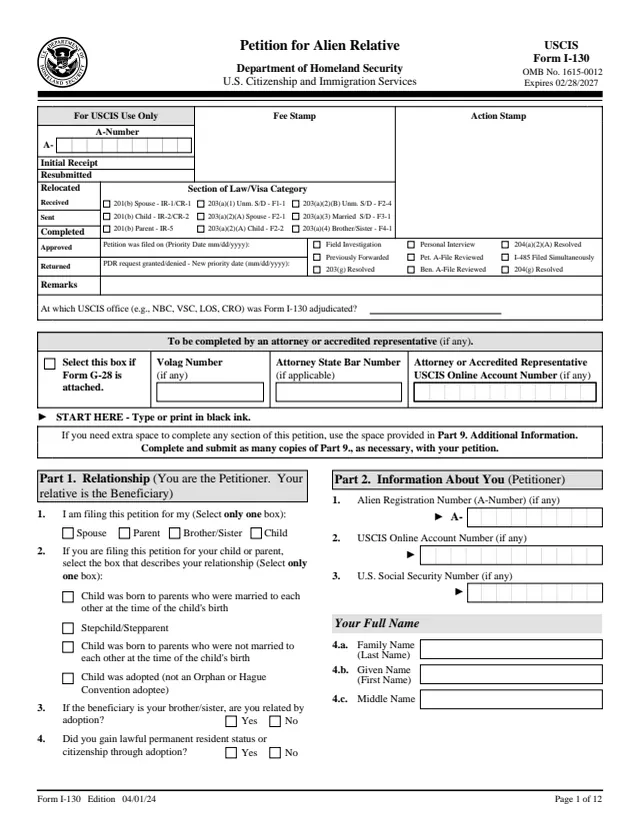
I-130
450 fields, 12 pages
No tool matches that search.
No. The USCIS page says not to sign it before the interview. The interviewee and the interpreter sign it in the presence of the interviewing officer.
No. The USCIS page says to bring it to the scheduled domestic interview. The instructions say it can also be obtained from the officer at the interview.
The instructions say the interpreter is at least 18. USCIS may allow someone 14 through 17 years of age, or a witness in the case, if the interviewee shows good cause for a discretionary exception.
No. The instructions say attorneys and accredited representatives cannot serve simultaneously as interpreters for their clients during the interview.
The instructions say the interviewee is offered the choice to proceed with another acceptable interpreter, reschedule the interview to obtain one, or proceed voluntarily without an interpreter.
The form says the interpreter may learn personal information related to the benefit request, and the interviewee consents to that. The interpreter agrees not to disclose it.