Line 1: qualified costs
Qualified enhanced oil recovery costs paid or incurred during the year for a qualified enhanced oil recovery project.
8830
Enhanced Oil Recovery Credit
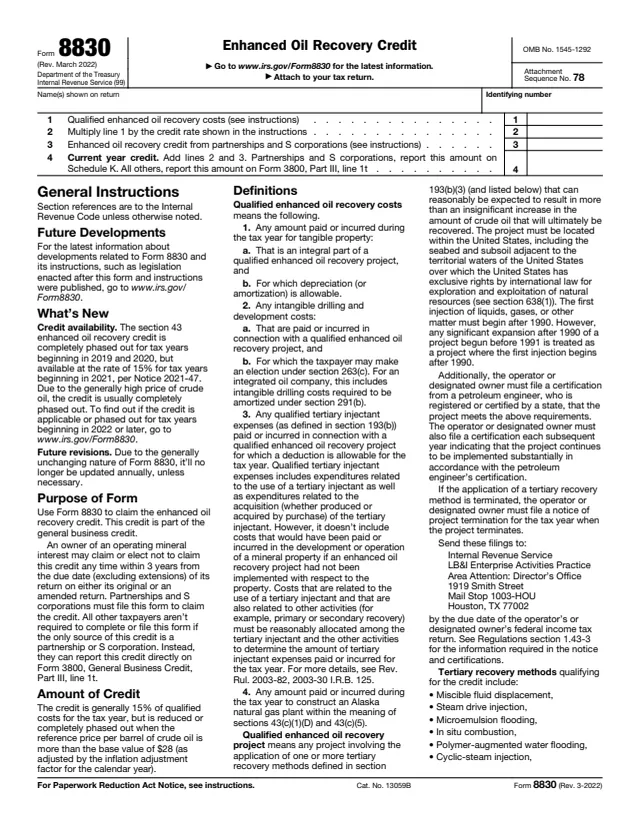
Form 8830 is used to claim the enhanced oil recovery credit, which the form says is part of the general business credit. The credit is based on qualified costs of enhanced oil recovery projects in the United States that apply tertiary recovery methods, such as steam drive injection or in situ combustion.
The form itself is four lines: qualified enhanced oil recovery costs, the credit rate applied to them, credits from partnerships and S corporations, and the current year credit. It is attached to the tax return, and its general and specific instructions are printed on the form.
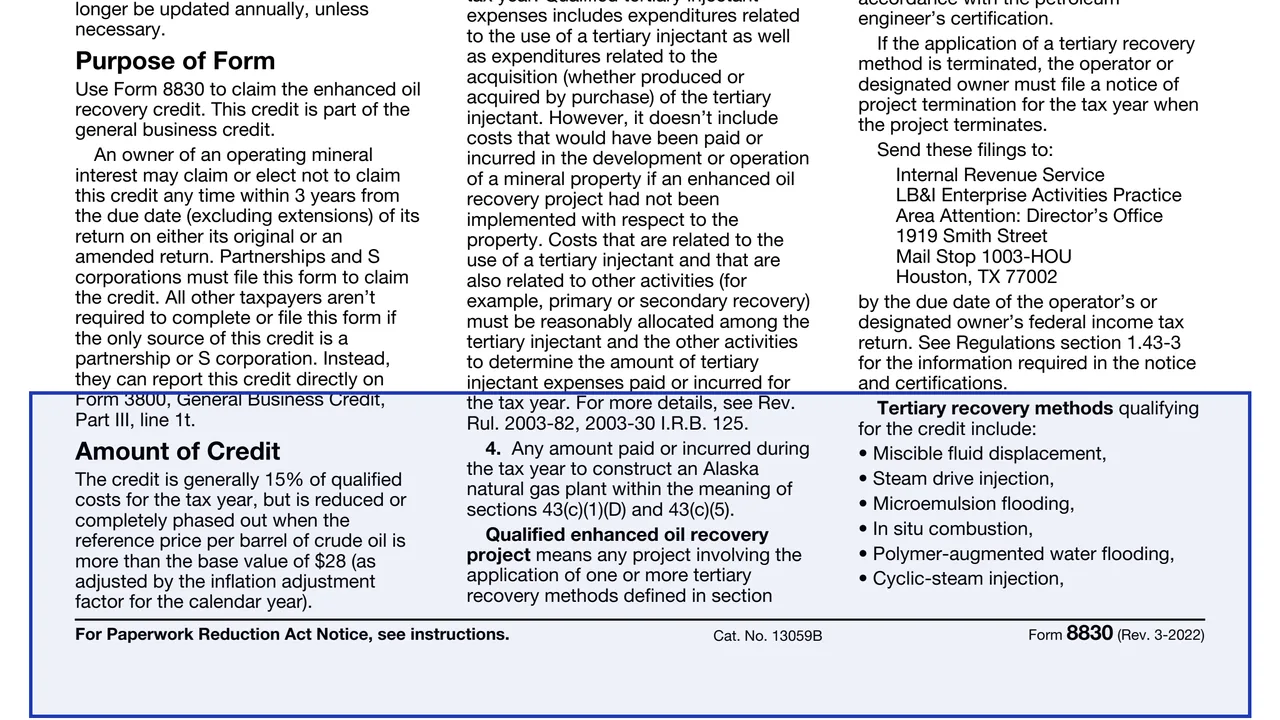
The instructions say the credit is generally 15% of qualified costs for the tax year, but is reduced or completely phased out when the reference price per barrel of crude oil is more than the base value of $28 as adjusted for inflation. The form points to www.irs.gov/Form8830 for tax years beginning in 2022 or later, and the About page lists an update for this revision per Notice 2025-32. This page covers the March 2022 revision. You can fill out the PDF free in your browser on this page and download it without an account.
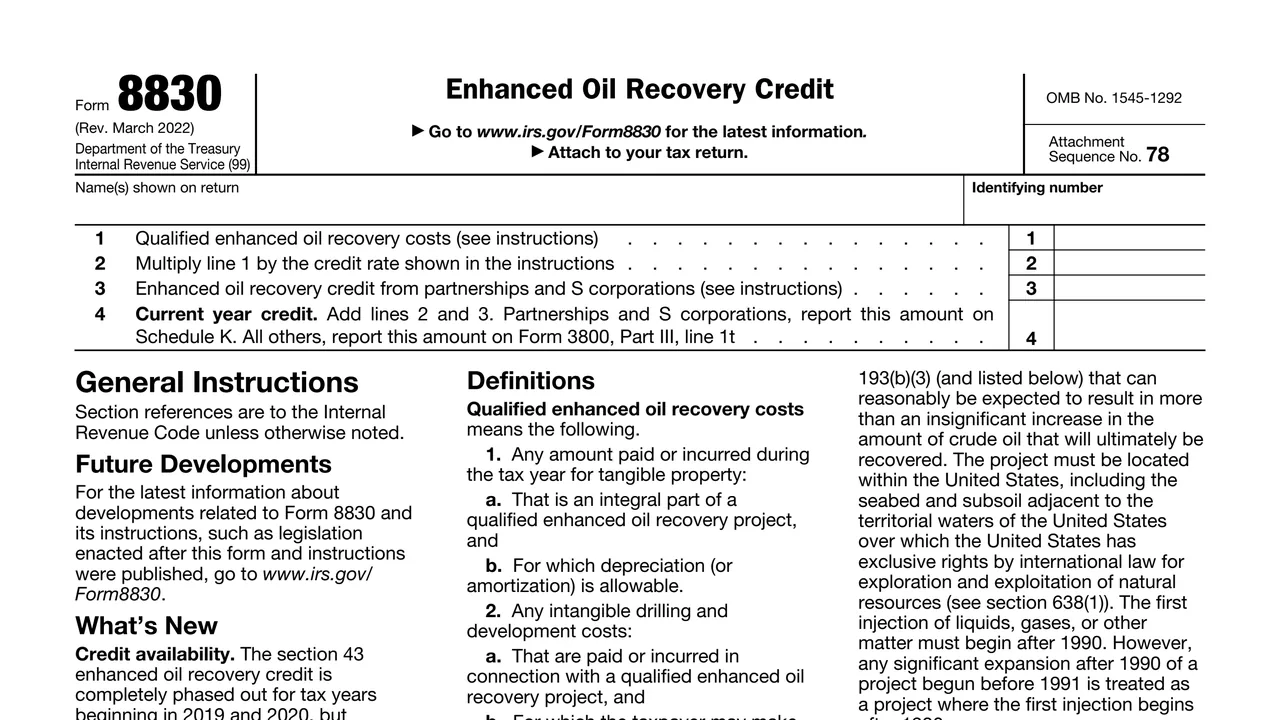
Qualified enhanced oil recovery costs paid or incurred during the year for a qualified enhanced oil recovery project.
Line 1 multiplied by the credit rate shown in the instructions.
Enhanced oil recovery credits from Schedule K-1 (Form 1065), box 15 (code P), and Schedule K-1 (Form 1120-S), box 13 (code P).
Lines 2 and 3 added together. Partnerships and S corporations report it on Schedule K; all others on Form 3800, Part III, line 1t.
The instructions define qualified costs: certain tangible property, intangible drilling and development costs, qualified tertiary injectant expenses, and costs to construct an Alaska natural gas plant.
The instructions list qualifying methods, including miscible fluid displacement, steam drive injection, polymer-augmented water flooding and carbonated water flooding.
Enter the name or names shown on the return and the identifying number.
Enter the total qualified costs for the year. The instructions say to skip lines 1 and 2 if you are only claiming a credit allocated from an S corporation or a partnership.
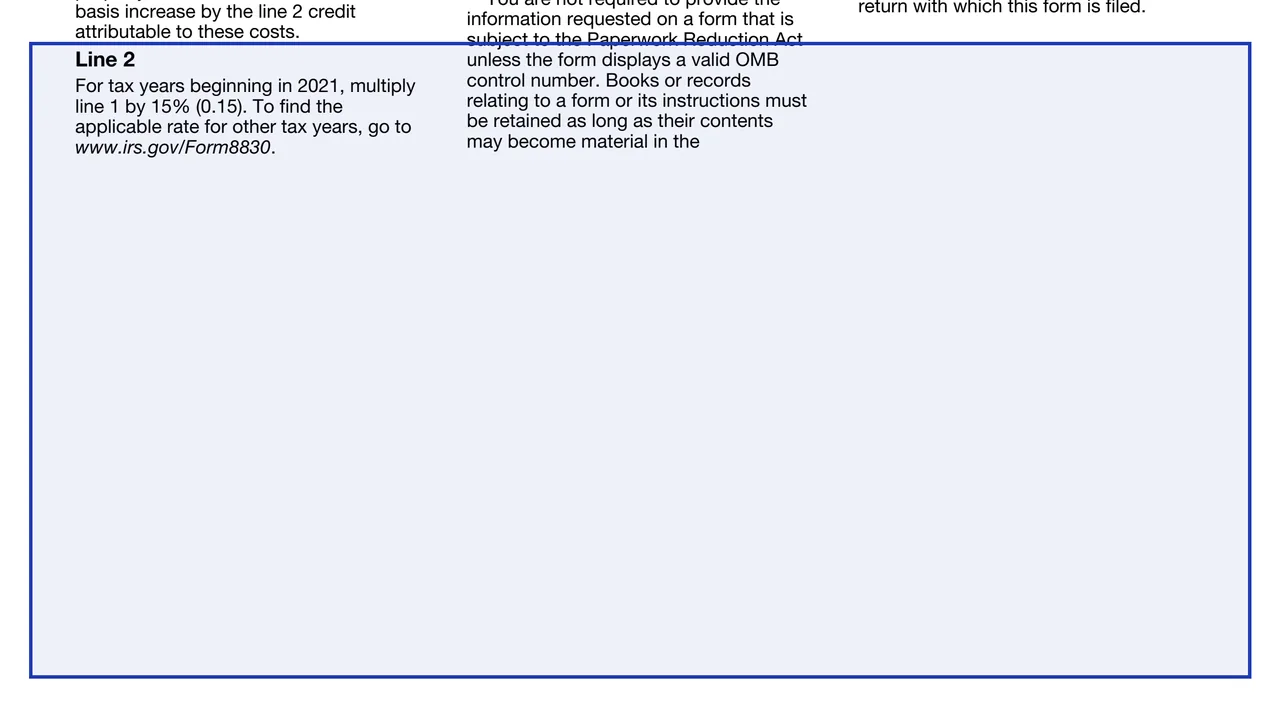
Multiply line 1 by the credit rate. The instructions say to use 15% (0.15) for tax years beginning in 2021 and to go to www.irs.gov/Form8830 for the rate for other tax years.
Enter credits from Schedule K-1 (Form 1065), box 15 (code P), and Schedule K-1 (Form 1120-S), box 13 (code P). Partnerships and S corporations always report these on line 3.
Add lines 2 and 3 and report the result on Schedule K, or on Form 3800, Part III, line 1t, as the form says.
The instructions say to reduce the otherwise allowable deductions for line 1 costs by the line 2 credit attributable to them, and to reduce any basis increase the same way.
You get the real form, filled in a browser tab, with nothing standing between you and the finished PDF.
The form says to attach it to your tax return. Its attachment sequence number is 78.
The instructions say the credit was completely phased out for tax years beginning in 2019 and 2020, and available at the rate of 15% for tax years beginning in 2021, per Notice 2021-47.
The form points to www.irs.gov/Form8830 to find out whether the credit applies or is phased out for tax years beginning in 2022 or later. The About page lists an update for this revision per Notice 2025-32.
The operator or designated owner sends the petroleum engineer's certification, yearly certifications and any project termination notice to Internal Revenue Service, LB&I Enterprise Activities Practice Area Attention: Director's Office, 1919 Smith Street, Mail Stop 1003-HOU, Houston, TX 77002, by the due date of its federal income tax return.
The instructions say that, due to its generally unchanging nature, Form 8830 will no longer be updated annually unless necessary.
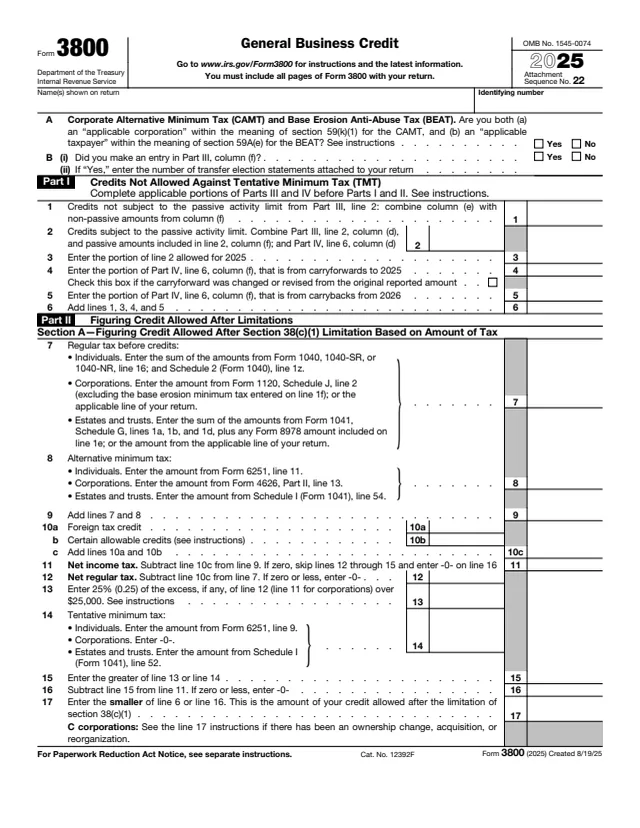
3800
1,921 fields, 9 pages
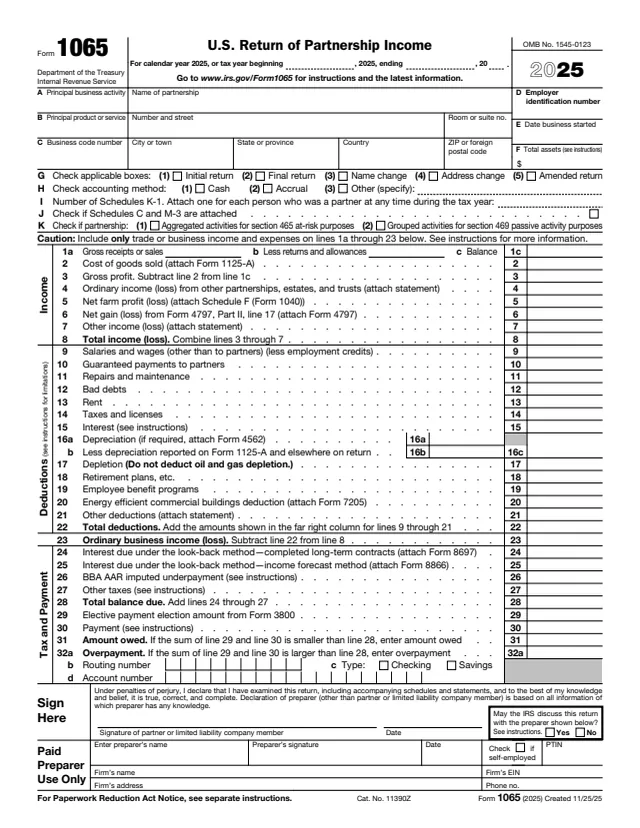
1065
440 fields, 6 pages
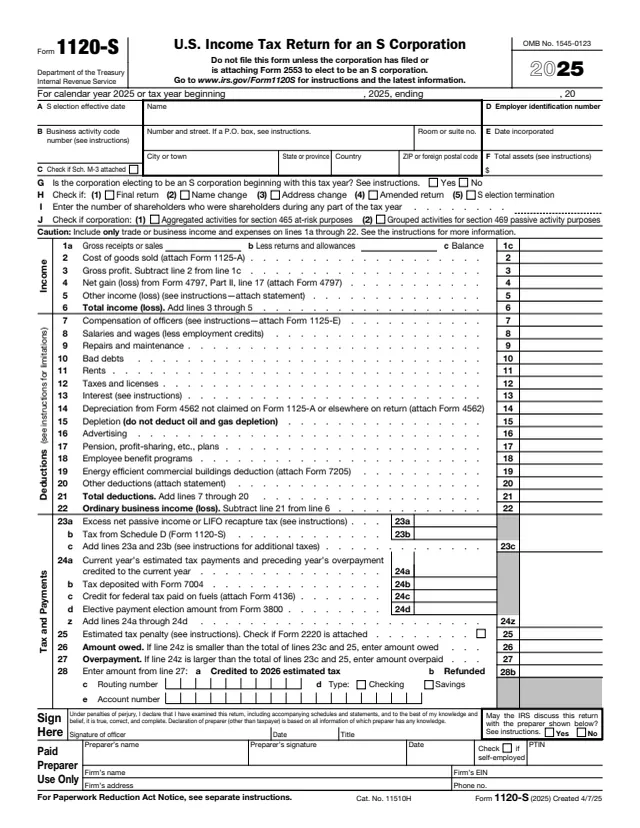
1120-S
390 fields, 5 pages
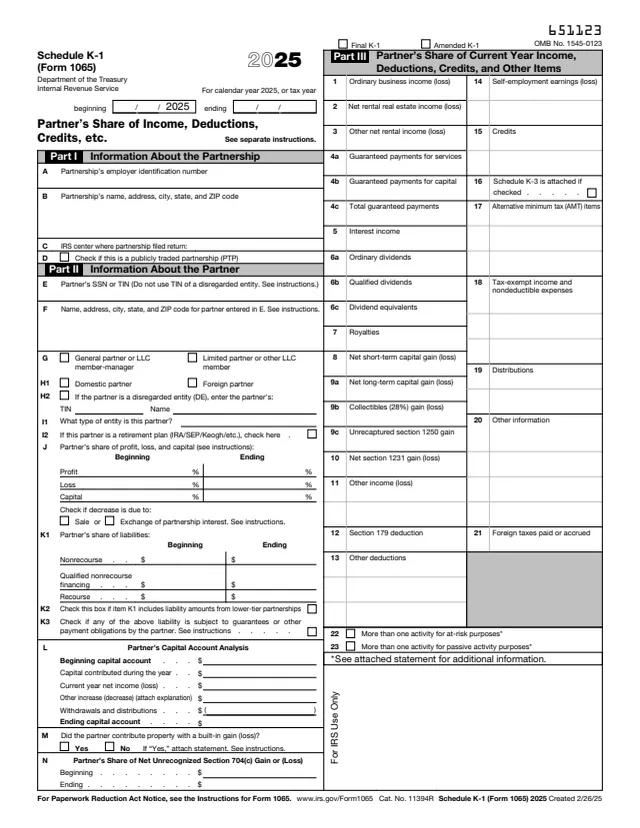
1065
111 fields, 1 page
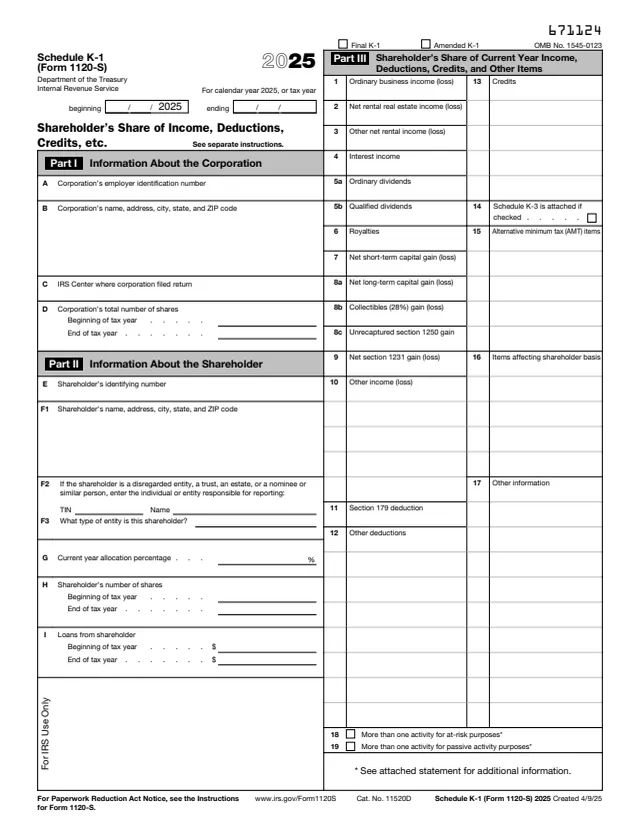
1120-S
114 fields, 1 page
The taxpayer claiming the credit completes the form and attaches it to its tax return filed with the IRS.
No tool matches that search.
The instructions say taxpayers other than partnerships and S corporations are not required to file it if the only source of the credit is a partnership or S corporation. They report the credit on Form 3800, Part III, line 1t.
The instructions say the credit is generally 15% of qualified costs, reduced or completely phased out when the reference price per barrel of crude oil is more than the base value of $28 as adjusted for inflation.
The form says to go to www.irs.gov/Form8830 for tax years beginning in 2022 or later. It also says that, due to the generally high price of crude oil, the credit is usually completely phased out.
The instructions say an owner of an operating mineral interest may claim or elect not to claim it any time within 3 years from the due date (excluding extensions) of its return, on an original or amended return.
Partnerships and S corporations report it on Schedule K. All others report it on Form 3800, Part III, line 1t.
The instructions say that, due to the generally unchanging nature of Form 8830, it will no longer be updated annually unless necessary.