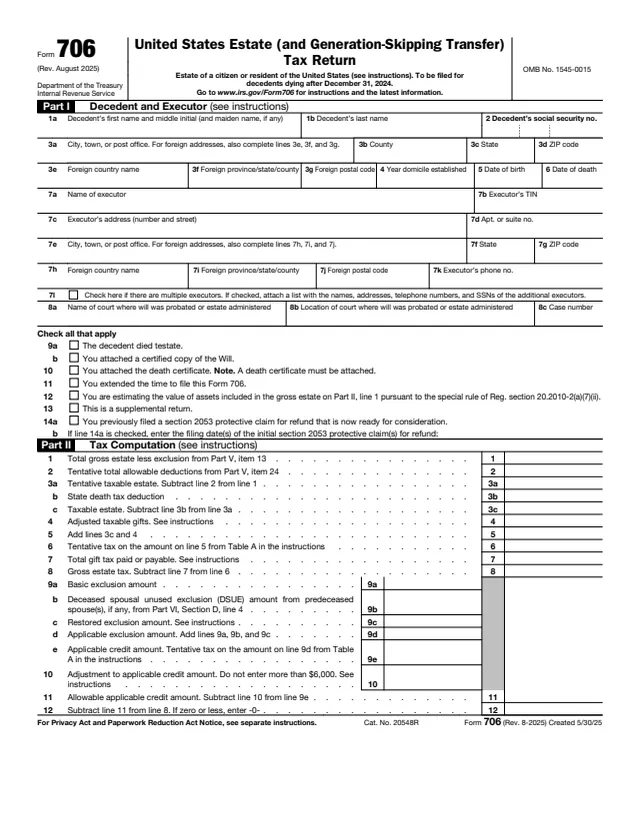
Estate and date of death
The name of the estate and the decedent's date of death at the top of the form.
4421
Declaration Executor's Commissions and Attorney's Fees
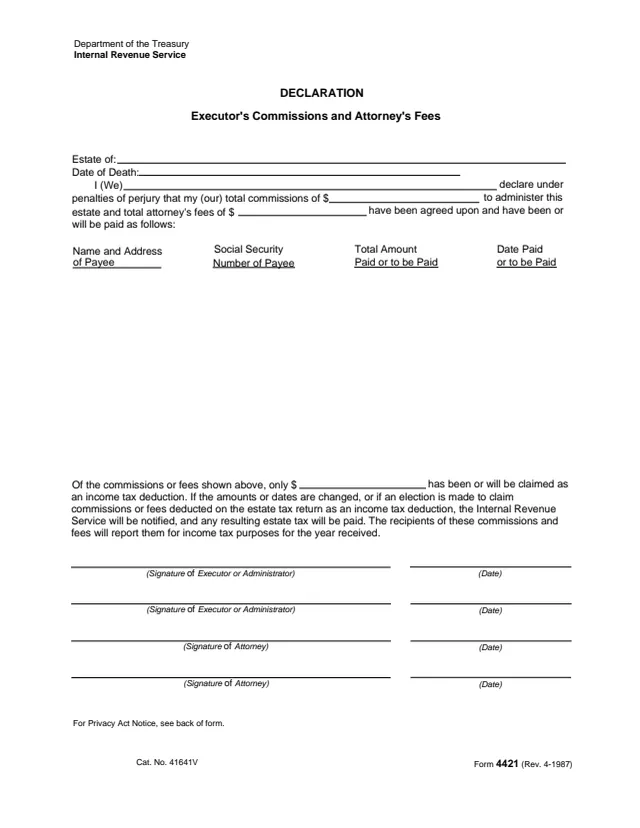
Form 4421 is a one-page IRS declaration, made under penalties of perjury, of the total executor's commissions to administer an estate and the total attorney's fees that have been agreed upon, and how they have been or will be paid. It names the estate and the date of death, then lists each payee with the amount and date paid or to be paid.
The declaration also states how much of those commissions or fees has been or will be claimed as an income tax deduction. It says the IRS will be notified if the amounts or dates change, or if an election is made to claim commissions or fees deducted on the estate tax return as an income tax deduction, and that any resulting estate tax will be paid.
The PDF prints no filing instructions. You can fill it out free in your browser on this page and download the result without an account.
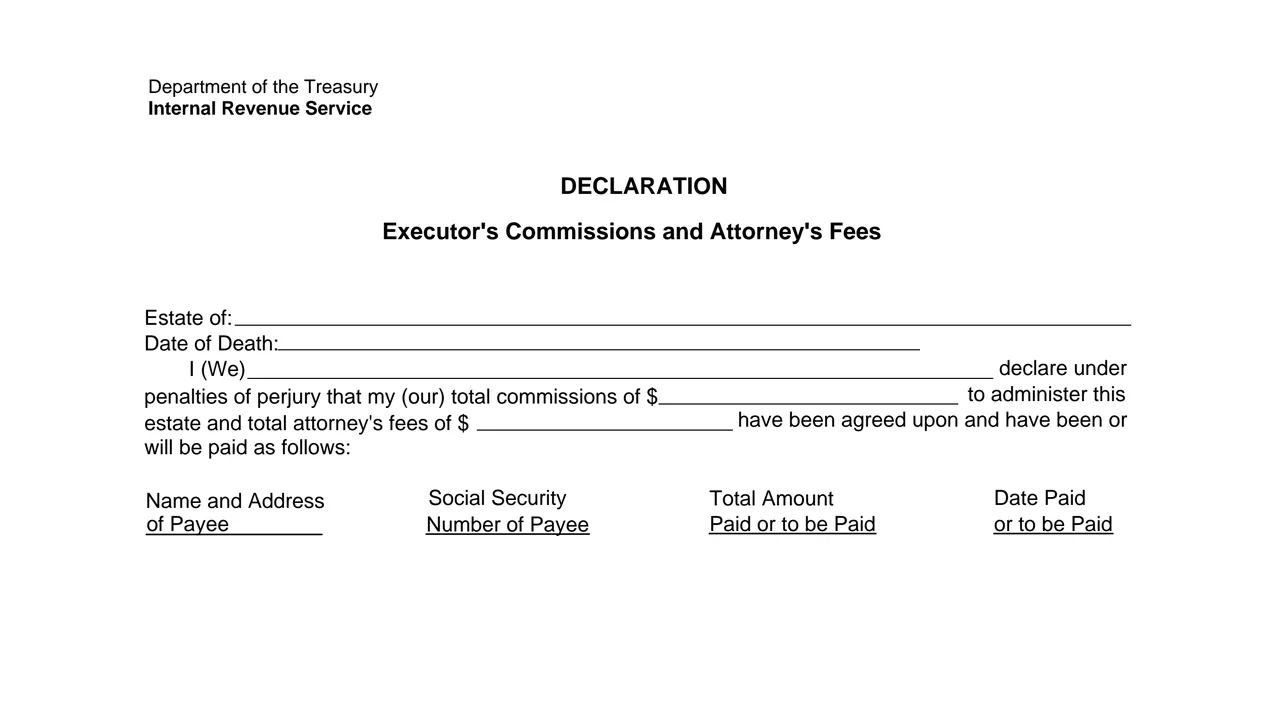
The name of the estate and the decedent's date of death at the top of the form.
The names of the declarants and the dollar totals of commissions to administer the estate and of attorney's fees agreed upon.
Columns for the name and address of each payee, the payee's social security number, the total amount paid or to be paid, and the date paid or to be paid.
The part of the commissions or fees that has been or will be claimed as an income tax deduction, with the notification statement.
Four signature and date lines, two for executors or administrators and two for attorneys, with the Privacy Act Notice on the back.
Enter the name of the estate and the date of death.
Enter the names of the people making the declaration, the total commissions to administer the estate and the total attorney's fees agreed upon.
For each payee, enter the name and address, social security number, total amount paid or to be paid, and the date paid or to be paid.
Enter the amount of the commissions or fees shown that has been or will be claimed as an income tax deduction.
The executor or administrator and the attorney sign and date on the lines provided.
You get the real form, filled in a browser tab, with nothing standing between you and the finished PDF.
The declarants state the agreed commissions and fees under penalties of perjury.
The form says the IRS will be notified if the amounts or dates change, or if an election is made to claim commissions or fees deducted on the estate tax return as an income tax deduction, and any resulting estate tax will be paid.
The form says the recipients of these commissions and fees will report them for income tax purposes for the year received.
The form does not print a mailing address, deadline or the return it goes with. Its Privacy Act Notice says to call or visit any Internal Revenue Service office with questions about filing.
The form is a declaration by the people who administer the estate and the attorneys paid from it, not by the heirs.
No tool matches that search.
The executor or administrator of the estate and the attorney. The form has two signature lines for each.
The name and address of each payee, the payee's social security number, the total amount paid or to be paid, and the date paid or to be paid.
The form says the IRS will be notified if the amounts or dates are changed, and any resulting estate tax will be paid.
The PDF prints no filing instructions. Its back page holds only the Privacy Act Notice, which says to call or visit any Internal Revenue Service office with questions about filing.