Line 1
Name of the taxpayer applying, as shown on Form 1040, Social Security number, address and an optional telephone number.
4361
Application for Exemption From Self-Employment Tax for Use by Ministers, Members of Religious Orders and Christian Science Practitioners
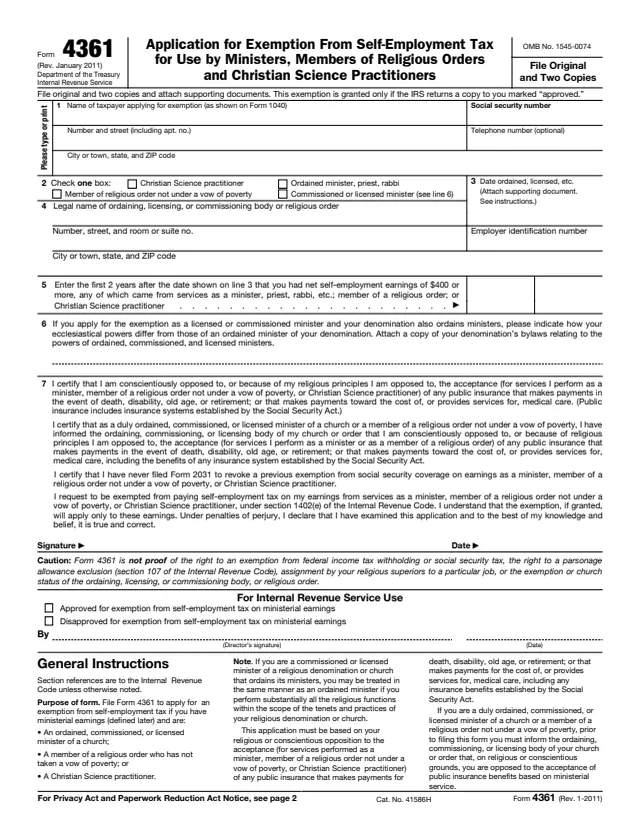
Form 4361 is the Application for Exemption From Self-Employment Tax for Use by Ministers, Members of Religious Orders and Christian Science Practitioners. The IRS says it is filed to apply for an exemption from self-employment tax by someone with ministerial earnings who is an ordained, commissioned, or licensed minister of a church; a member of a religious order who has not taken a vow of poverty; or a Christian Science practitioner.
The instructions say the application is based on religious or conscientious opposition to accepting public insurance, including Social Security, for ministerial services. The exemption covers only ministerial earnings. The form says the exemption is granted only if the IRS returns a copy marked "approved," and the instructions say an approved exemption cannot be revoked.
This is the January 2011 revision, the one the IRS page links as current. You can fill out Form 4361 free in your browser on this page and download it without an account.
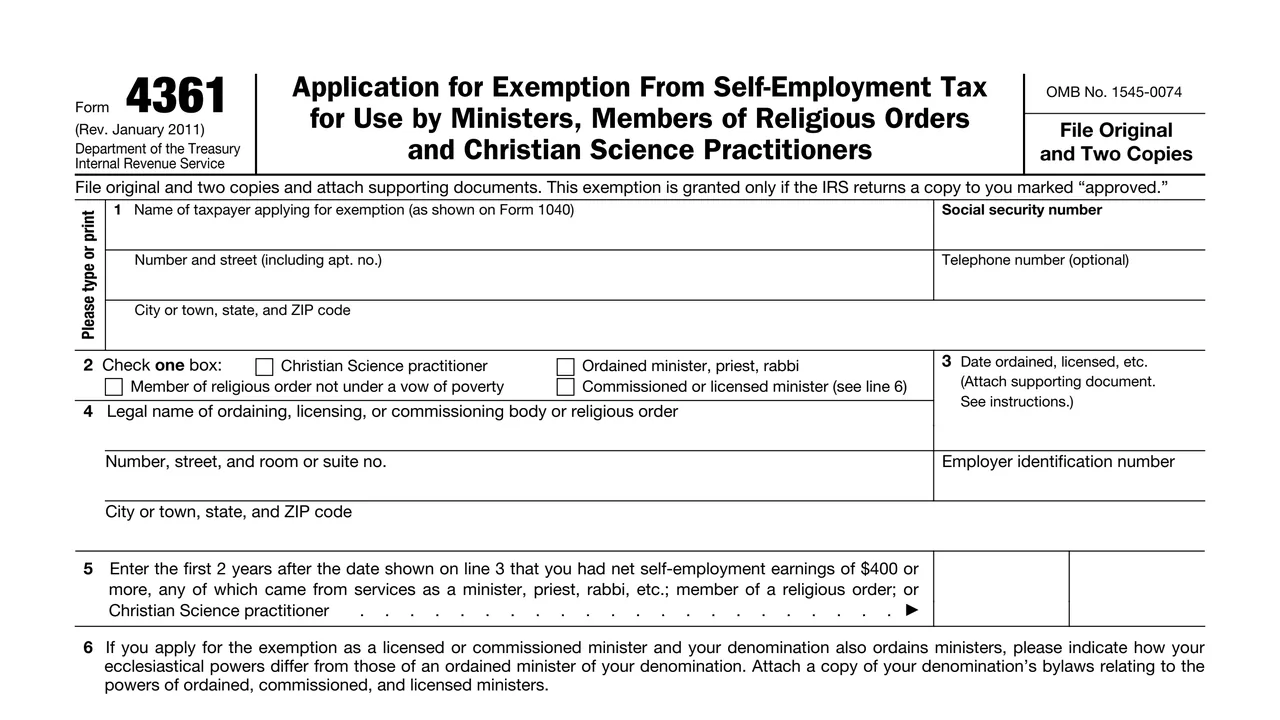
Name of the taxpayer applying, as shown on Form 1040, Social Security number, address and an optional telephone number.
One box for your role, and the date you were ordained, licensed or similar, with a supporting document attached.
Legal name, address and employer identification number of the ordaining, licensing or commissioning body or religious order.
The first 2 years after the line 3 date with net self-employment earnings of $400 or more from ministerial services, and, for licensed or commissioned ministers, how their powers differ.
Certifications of opposition to public insurance, of informing your church or order, and of never filing Form 2031, then the request, signature and date.
Boxes the IRS checks to approve or disapprove the exemption on ministerial earnings, with the director's signature and date.
Enter your name as shown on Form 1040, your Social Security number and your address. The telephone number is optional.
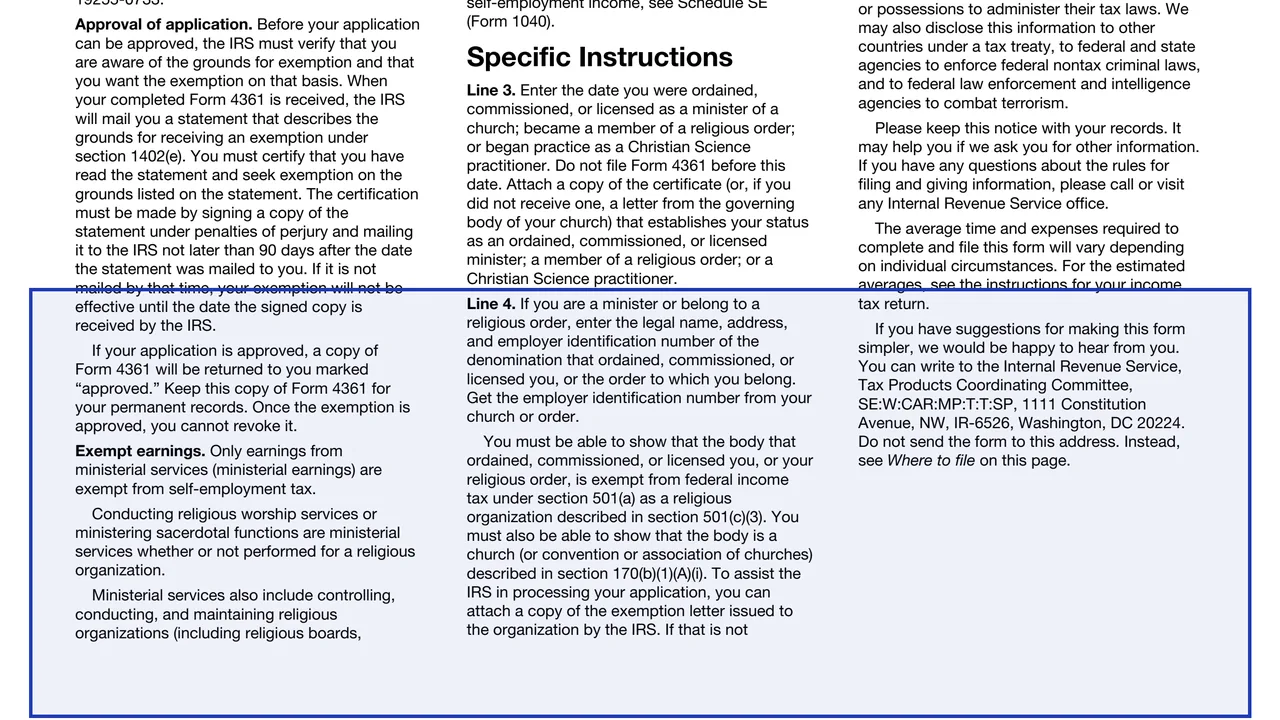
Check one box and enter the date you were ordained, commissioned or licensed, became a member of the order, or began practice. The instructions say not to file before this date and to attach the certificate or a letter from your church.
Enter the legal name, address and EIN of the body that ordained, commissioned or licensed you, or your order. The instructions say to get the EIN from your church or order.
Enter the first 2 years after the line 3 date in which you had net self-employment earnings of $400 or more, any of which came from ministerial services.
The instructions say you can attach the IRS exemption letter of the ordaining body, or a letter from an authorized individual that it meets both requirements, to help processing.
Read the certifications, then sign and date. The instructions say ministers and order members inform their church or order of their opposition before filing.
You get the real form, filled in a browser tab, with nothing standing between you and the finished PDF.
The instructions say to mail the original and two copies to: Department of the Treasury, Internal Revenue Service Center, Philadelphia, PA 19255-0733.
By the due date, including extensions, of your tax return for the second tax year in which you had at least $400 of net earnings from self-employment, any of which came from ministerial services.
The IRS mails a statement describing the grounds for exemption. The instructions say to sign a copy under penalties of perjury and mail it back not later than 90 days after it was mailed to you.
If approved, a copy of Form 4361 comes back marked "approved." The instructions say to keep it for your permanent records.
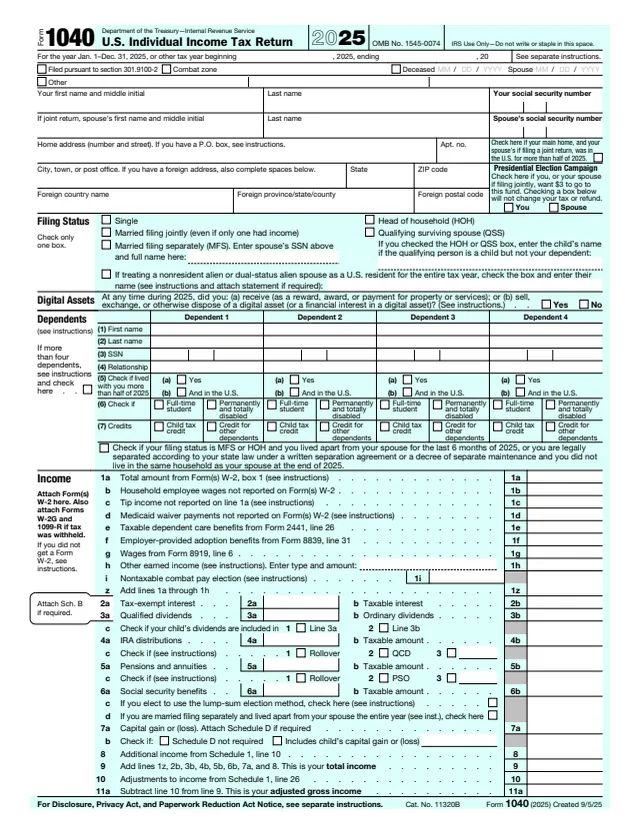
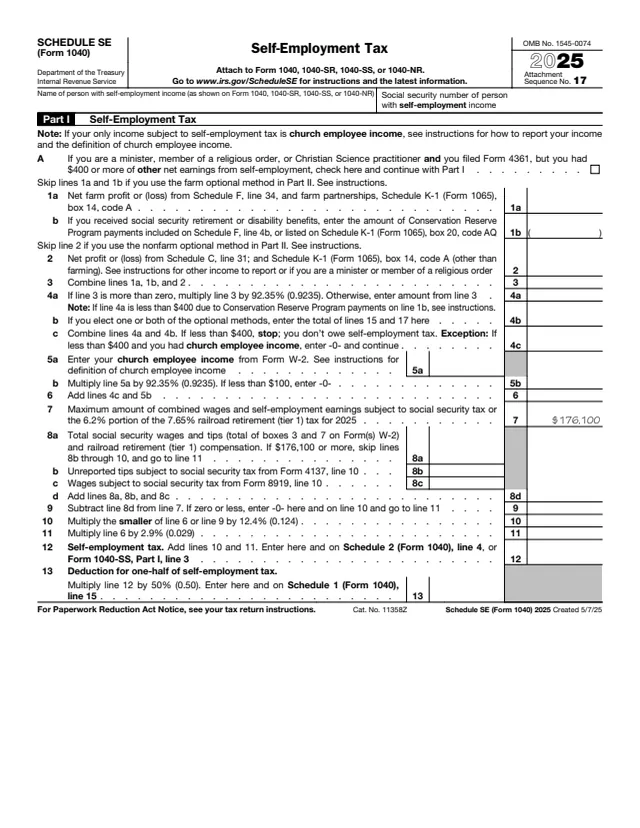
If approved and your only self-employment income was from ministerial services, the instructions say to note the Form 4361 exemption on the self-employment tax line of Form 1040. Other self-employment income: see Schedule SE.
The form cautions that it is not proof of exemption from income tax withholding or social security tax, a parsonage allowance exclusion, a job assignment, or the church body's exempt status.
The applicant files it with the IRS, and an IRS director marks it approved or disapproved. The form names three groups who apply when they have ministerial earnings.
No tool matches that search.
The instructions say to mail the original and two copies to Department of the Treasury, Internal Revenue Service Center, Philadelphia, PA 19255-0733.
The form says to file the original and two copies and attach supporting documents.
The instructions say that once the exemption is approved, you cannot revoke it.
No. The instructions say only earnings from ministerial services are exempt from self-employment tax. Earnings from services that are not ministerial are not exempt.
The instructions say for all tax years ending after 1967 in which you have net self-employment earnings of $400 or more, any of it from ministerial services. They point to Pub. 517 about refunds.
No. The form says it is not proof of the right to a parsonage allowance exclusion under section 107 of the Internal Revenue Code.