Header: tax year and names
The calendar or other tax year the decedent was due a refund, the decedent's name, date of death and Social Security number, and the claimant's name, Social Security number and address.
1310
Statement of Person Claiming Refund Due a Deceased Taxpayer
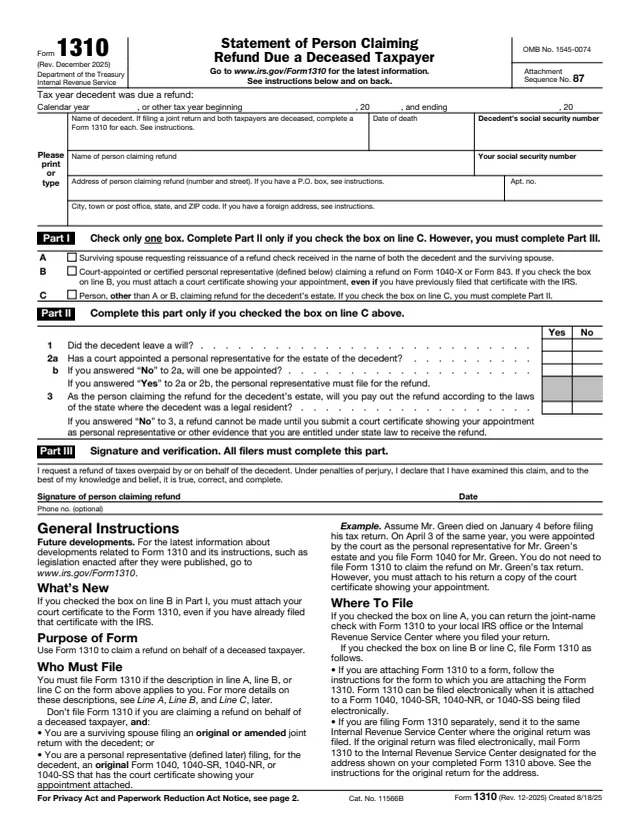
Form 1310 is the statement a person files to claim a federal tax refund on behalf of a taxpayer who has died. The IRS describes its purpose in one line: use Form 1310 to claim a refund on behalf of a deceased taxpayer.
The form identifies the decedent, the tax year the refund is due for and the person claiming it. That person checks one of three boxes: a surviving spouse asking for a joint-name refund check to be reissued, a court-appointed or certified personal representative claiming a refund on Form 1040-X or Form 843, or another person claiming the refund for the decedent's estate. The instructions are printed on the form itself.
The form also lists cases where it is not filed, such as a surviving spouse filing a joint return with the decedent. You can fill out Form 1310 free in your browser on this page and download it without an account.
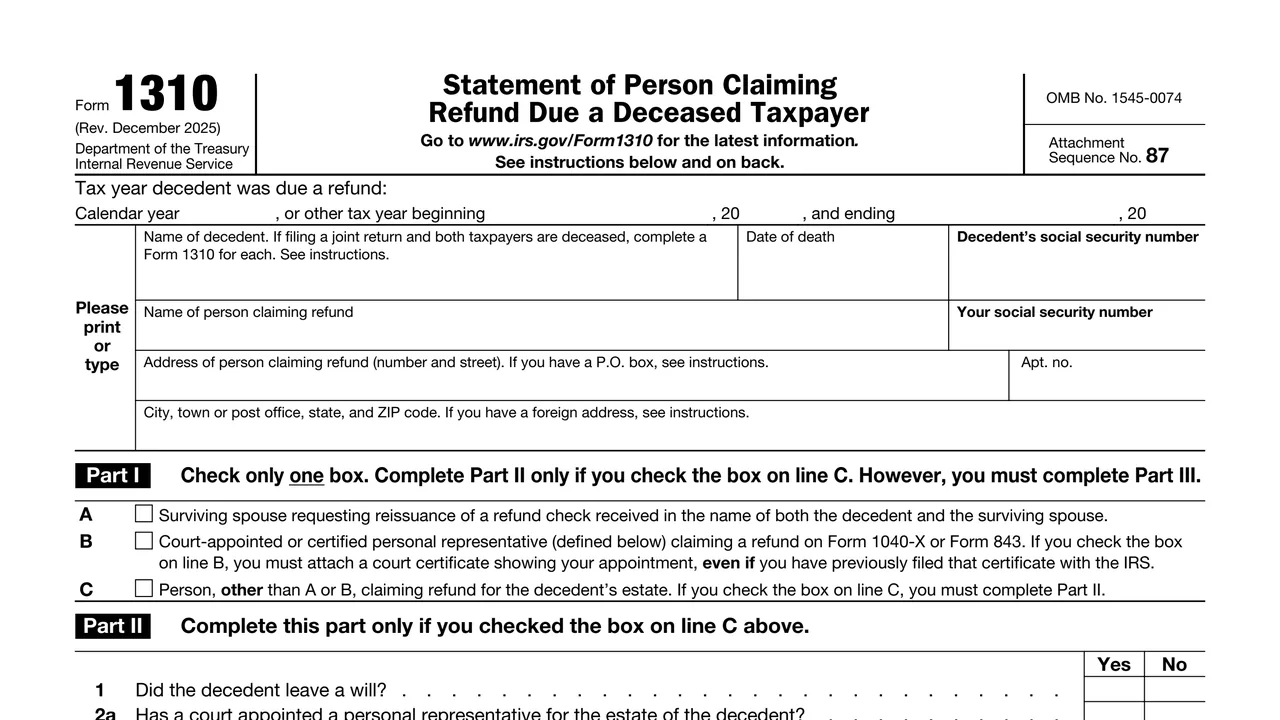
The calendar or other tax year the decedent was due a refund, the decedent's name, date of death and Social Security number, and the claimant's name, Social Security number and address.
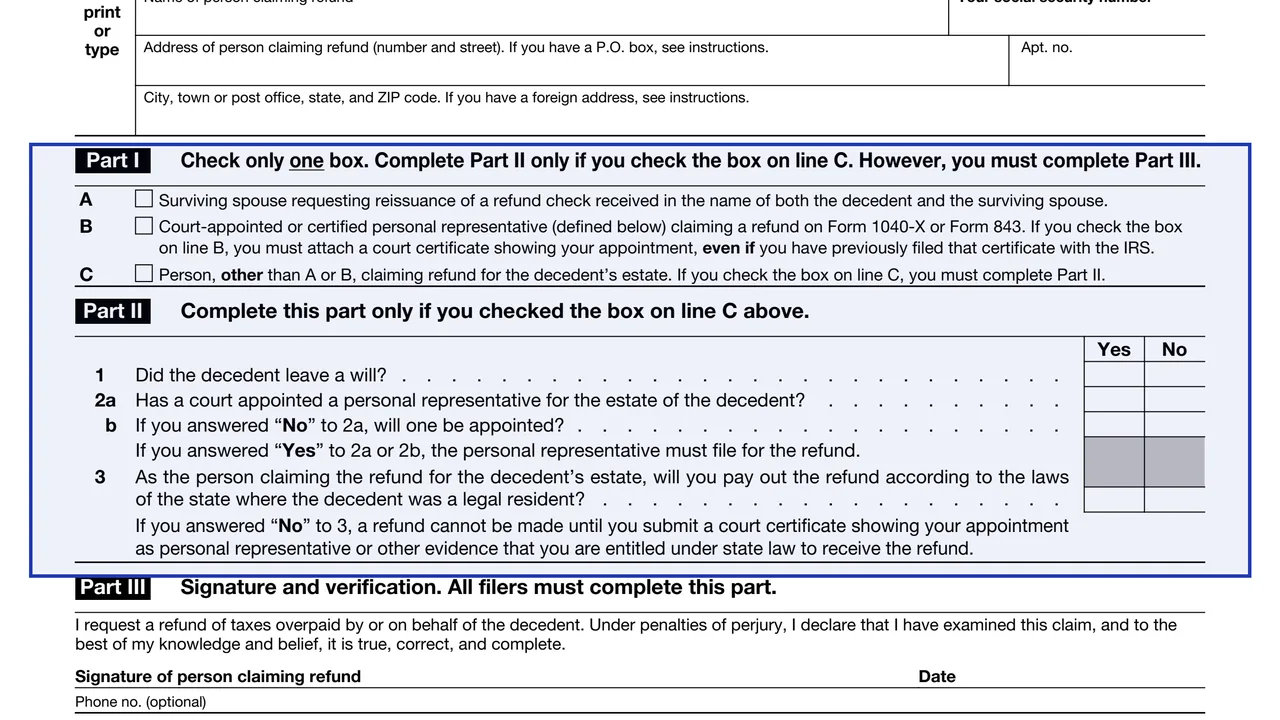
Line A for a surviving spouse requesting a reissued check, line B for a court-appointed or certified personal representative, and line C for any other person claiming for the estate.
Yes or no questions: whether the decedent left a will, whether a court appointed or will appoint a personal representative, and whether the refund will be paid out under the laws of the state where the decedent was a legal resident.
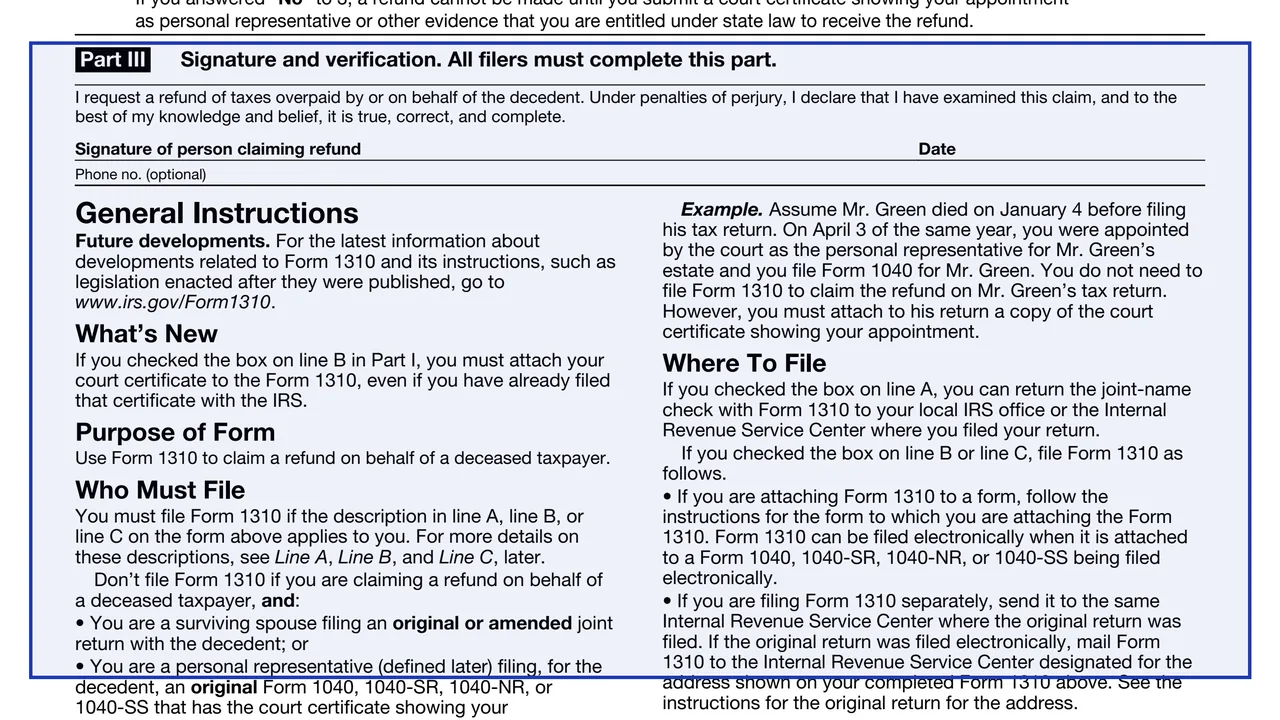
A refund request signed under penalties of perjury by the person claiming the refund, with the date and an optional phone number. The form says all filers complete this part.
Enter the tax year the refund is due for and the decedent's name, date of death and SSN. The instructions say that when both spouses on a joint return are deceased, a separate Form 1310 is completed for each and both are attached to the return.
Enter your name, SSN and address. The instructions say to use a P.O. box only if your post office does not deliver mail to your home. For a foreign address, enter city, province or state, and country, without abbreviating the country name.
Line A only if you received a refund check in your name and your deceased spouse's name. Line B only if you are the court-appointed or certified personal representative. Line C if neither applies and there is no court-appointed or certified personal representative.
For line B the form says to attach a copy of the court certificate showing the appointment, even if it was already sent to the IRS. For line A the instructions describe returning the joint-name check marked VOID with a written request for reissuance.
Answer lines 1 through 3. The form says that if a personal representative was or will be appointed, the personal representative files for the refund. A line C filer keeps proof of death, such as the death certificate, but does not attach it.
Sign and date the refund request. The phone number is optional.
You get the real form, filled in a browser tab, with nothing standing between you and the finished PDF.
The form says the joint-name check can be returned with Form 1310 to your local IRS office or the Internal Revenue Service Center where you filed your return. A new check is issued in your name and mailed to you.
For line B or C, when Form 1310 is attached to another form, follow that form's instructions. The form says it can be filed electronically when attached to a Form 1040, 1040-SR, 1040-NR or 1040-SS being filed electronically.
Send it to the same Internal Revenue Service Center where the original return was filed. If the original return was e-filed, the form says to mail it to the service center designated for the address shown on Form 1310.
A copy of the death certificate or a formal notification from a government office, such as the Department of Defense. The form says not to attach it, and to keep it and provide it if requested.
The form says a copy of the decedent's will cannot be accepted as evidence that you are the personal representative.
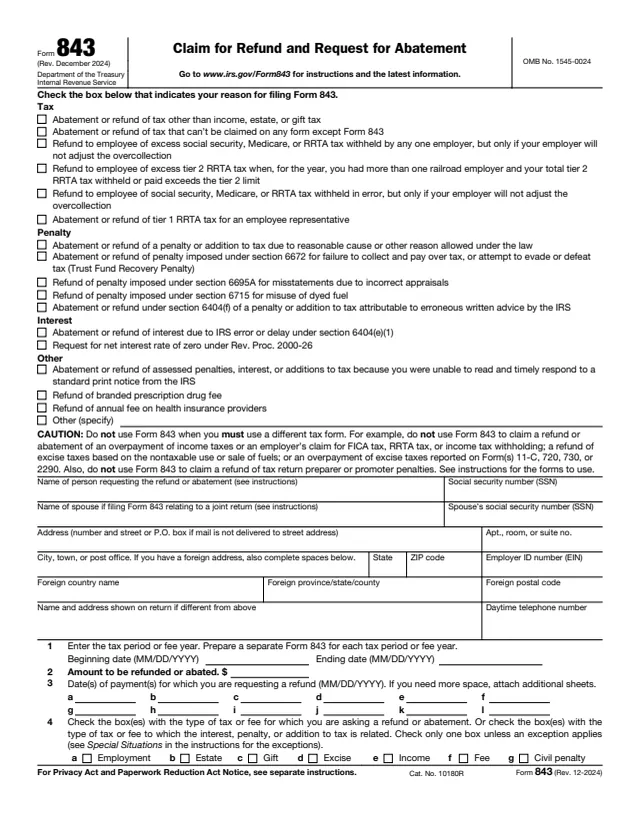
843
85 fields, 2 pages
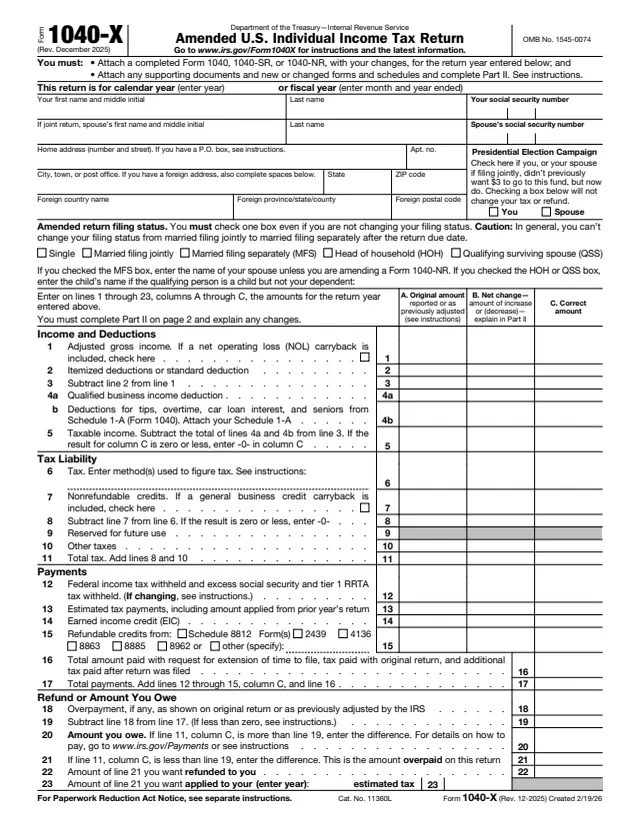
1040-X
166 fields, 2 pages
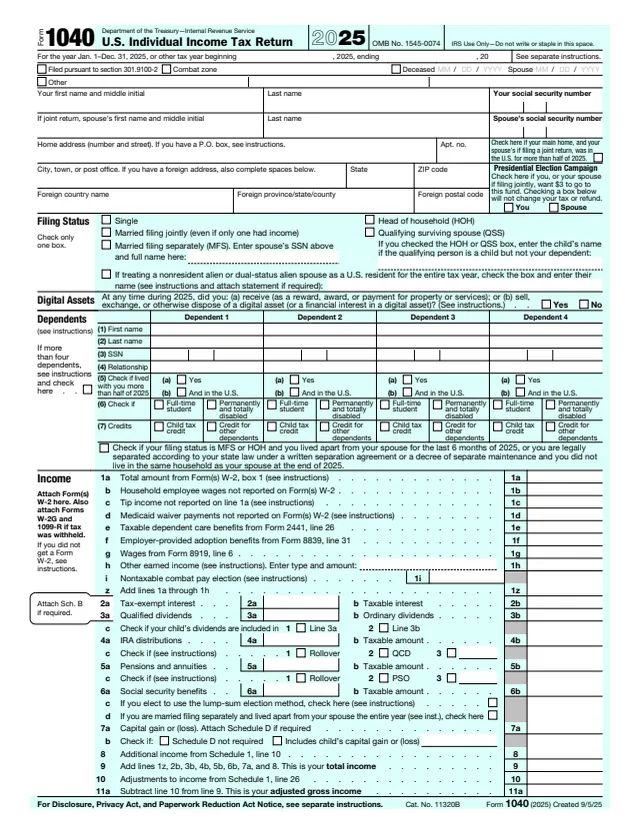
1040
199 fields, 2 pages
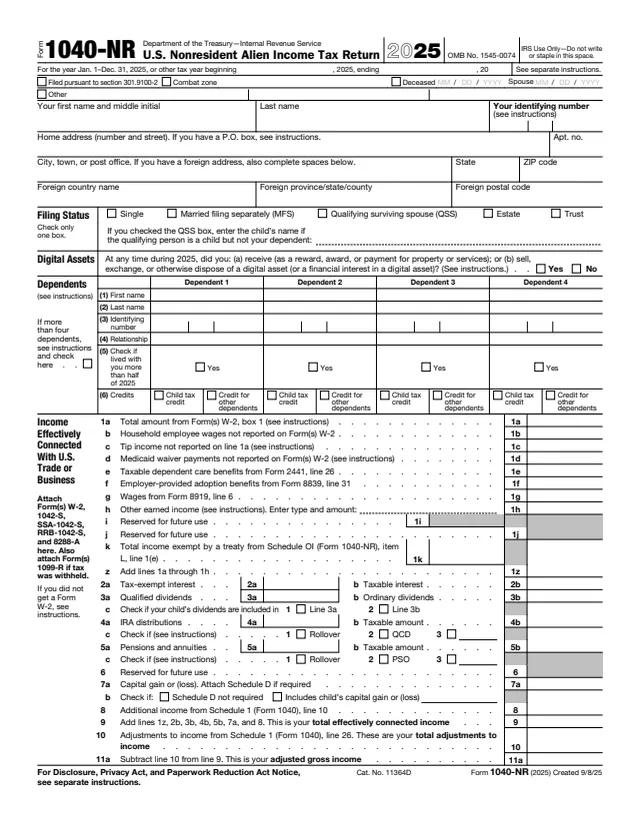
1040-NR
171 fields, 2 pages
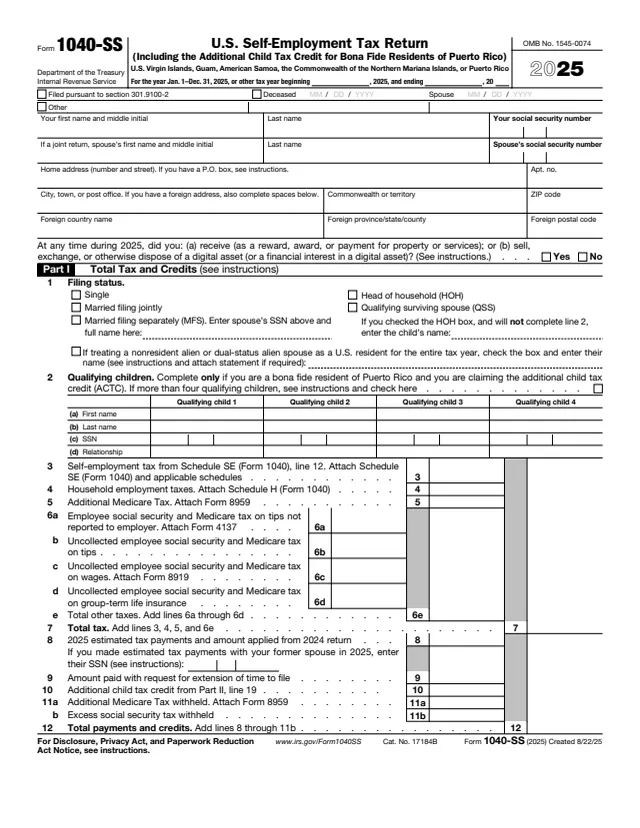
1040-SS
132 fields, 3 pages
The person claiming the refund completes and signs the form. The form says to check only one box in Part I.
No tool matches that search.
The form says not to file it if you are a surviving spouse filing an original or amended joint return with the decedent.
Not when filing an original Form 1040, 1040-SR, 1040-NR or 1040-SS with the court certificate attached. The form says line B is for a personal representative claiming a refund on Form 1040-X or Form 843.
No. The form says not to attach the death certificate or other proof of death. Keep it for your records and provide it if requested.
The form says it can be filed electronically when it is attached to a Form 1040, 1040-SR, 1040-NR or 1040-SS being filed electronically.
The instructions say to complete a separate Form 1310 for each spouse and attach both to the return.
They are printed on the form itself, on page 1 and page 2. The IRS also points to Pub. 559, Survivors, Executors, and Administrators, for more details.