Identifying information
The QBU's tax year, the filer's name and identifying number, and the QBU's name, identifying number and reference ID number.
8964-TRA
Section 987 Transition Information
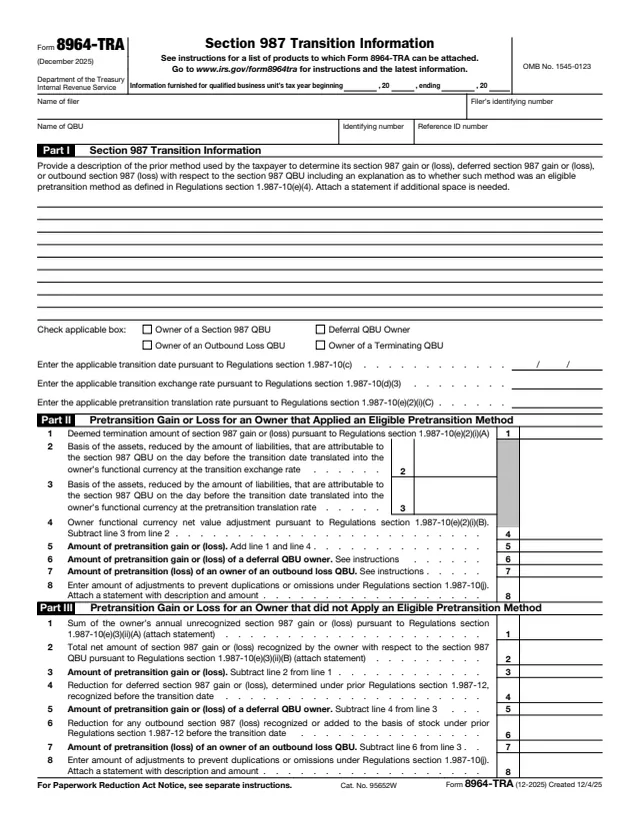
Form 8964-TRA is used to report the section 987 transition information required under Regulations section 1.987-10(k). The instructions say final regulations under section 987 were issued on December 11, 2024 (TD 10016, 89 FR 100138), and that section 987 applies to any taxpayer that has a qualified business unit (QBU) with a functional currency other than the dollar.
The transition rules address how taxpayers move from their previous methods of accounting for section 987 gain or loss to the method in the regulations. In particular, the instructions say an owner computes pretransition gain or loss for each section 987 QBU, deferral QBU and outbound loss QBU. Part I describes the prior method and the transition rates, and Parts II and III compute the pretransition gain or loss.
The form is attached to the owner's return, with a separate Form 8964-TRA for each applicable QBU. You can fill out the PDF free in your browser on this page and download it without an account.
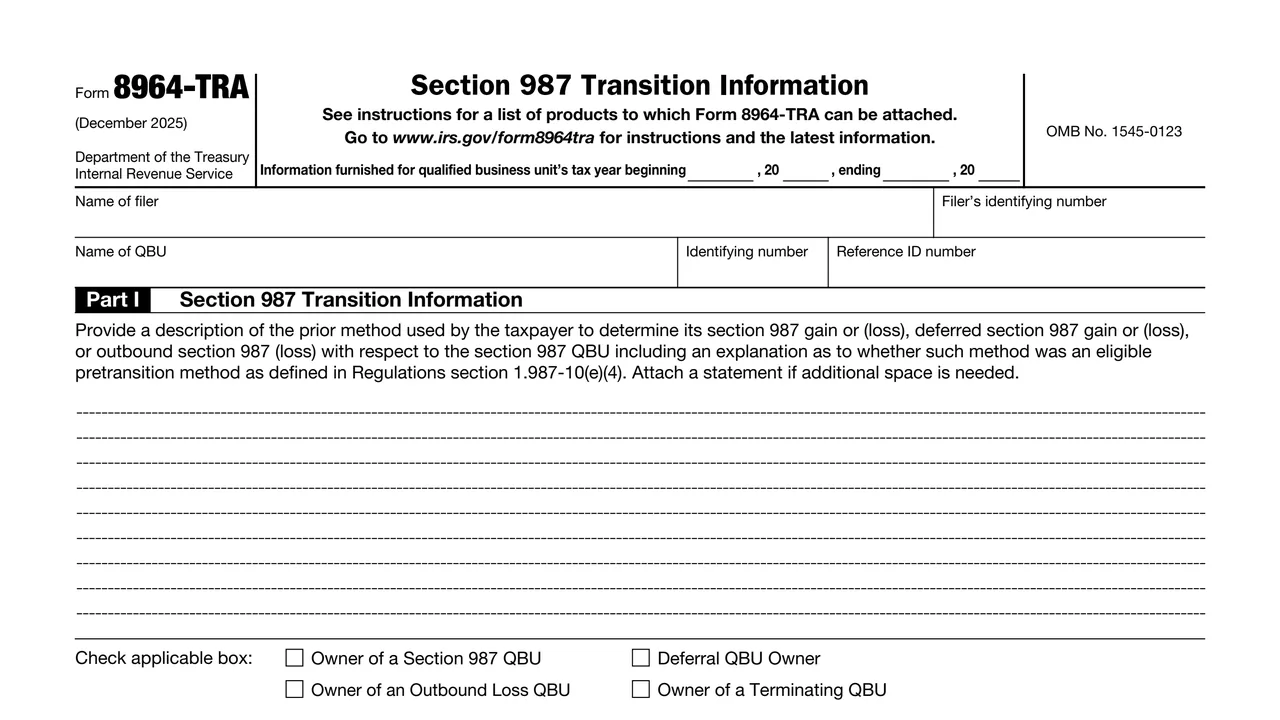
The QBU's tax year, the filer's name and identifying number, and the QBU's name, identifying number and reference ID number.
A description of the prior method used for section 987 gain or loss and whether it was an eligible pretransition method, plus four boxes for the owner type.
The transition date under Regulations section 1.987-10(c), the transition exchange rate and the pretransition translation rate.
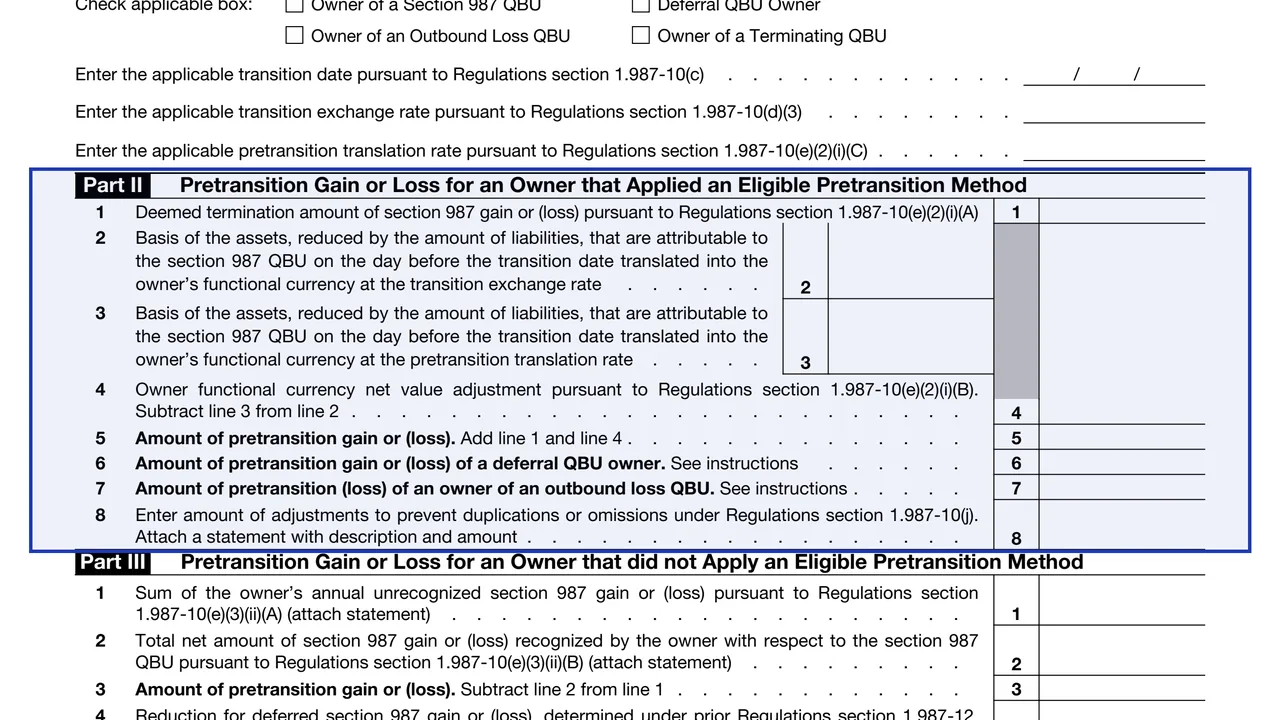
Lines 1 to 8 for an owner that applied an eligible pretransition method, from the deemed termination amount to adjustments under 1.987-10(j).
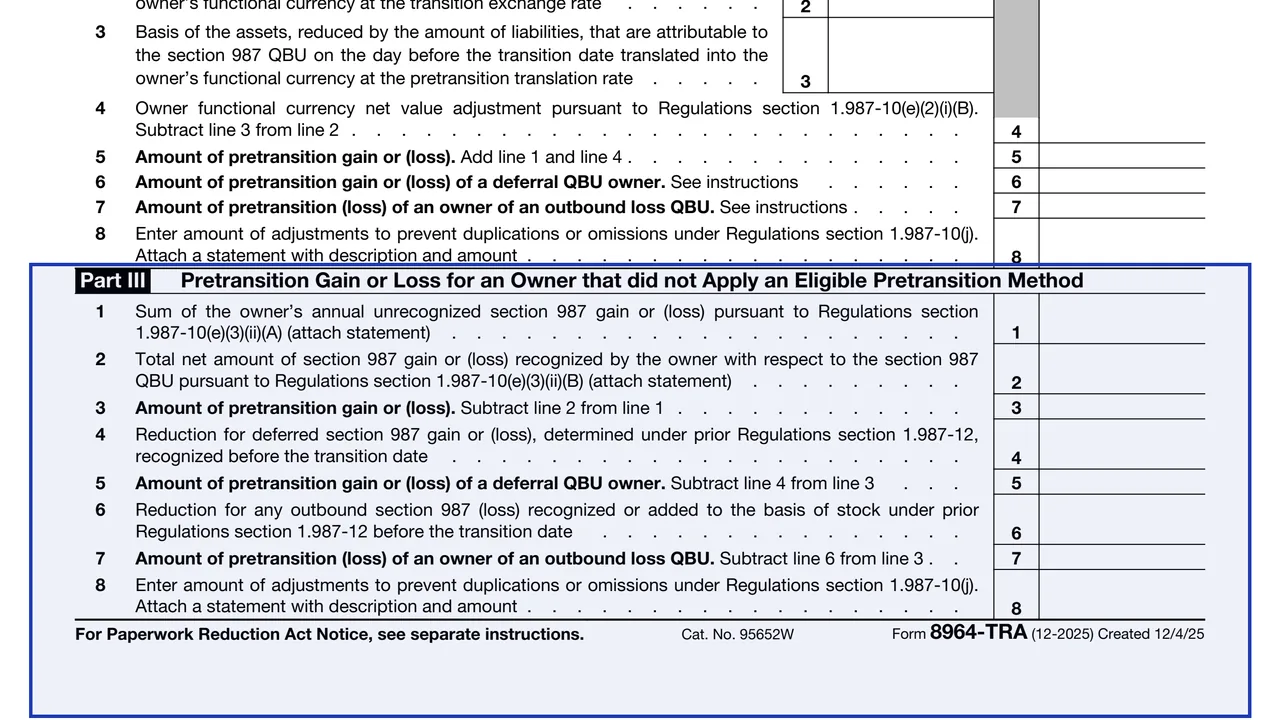
Lines 1 to 8 for an owner that did not apply an eligible pretransition method, starting from the sum of annual unrecognized section 987 gain or loss.
Enter the QBU's tax year, which the instructions say is the tax year of the owner. If a name changed within the past 3 years, show the prior name in parentheses after the current name.
Describe the prior method and check the owner box. For a QBU under the small business election, explain why in Part I and skip Parts II and III. For the fresh start method, complete only line 8 in Part II.
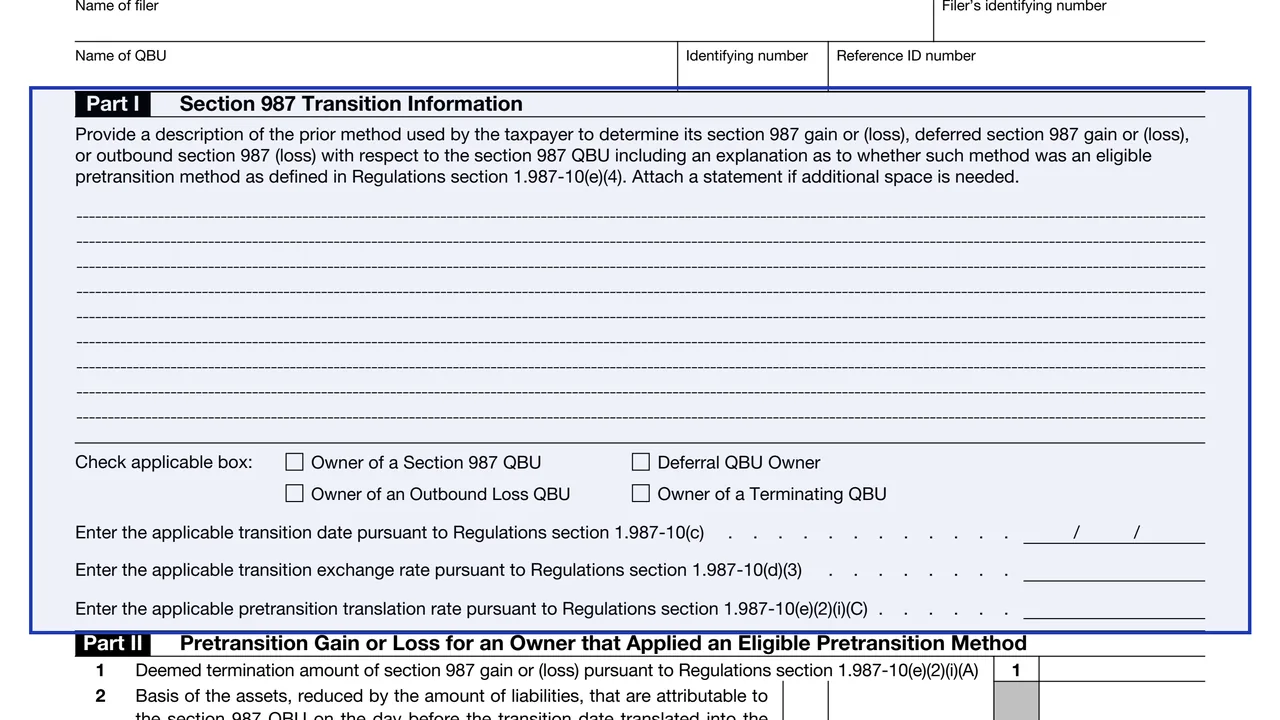
The transition date is generally the first day of the first tax year beginning after December 31, 2024, or the day after termination for a terminating QBU. Rates use a divide-by convention rounded to at least four places.
Used when the owner applied an eligible pretransition method. An owner of a section 987 QBU completes lines 1 to 5 and 8, a deferral QBU owner lines 6 and 8, and an outbound loss QBU owner lines 7 and 8.
Used when no eligible method was applied. A section 987 QBU owner completes lines 1 to 3 and 8, a deferral QBU owner lines 1 to 5 and 8, and an outbound loss QBU owner lines 1 to 3 and 6 to 8. Lines 1 and 2 need attached statements by year.
In either part, line 8 holds adjustments to avoid duplication or omission of income under Regulations section 1.987-10(j), with a statement describing each adjustment and its amount.
You get the real form, filled in a browser tab, with nothing standing between you and the finished PDF.
The instructions say to attach Form 8964-TRA to the income tax return (or, if applicable, exempt organization return) and file both by the due date, including extensions, for that return.
The instructions say Form 8964-TRA can be attached to Forms 1040, 1120 and 5471.
Complete a separate Form 8964-TRA for each applicable QBU, the instructions say.
When a schedule is required but all reportable amounts are zero, the instructions say it should still be filed with one or more zero amounts.
A corrected Form 8964-TRA is filed with an amended return, with "Corrected" entered at the top and a statement identifying the changes.
The IRS page for the form lists "Updated rules related to CFC exemption election" dated 27-AUG-2026.
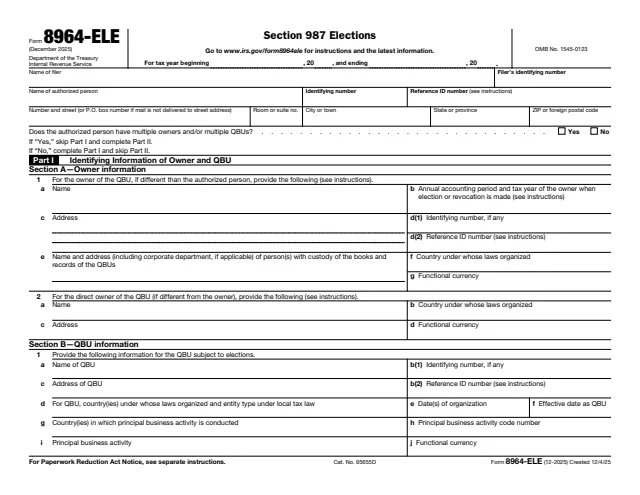
8964-ELE
120 fields, 3 pages
8858
190 fields, 4 pages
5471
437 fields, 6 pages
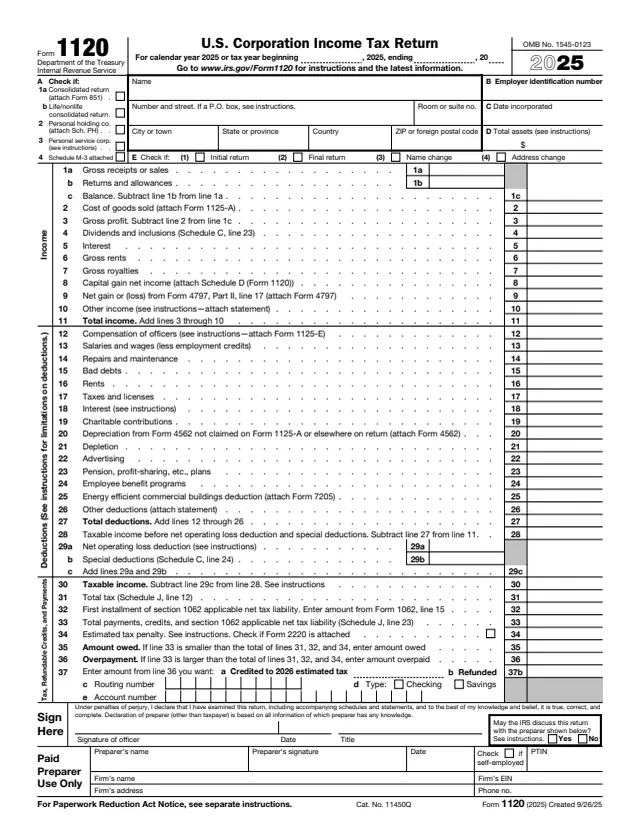
1120
481 fields, 6 pages
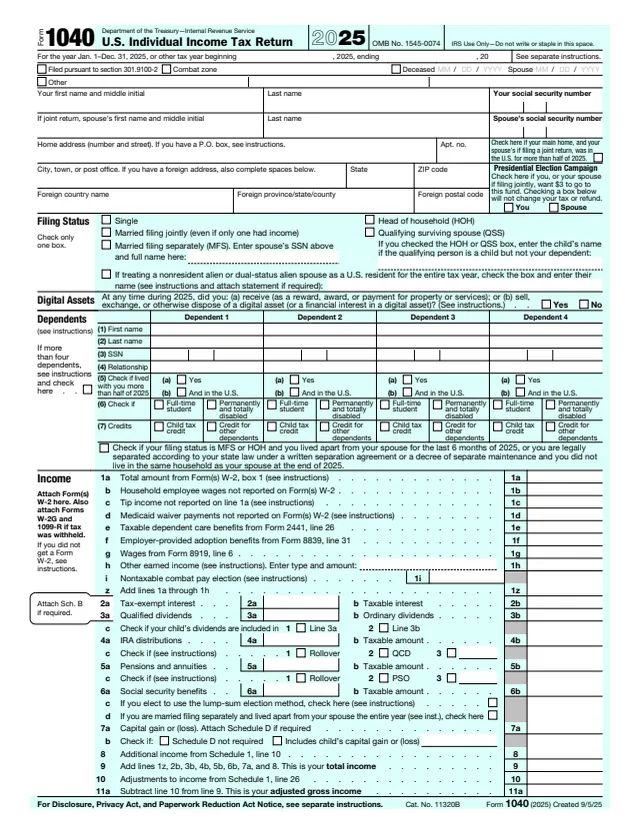
1040
199 fields, 2 pages
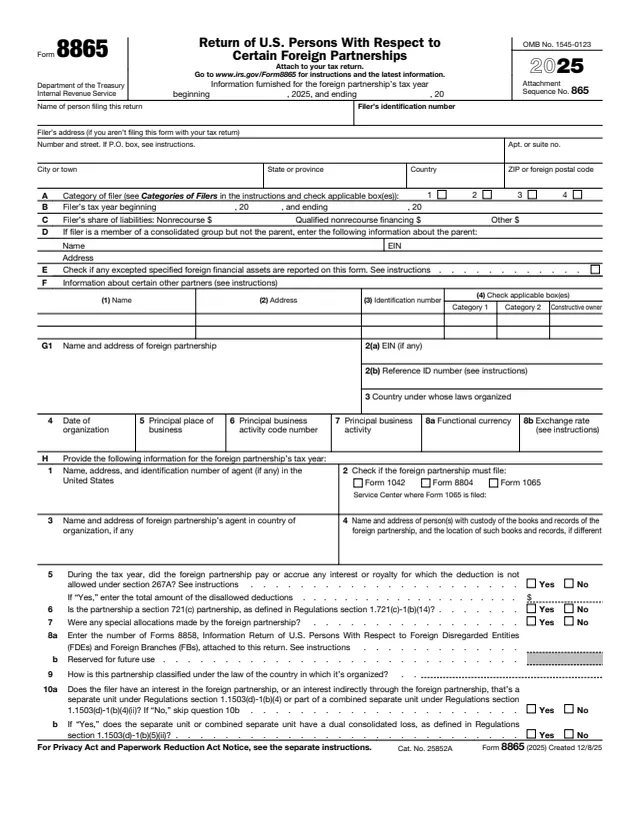
8865
461 fields, 6 pages
The instructions say the filer is generally the owner of the section 987 QBU. An owner can be a U.S. person, a controlled foreign corporation (CFC), a U.S. partnership or a foreign partnership.
No tool matches that search.
The instructions define it as an eligible QBU that has a functional currency different from that of its owner. A QBU is generally a separate and clearly identified unit of a trade or business with separate books and records.
The instructions say a partnership or S corporation is not required to file Form 8964-TRA.
The instructions say to complete Part II if the owner applied an eligible pretransition method and Part III if it did not.
With a divide-by convention rounded to at least four places, shown as the units of foreign currency that equal one U.S. dollar when translating into dollars.
Attached to the owner's return for the tax year beginning on the transition date. For a terminating QBU, the instructions say the first tax year beginning after December 31, 2024.
The instructions say all elections under the section 987 regulations are made by filing Form 8964-ELE, Section 987 Elections.