Filer and transferor boxes
The filer's name, address, telephone number and TIN, the transferor's TIN, name and address, and an account number.
1099-S
Proceeds From Real Estate Transactions
Form 1099-S is the information return used to report the sale or exchange of real estate. The instructions say that generally the person responsible for closing the transaction files it, and the form says that person must furnish a copy to the transferor, the seller of the property.
The form shows the date of closing, total gross proceeds split between cash and digital assets, the property address or legal description, the buyer's part of real estate tax, and checkboxes for property or services received and for a foreign transferor. The December 2026 revision has box 2c and boxes 8a to 8d for digital assets received as consideration, and the instructions say digital assets will be reported on Form 1099-S beginning in tax year 2026.
The instructions call this a continuous-use revision: it is used to file 2026 information with the IRS in early 2027 and for later years until a superseding revision is issued. You can fill out Form 1099-S free in your browser on this page and download it without an account.
The filer's name, address, telephone number and TIN, the transferor's TIN, name and address, and an account number.
The closing date of the real estate transaction.
Total gross proceeds in box 2a, which is the total of cash gross proceeds in box 2b and digital asset gross proceeds in box 2c.
The property's address or legal description, and the buyer's part of real estate tax. Box 5 is reserved for future use.
Checkboxes for a transferor who received or will receive services or property other than cash, notes or digital assets, and for a foreign transferor.
The code, name, number of units and date of any digital asset received, or to be received, as consideration.
Enter the filer's name, address and phone number, matching the filer information on Form 1096, then the transferor's name, address and TIN. The instructions say to request the transferor's TIN no later than closing, for example on Form W-9.
Enter the closing date. The instructions say it is the Closing Disclosure date, or without one, the earlier of the date title transfers or the date the burdens and benefits of ownership shift to the transferee.
Enter total gross proceeds, generally the sales price, in box 2a as the total of cash in box 2b and digital assets in box 2c. The instructions say not to reduce gross proceeds by expenses such as sales commissions.
Enter the property address with city, state and ZIP code, adding a legal description if the address does not identify the property. For a residence, enter real estate tax paid in advance that is allocable to the buyer.
Check box 6 if the transferor received or will receive property or services other than cash, notes or digital assets. Check box 7 for a foreign transferor. For a like-kind exchange with no reportable proceeds, enter -0- in box 2a and check box 6.
Enter the nine-character DTIF token identifier, or 999999999 if the asset is not registered, the asset's full name, the units to 18 decimal places and the date received as MM/DD/YYYY.
You get the real form, filled in a browser tab, with nothing standing between you and the finished PDF.
Copy A is for the Internal Revenue Service Center and Copy B is for the transferor. The instructions say to furnish a copy of Form 1099-S or an acceptable substitute statement to each transferor.
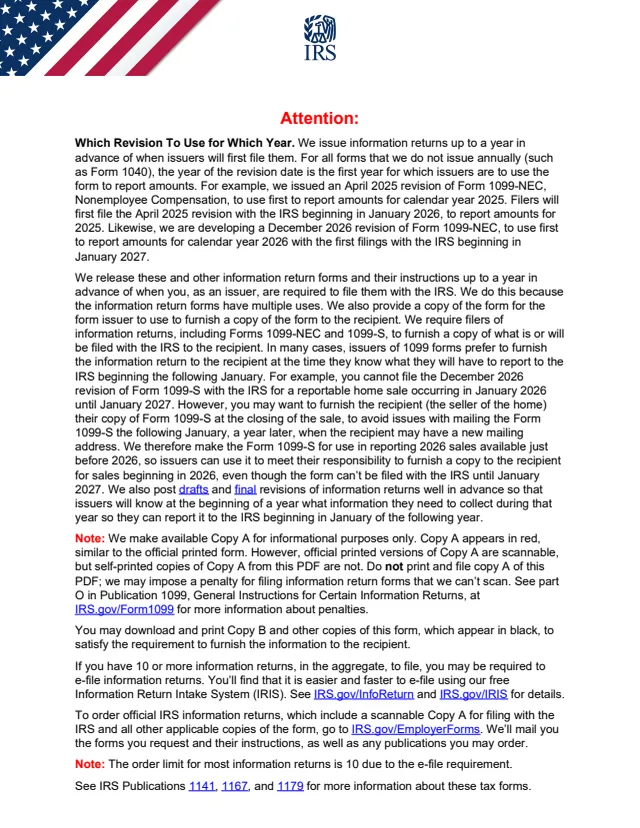
The PDF says its Copy A is for informational purposes only and self-printed copies are not scannable, and the IRS may impose a penalty for filing forms it can't scan. Copy B and the other black copies may be printed for the recipient.
The instructions say the e-file threshold is 10, calculated by aggregating all information returns. The IRS online portal for e-filing information returns is IRIS.
The instructions point to Pub. 1099, General Instructions for Certain Information Returns, for when and where to file, corrections and penalties.
The instructions list transactions that are not reportable, such as certain main home sales of $250,000 or less ($500,000 if married) with a seller certification, gifts, foreclosures and transfers for less than $600.
The instructions say the filer may not charge customers a separate fee for complying with the Form 1099-S filing requirements.
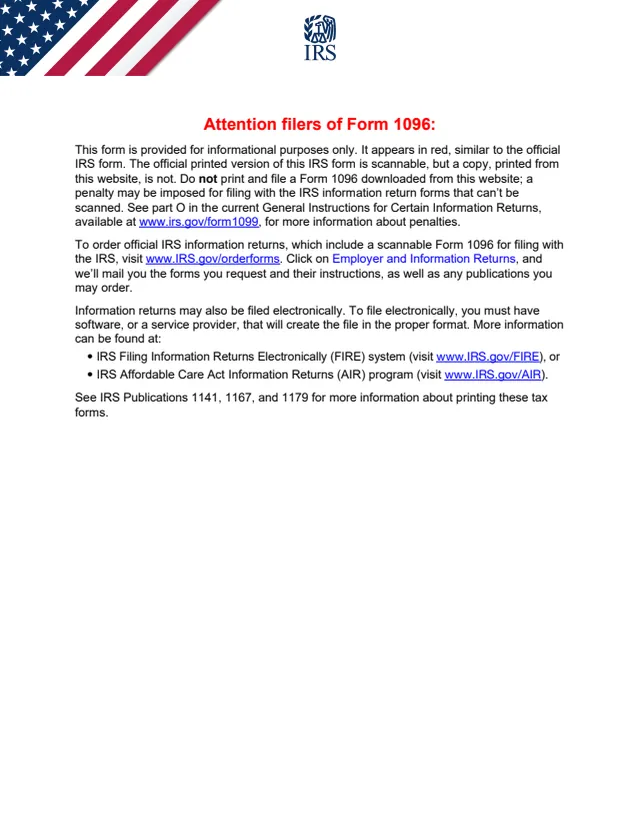
1096
55 fields, 3 pages
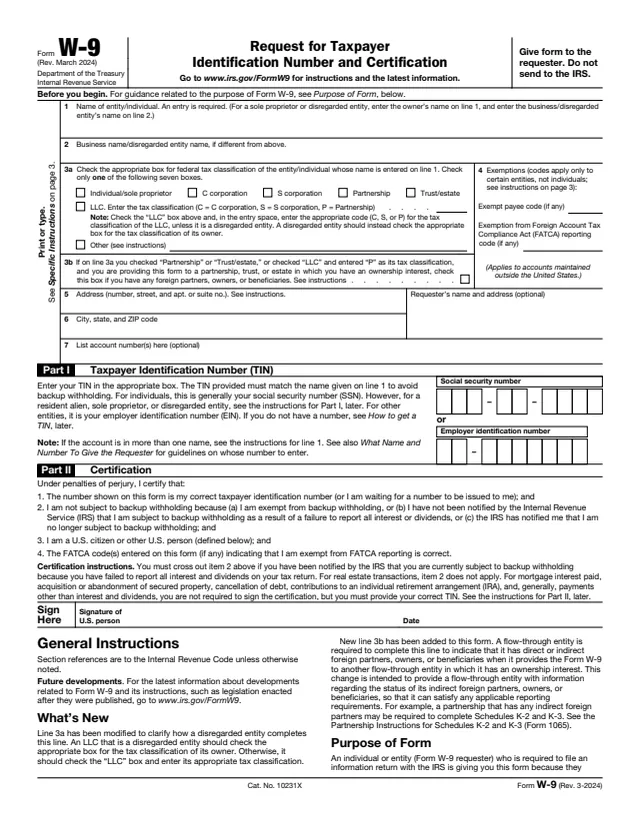
W-9
23 fields, 6 pages
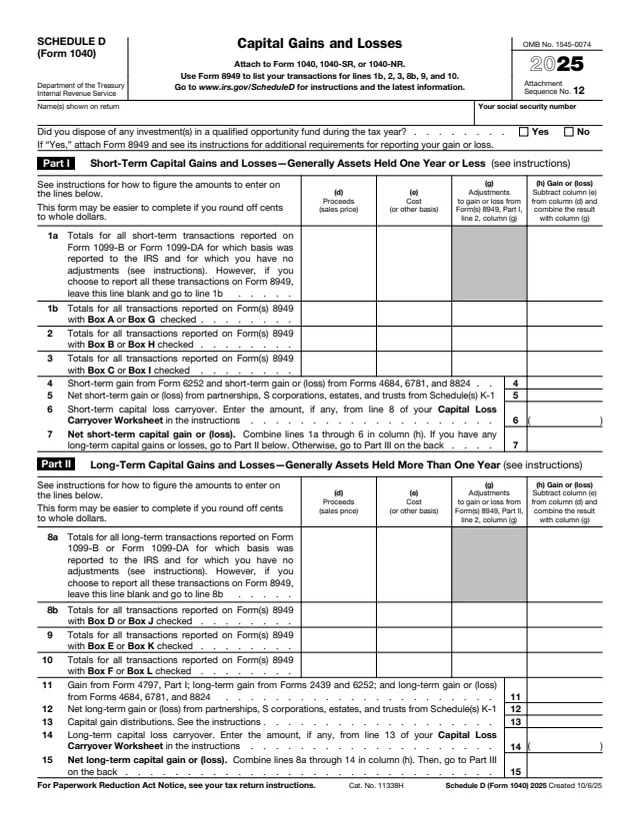
1040
55 fields, 2 pages
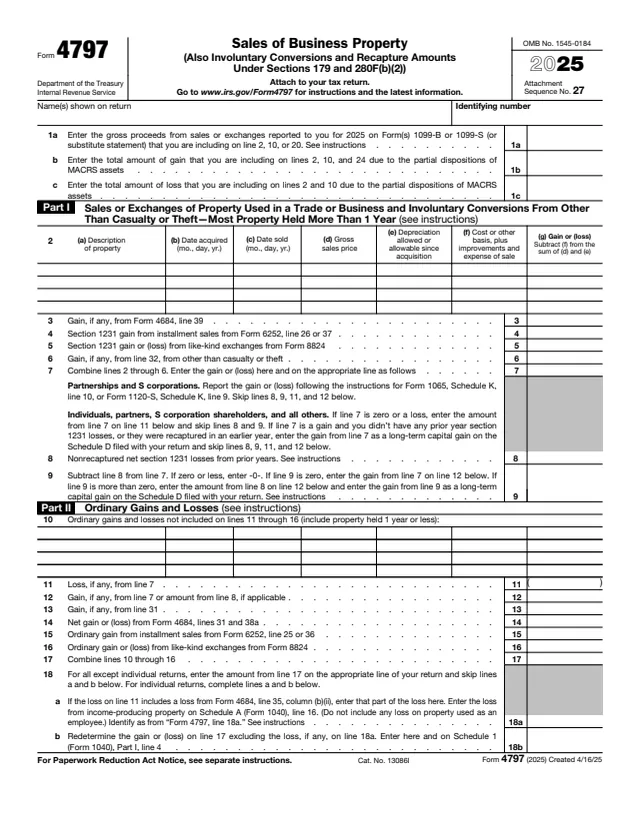
4797
182 fields, 2 pages
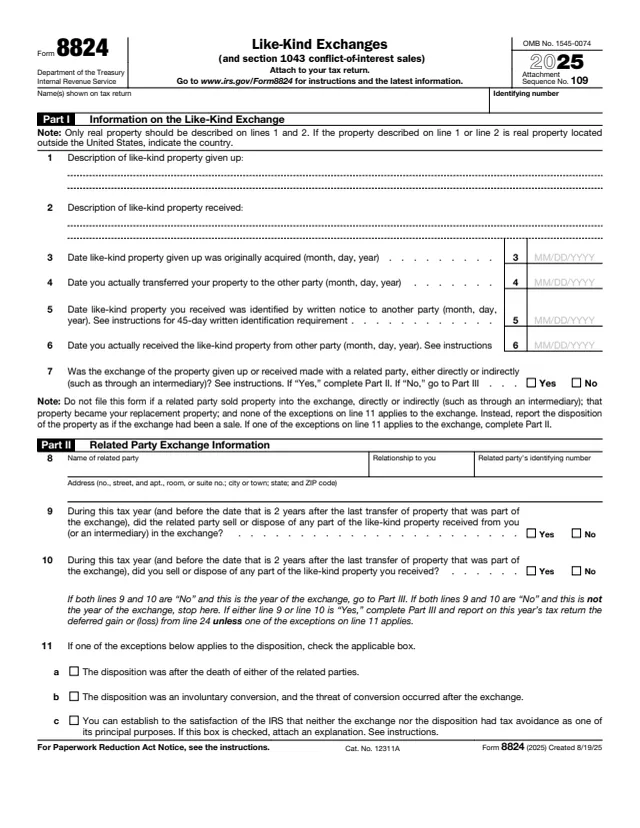
8824
63 fields, 2 pages
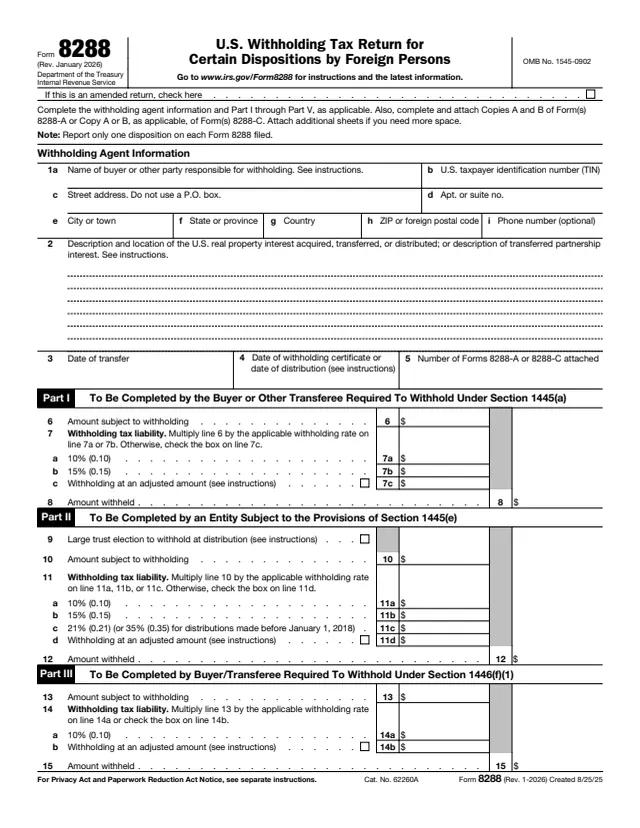
8288
56 fields, 2 pages
The instructions say that generally the person responsible for closing the transaction files Form 1099-S. The filer sends Copy A to the IRS and furnishes a statement to each transferor. The seller, called the transferor, receives Copy B.
No tool matches that search.
The instructions say that generally the person responsible for closing the transaction files it, such as the settlement agent listed on the Closing Disclosure. If no one is responsible for closing, the mortgage lender, a broker or the transferee files, in that order.
The seller, called the transferor, receives Copy B. Its instructions point to Schedule D (Form 1040) for the sale of a main home, and to Form 4797, Form 6252 or Schedule D for other real estate.
Yes. The PDF says a filer may want to furnish the seller their copy at the closing of the sale, even though the form can't be filed with the IRS until the following January.
No. The instructions say a residence sale for $250,000 or less ($500,000 if the seller is married) is not reportable when the filer gets the seller certification the instructions describe.
The instructions say to file a separate Form 1099-S for each transferor. Spouses holding the property together are treated as a single transferor, and a partnership gets one form, not one per partner.
The instructions say to use it to file 2026 information with the IRS in early 2027 and for later years until a superseding revision is issued, but not for prior years.
The PDF says not to print and file Copy A from it, because self-printed copies are not scannable. Official Copy A can be ordered at IRS.gov/EmployerForms.