Sections 1 to 5: the parties
Taxpayer, applicant, property owner, attorney or representative, and lending or finance company, each with contact details.
14134
Application for Certificate of Subordination of Federal Tax Lien
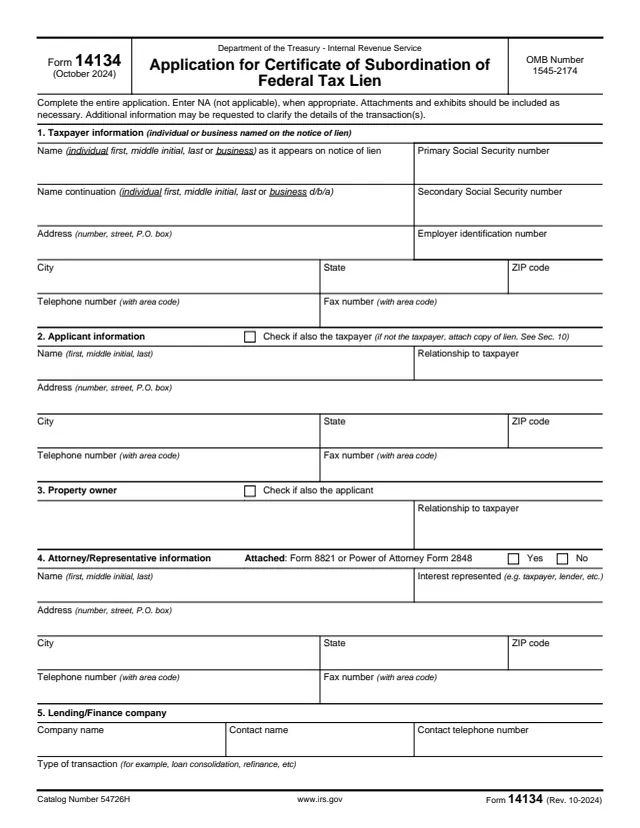
Form 14134, Application for Certificate of Subordination of Federal Tax Lien, is a three-page IRS application about property covered by a notice of federal tax lien. It names the taxpayer on the lien, the applicant, the property owner, any attorney or representative, and the lending or finance company, along with the type of transaction, for example a loan consolidation or refinance.
The applicant checks one basis for subordination: Internal Revenue Code section 6325(d)(1), where the United States will receive an amount equal to the lien or interest subordinated, or section 6325(d)(2), where subordination will increase the government's interest and make collection easier. The form says Publication 784 has additional descriptions of these sections.
The form says to complete the entire application and enter NA when appropriate. It has no separate instructions and prints no mailing address or deadline. You can fill out Form 14134 free in your browser on this page and download it without an account.
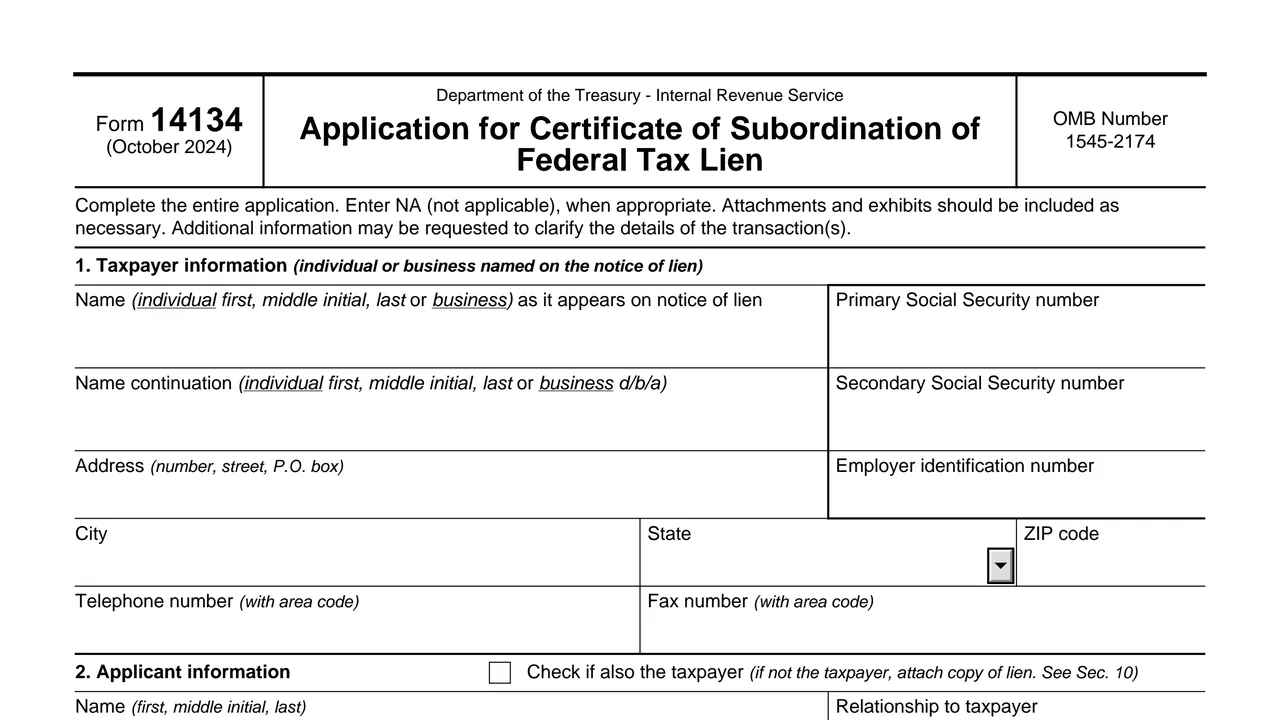
Taxpayer, applicant, property owner, attorney or representative, and lending or finance company, each with contact details.
Amount of the existing loan if refinancing, amount of the new loan, and the amount to be paid to the United States for 6325(d)(1) applications only.
Checkboxes for 6325(d)(1) and 6325(d)(2), with an attached or N/A box for the signed statement the (d)(2) basis calls for.
Description and address of the property, a copy of the deed or title for real estate, and an appraisal or another valuation.
Copy of the lien notice or its serial numbers, the proposed loan agreement, a current title report or a list of senior encumbrances, and the proposed closing statement.
A yes or no for attached additional information, then two signature lines under penalties of perjury with title and date.
Enter the taxpayer exactly as the name appears on the notice of lien, then the applicant, property owner, any representative and the lender. Check the boxes where the applicant is also the taxpayer or the owner is also the applicant.
Enter the loan amounts. Check the basis that best fits. For 6325(d)(2), the form says to attach a signed and dated statement on how the amount the United States may realize will increase and how collection will be made easier.
Describe the property and give its address. For real estate, attach a legible copy of the deed or title. The form says a professional appraisal is not required for a subordination, and lists other valuations to attach instead.
If the applicant and taxpayer differ, attach the lien notice or list its serial numbers. Attach the proposed loan agreement if available and describe how subordination is in the best interests of the United States.
Attach a current title report, which the form marks as required for subordination, or list senior encumbrances. Attach the proposed closing statement or itemize the costs of the transfer or sale.
Mark whether additional information such as pending litigation is attached. Sign and date the declaration, adding a title if signing for a business.
The form says to complete the entire application, enter NA (not applicable) when appropriate, and include attachments and exhibits as necessary.
You get the real form, filled in a browser tab, with nothing standing between you and the finished PDF.
The form prints no mailing address, fax number or deadline. It points to Publication 784 for more on the Code sections in section 7.
Section 12 says a copy of a current title report is required for subordination.
Without a title report, list each encumbrance senior to the lien, including line of credit advances from the 46th day after the notice of federal tax lien was filed through the expected certificate date.
The form says additional information may be requested to clarify the details of the transaction.
The signer declares under penalties of perjury that the application and its schedules, exhibits, affidavits and statements are true, correct and complete to the best of their knowledge and belief.
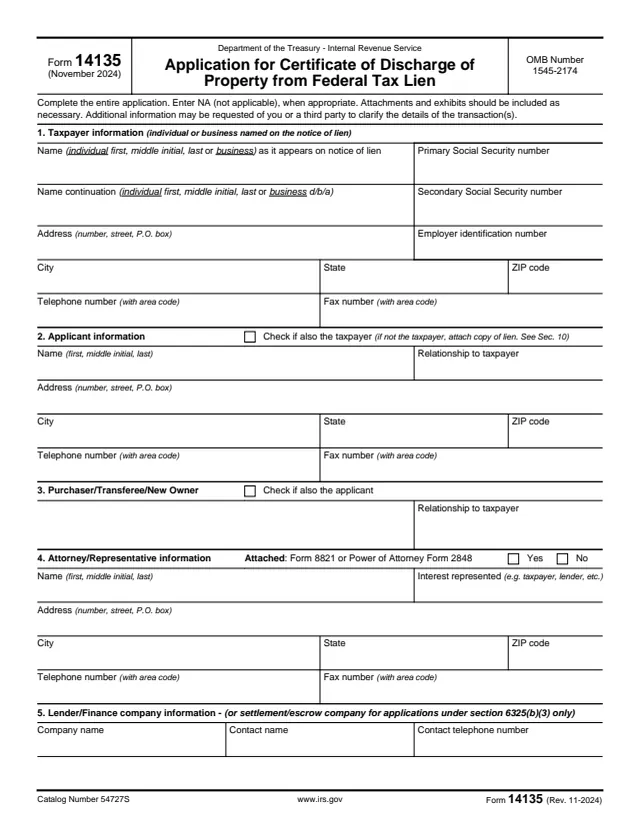
14135
89 fields, 3 pages
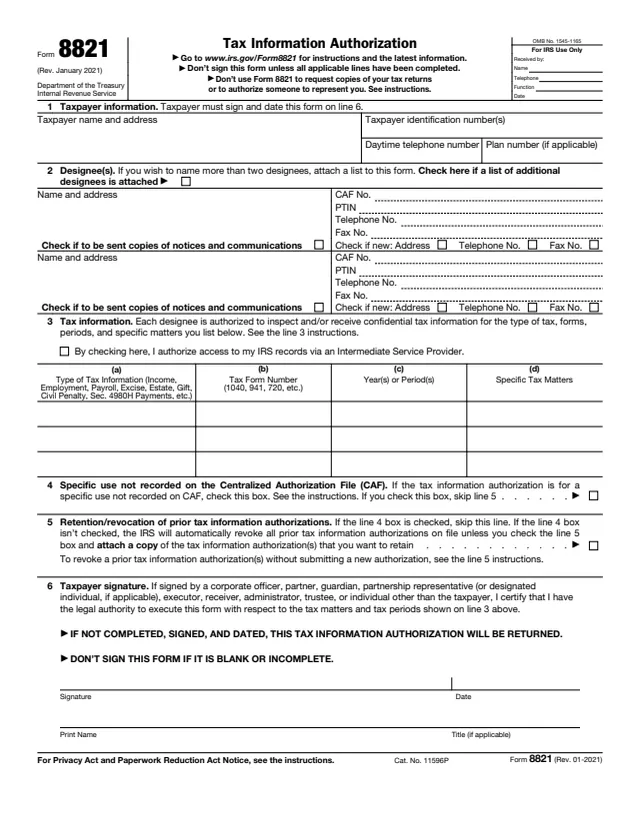
8821
45 fields, 1 page
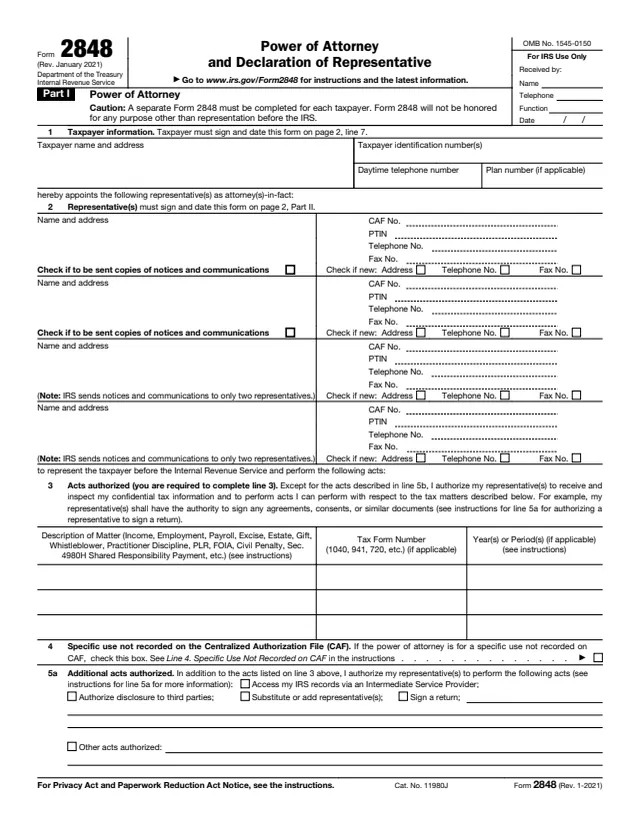
2848
92 fields, 2 pages
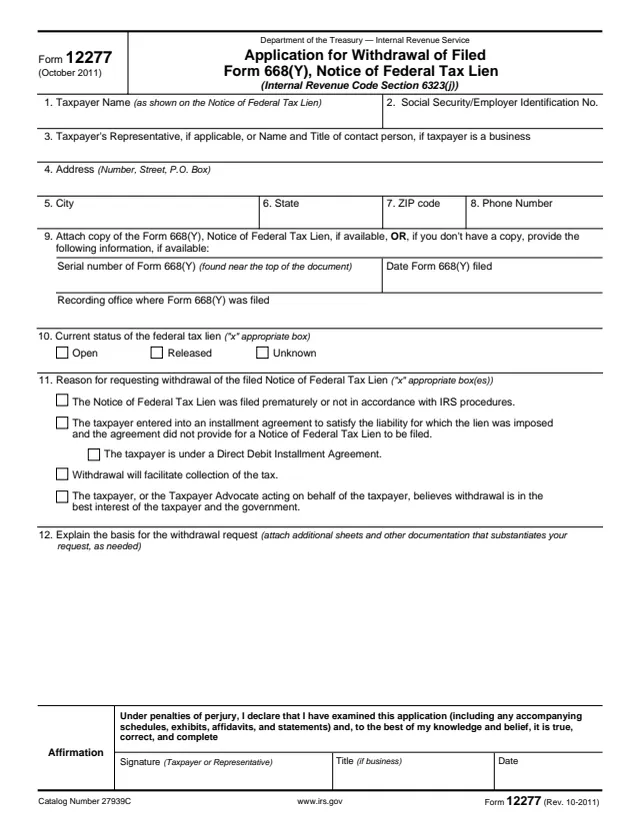
12277
22 fields, 2 pages
The applicant completes and signs the form. The applicant can be the taxpayer named on the notice of lien or someone else, and the form asks for the applicant's relationship to the taxpayer.
No tool matches that search.
A certificate of subordination of a federal tax lien on a property, with the parties, the loan amounts, the basis under section 6325(d)(1) or 6325(d)(2), and supporting documents.
The form asks for the applicant's relationship to the taxpayer and says an applicant who is not the taxpayer attaches a copy of the lien.
The form says a professional appraisal by a disinterested third party is not required for a subordination. A county valuation, an informal valuation, a proposed selling price or another valuation can be attached instead.
Section 12 marks a copy of a current title report as required for subordination, with a list of senior encumbrances as the alternative.
The form calls it the proposed closing statement (aka HUD-1). Without it, the costs, commissions and expenses of the transfer or sale are itemized.
The form itself prints no address. It refers to Publication 784 for descriptions of the Code sections it uses.