Creditor and debtor boxes
Creditor's name, address and telephone number, creditor's TIN, debtor's TIN, debtor's name and address, and an account number.
1099-C
Cancellation of Debt
Form 1099-C, Cancellation of Debt, is an information return a creditor files with the IRS. The IRS page says it is filed for each debtor for whom $600 or more of a debt was canceled, when the creditor is an applicable financial entity and an identifiable event has occurred. The instructions say the debtor may be an individual, corporation, partnership, trust, estate, association, or company, and that the form is filed regardless of whether the debtor is required to report the debt as income.
The creditor sends Copy A to the IRS and gives Copy B to the debtor. Copy B carries the Instructions for Debtor, which explain each box and point to Pub. 4681 for exceptions and exclusions such as bankruptcy and insolvency.
The PDF notes that Copy A printed from IRS.gov is for information only and cannot be scanned, while Copy B and the other black copies may be printed and given to the debtor. You can fill out the PDF free in your browser on this page and download it without an account.
Creditor's name, address and telephone number, creditor's TIN, debtor's TIN, debtor's name and address, and an account number.
Date of identifiable event and amount of debt discharged.
Interest, if included in box 2, and a description of the debt.
A check box showing the debtor was personally liable for repayment of the debt.
A code from A to H: bankruptcy, other judicial debt relief, statute of limitations, foreclosure election, probate, by agreement, decision or policy to discontinue collection, or other actual discharge.
Fair market value of property. The PDF holds Copy A for the IRS and Copy B for the debtor, with VOID and CORRECTED boxes.
The instructions say the creditor's phone number goes in the creditor's box, as a central number for all canceled debts. The debtor's TIN may be truncated on payee statements but not on documents filed with the IRS.
The instructions say it is required when a debtor has multiple accounts with more than one Form 1099-C, and the IRS encourages one on every form.
Enter the date of the identifiable event. If a debt is canceled before an identifiable event and that cancellation is reported, enter the date it was actually canceled.
Enter the canceled amount. The instructions say it cannot be greater than the total debt less any amount received in satisfaction of the debt. Interest included in box 2 is also shown in box 3.
Describe the origin of the debt, such as student loan, mortgage, or credit card expenditure. Enter an X in box 5 if the debtor was personally liable when the debt was created or last modified.
Enter the event code. Box 7 holds the property's fair market value for a combined Form 1099-C and 1099-A or a short sale. The instructions say the gross foreclosure bid price is generally the FMV.
You get the real form, filled in a browser tab, with nothing standing between you and the finished PDF.
The instructions say to file Form 1099-C in the year following the calendar year in which the identifiable event occurs.
The PDF says not to print and file Copy A downloaded from IRS.gov, because a penalty may be imposed for filing forms that cannot be scanned. Official scannable forms can be ordered at IRS.gov/EmployerForms.
The PDF says a filer with 10 or more information returns may be required to e-file, and points to IRS.gov/InfoReturn for e-file options.
Each debtor gets a copy of Form 1099-C or an acceptable substitute statement. Copy B may be downloaded, printed and used for this.
For a cancellation of $600 or more tied to a foreclosure or abandonment in the same year, the instructions say the creditor may file Form 1099-C only, completing boxes 4, 5 and 7.
The instructions say to keep a copy, or be able to reconstruct the data, for at least 4 years from the due date of the return.
1099-A
31 fields, 4 pages
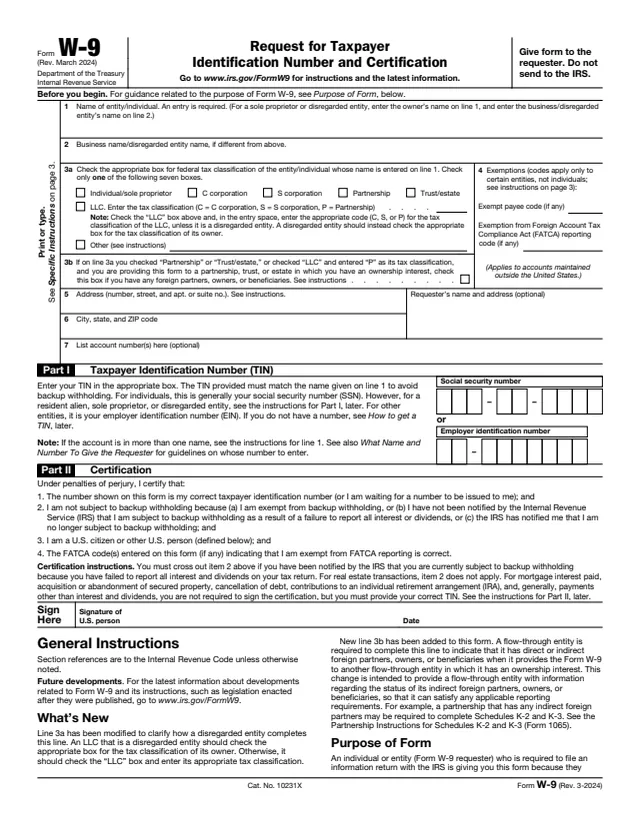
W-9
23 fields, 6 pages
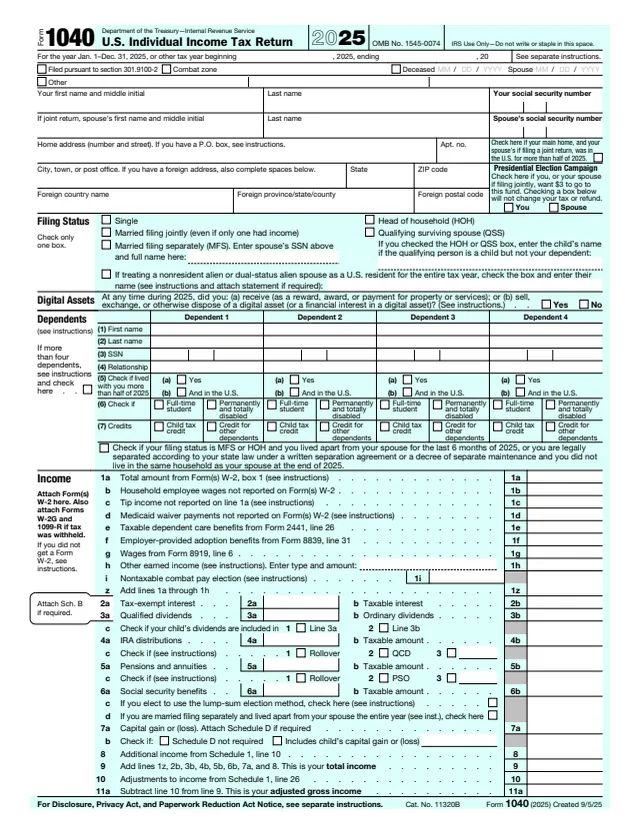
1040
199 fields, 2 pages
1099-S
65 fields, 4 pages
1098
41 fields, 4 pages
1099-INT
127 fields, 7 pages
The creditor completes and files the form. The debtor receives a copy and does not file it. The instructions list the entities that file.
No tool matches that search.
The Instructions for Debtor say a federal government agency or an applicable financial entity discharged a debt you owed, or an identifiable event occurred that is or is deemed to be a discharge of a debt of $600 or more.
Copy B says a debtor may not have to include all of the canceled debt in income, and names exceptions and exclusions such as bankruptcy and insolvency. It points to Pub. 4681 for details.
Copy B says that if you don't agree with the amount, contact your creditor.
No. The creditor files it with the IRS and gives the debtor Copy B, which says to keep it for your records.
The instructions say not to combine multiple cancellations of a debt to meet the $600 requirement unless they are under a plan to evade the Form 1099-C requirements.
Copy B says the form may show only the last four digits of your TIN for your protection, but the creditor has reported your complete TIN to the IRS.
It may file Form 1099-C only and complete boxes 4, 5 and 7. If it files both, the instructions say not to complete boxes 4, 5 and 7 on Form 1099-C.