Section I, lines 1 to 6
The taxpayer's and spouse's names and identification numbers, current address, daytime phone, email address and fax number.
911
Request for Taxpayer Advocate Service Assistance (and Application for Taxpayer Assistance Order)
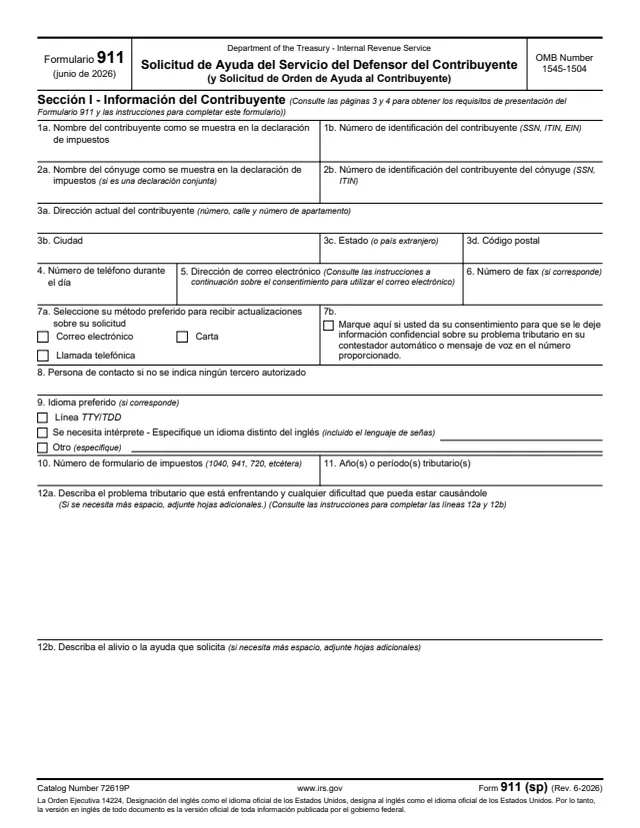
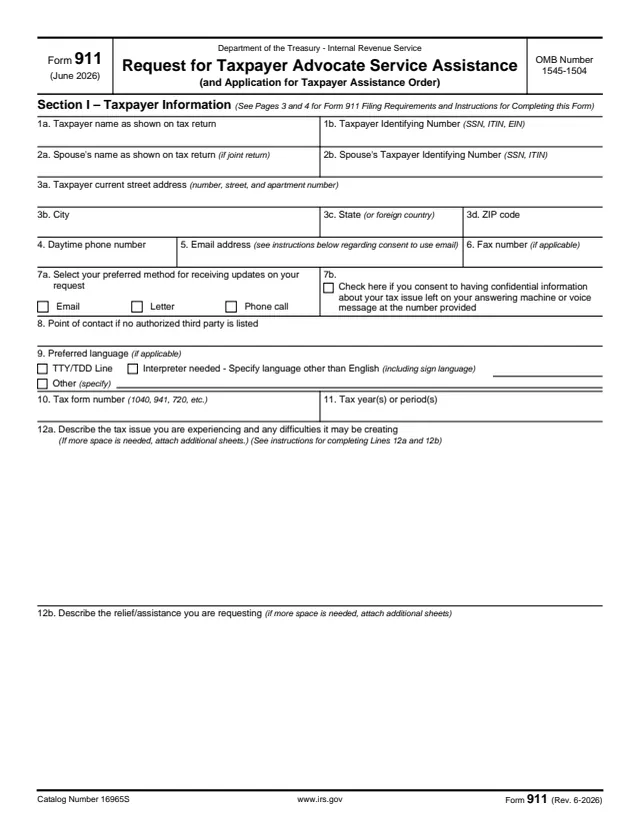
Form 911 (sp) is the IRS Spanish version of Form 911, Request for Taxpayer Advocate Service Assistance (and Application for Taxpayer Assistance Order). Its Spanish title is "Solicitud de Ayuda del Servicio del Defensor del Contribuyente (y Solicitud de Orden de Ayuda al Contribuyente)." The fields, the instructions on pages 3 and 4 and the Paperwork Reduction Act notice are all in Spanish. The English edition is Form 911.
The form describes the Taxpayer Advocate Service (TAS) as an independent organization within the IRS that helps taxpayers resolve federal tax problems and protects their rights. It says TAS can help if a federal tax problem is causing a financial difficulty, if the problem could not be resolved with the IRS, or if an IRS system, process or procedure is not working as it should, and that its help is always free for those who qualify.
Page 1 notes that Executive Order 14224 designates English as the official language of the United States, so the English version of any document is the official version. The PDF can be filled out free in the browser on this page and downloaded without an account.
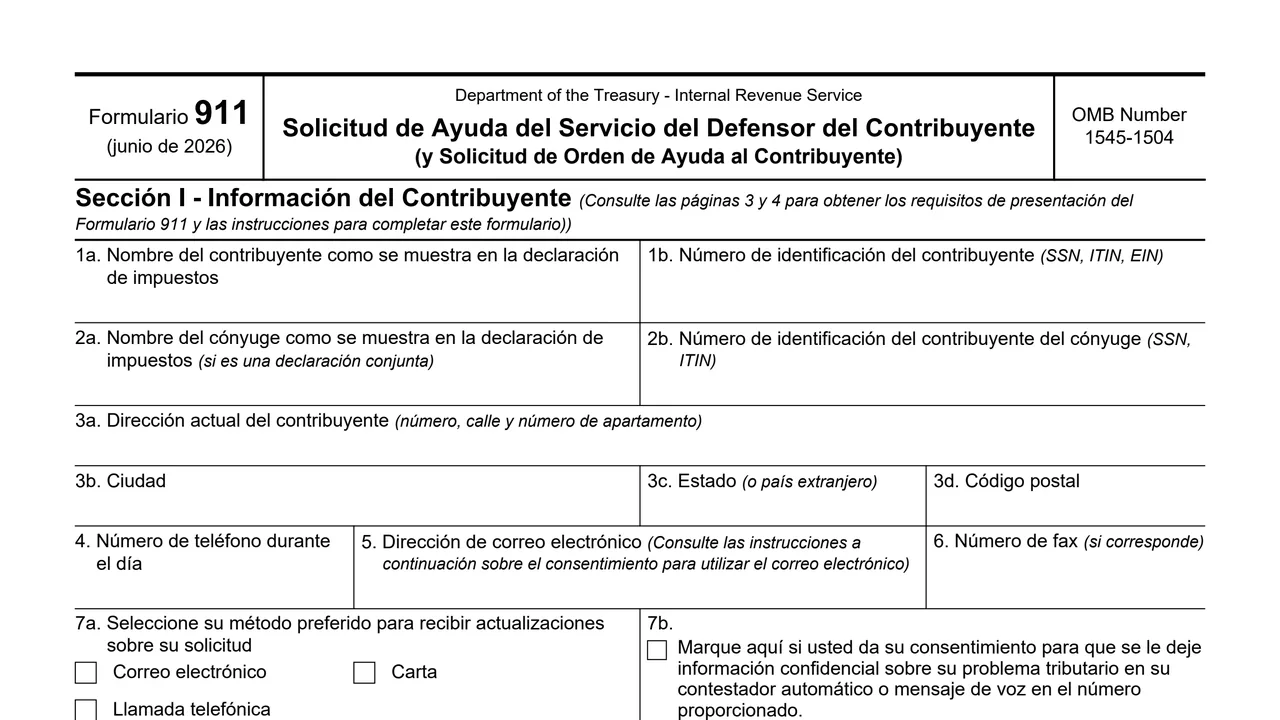
The taxpayer's and spouse's names and identification numbers, current address, daytime phone, email address and fax number.
The preferred way to get updates (email, letter or phone call), consent for voicemail, a contact person, and a preferred language with TTY/TDD and interpreter options.
The tax form number, the tax year or period, a description of the problem and any hardship, and the relief requested.
An authorization for TAS to contact third parties, followed by the signature, title and date of the taxpayer or official, and the spouse's signature.
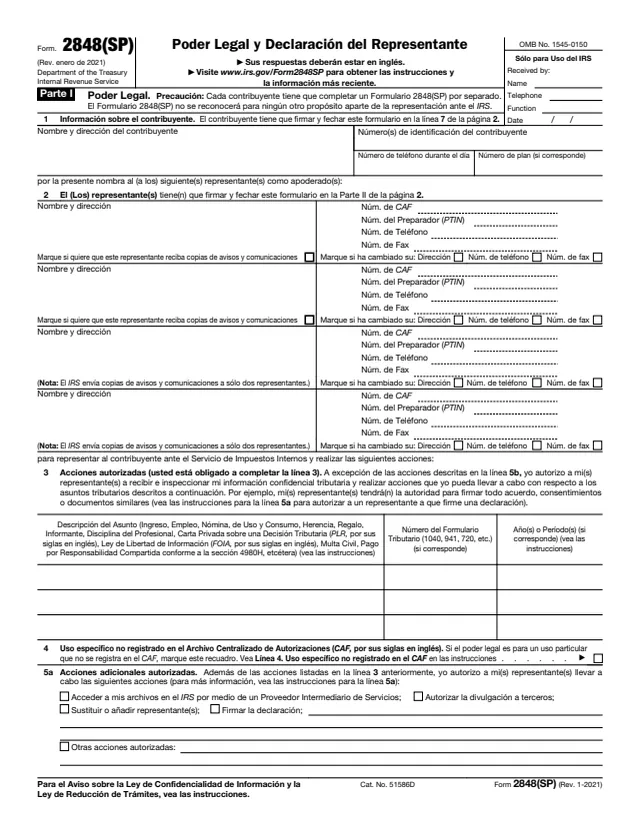
Block A for a Form 2848 representative and block B for a Form 8821 designee, each with name, CAF number, address, phone, fax and signature.
How to send the form, what happens next, line by line instructions for Sections I and II, and the Paperwork Reduction Act notice.
Enter the name as shown on the tax return, the SSN, ITIN or EIN, the spouse's details for a joint return, the current mailing address and a daytime phone with area code.
The form says an email address on line 5 is consent to encrypted email, and to leave it blank to avoid email from TAS. Choose a contact method on line 7a, and check 7b only to allow voicemail.
An entity enters the person authorized to act for it. On line 9, note any special communication need, such as sign language, and any language other than English.
Enter the tax return or form involved, for example Form 1040, and the year, quarter or period. The form says a payroll tax problem uses the calendar quarter.
Describe the problem, the hardship and what the IRS has or has not done. If an IRS delay is over 30 days, give the date of first contact. Then describe the relief requested.
Sign and date on lines 13 and 14. A representative instead completes Section II, enters the CAF number in block 2 and attaches a copy of Form 2848 or 8821.
You get the real form, filled in a browser tab, with nothing standing between you and the finished PDF.
[email protected]. The form says emailed forms and attachments are not encrypted, and emailing TAS is consent to email as a way to communicate about the request.
7940 Kentucky Dr. MS 11 G, Florence, KY 41042.
(855) 828-2723. From abroad, fax 1 (304) 707-9793, which the form says is not toll free for U.S. taxpayers, or use the same email address.
The form says to email [email protected] with "Sin respuesta" (No response) in the subject line.
The form says not to send several Forms 911 for the same problem, since this can delay the request.
The form says signing it does not replace any legal or administrative action and does not suspend any period, such as for a Tax Court petition or a Collection Due Process hearing.
911
57 fields, 4 pages
2848
78 fields, 2 pages
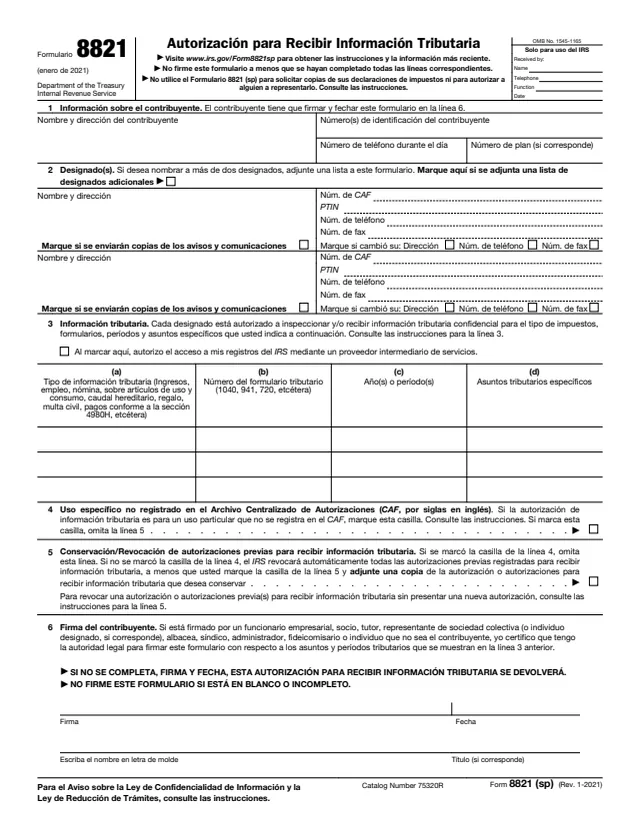
8821
45 fields, 1 page
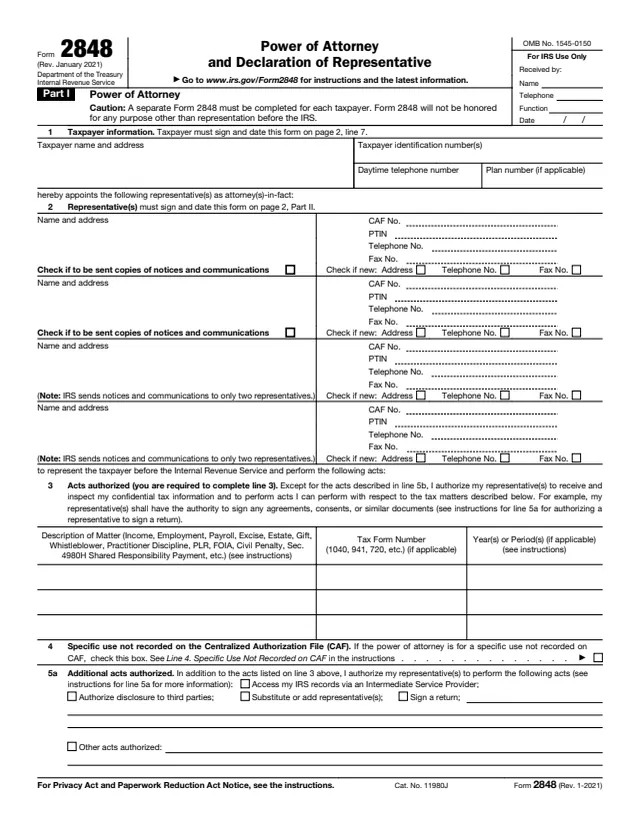
2848
92 fields, 2 pages
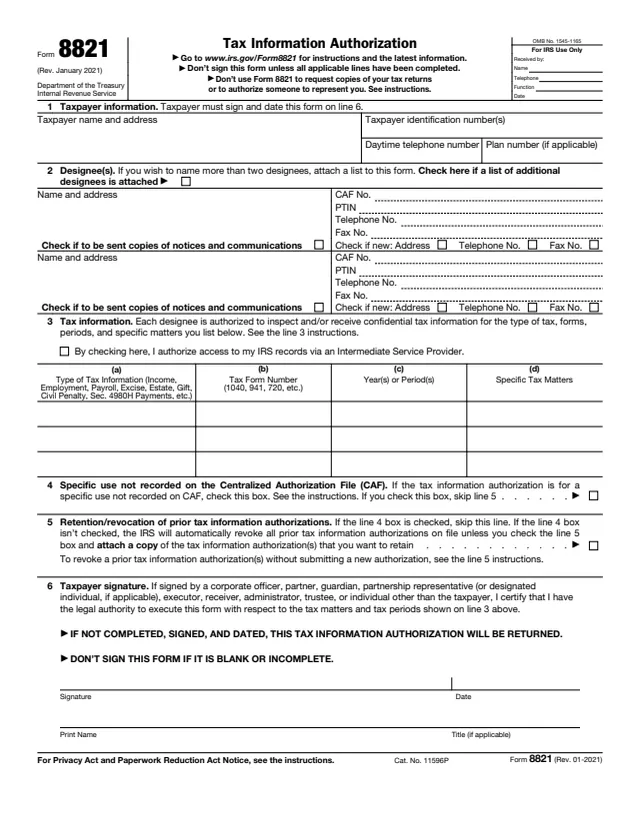
8821
45 fields, 1 page
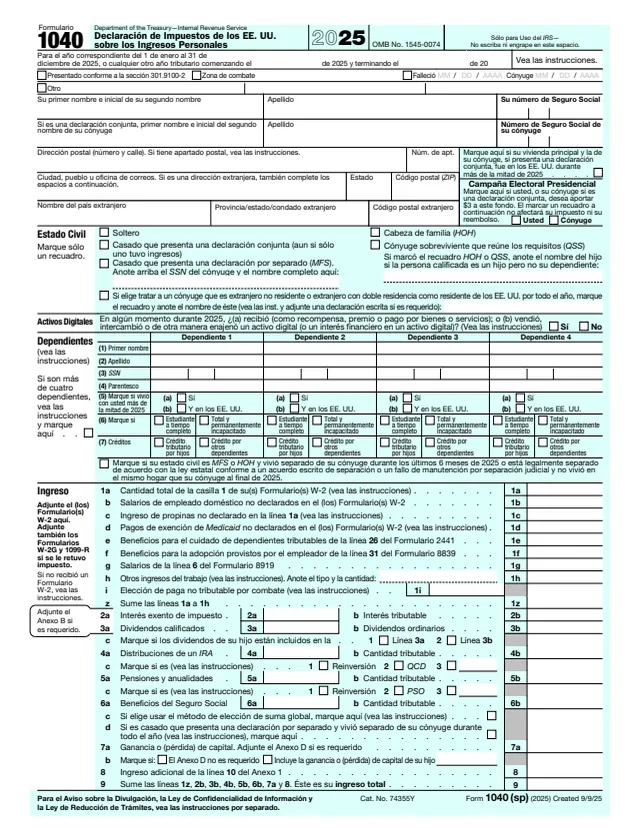
1040
199 fields, 2 pages
The taxpayer, a spouse on a joint request, a duly authorized official of a business, or an authorized representative completes it. It goes to the Taxpayer Advocate Service, not to a tax return.
No tool matches that search.
Spanish. It is the IRS Spanish version of Form 911, and the English edition is Form 911. Page 1 says the English version of any federal document is the official version.
The form says TAS help is always free for those who qualify.
By email to [email protected], by mail to 7940 Kentucky Dr. MS 11 G, Florence, KY 41042, or by fax to (855) 828-2723.
The form says that with no response within 30 days, email [email protected] with "Sin respuesta" in the subject line.
Yes. The form says an authorized representative completes Section II, signs there and attaches Form 2848, Form 8821 or another power of attorney.
The Paperwork Reduction Act notice gives an average estimated time of 30 minutes.