Header and items A to C
Recomputation year, name, address, identifying number, type of taxpayer, and the name and EIN of any pass-through entity that depreciated the property.
8866
Interest Computation Under the Look-Back Method for Property Depreciated Under the Income Forecast Method
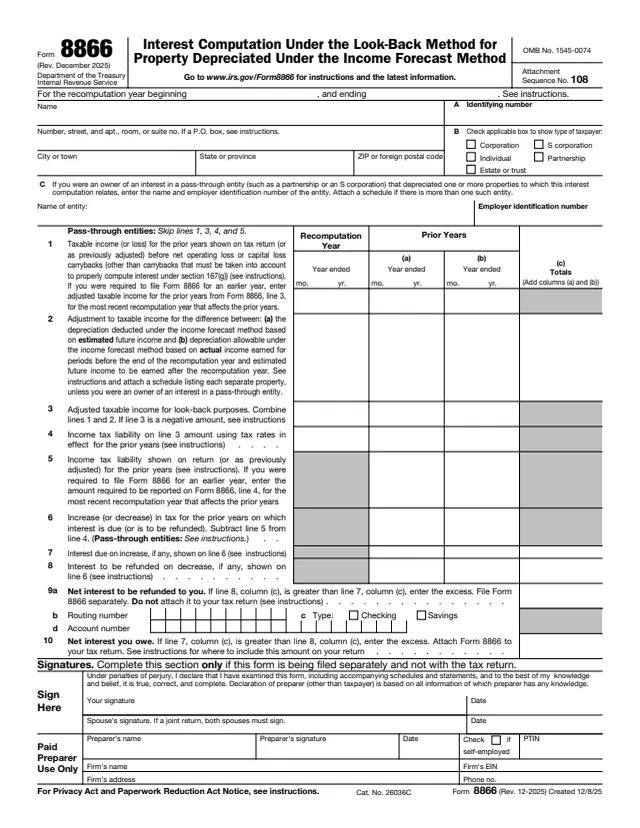
Form 8866 is used to figure the interest due or to be refunded under the look-back method of section 167(g)(2) for property placed in service after September 13, 1995, that is depreciated under the income forecast method. The instructions say the income forecast method generally is limited to motion picture films, video tapes, sound recordings, copyrights, books and patents.
The form recomputes taxable income and tax for prior years using depreciation based on actual income, then compares the result with the tax as originally reported. The difference in tax for each prior year sets an interest amount, which is either owed to the IRS or refunded. It is filed for a recomputation year, which the instructions say is generally the 3rd and 10th tax years after the year the property was placed in service.
The form lists five taxpayer types: corporation, S corporation, individual, partnership, and estate or trust. You can fill out Form 8866 free in your browser on this page and download it without an account.
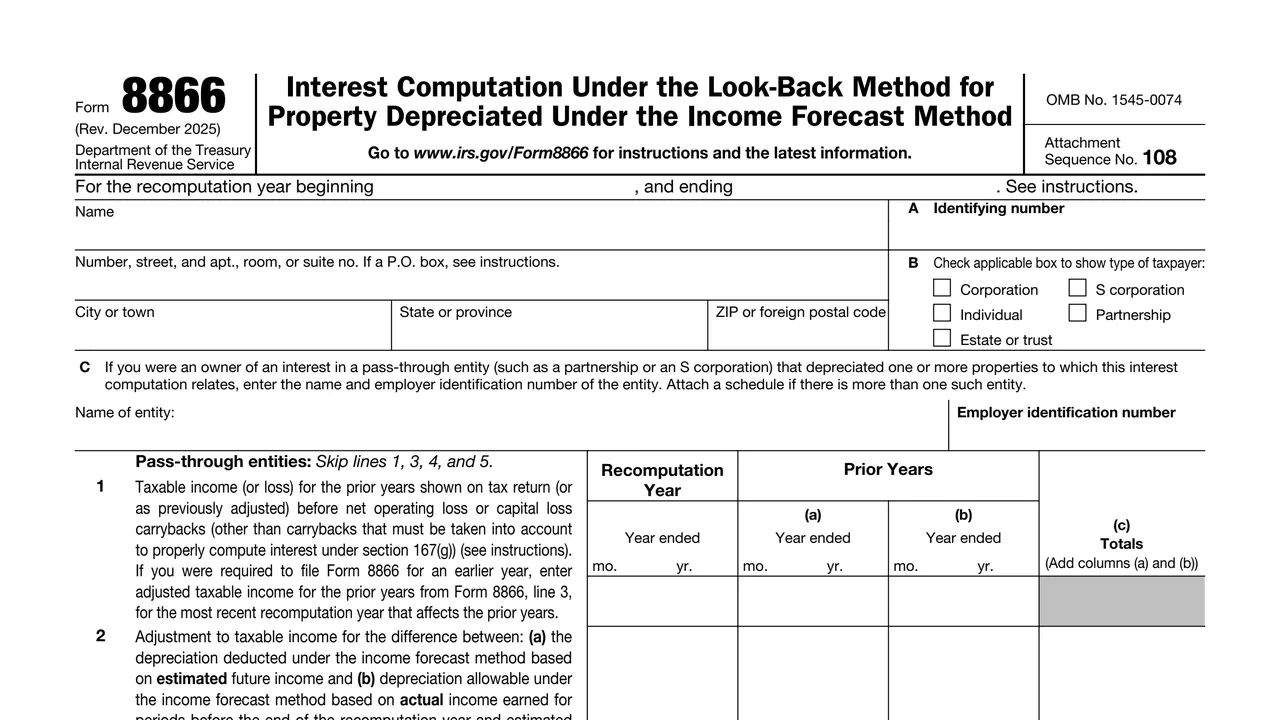
Recomputation year, name, address, identifying number, type of taxpayer, and the name and EIN of any pass-through entity that depreciated the property.
Prior year taxable income as reported, the adjustment for the difference in income forecast depreciation, and adjusted taxable income for look-back purposes.
Tax on the line 3 amount at prior year rates, tax shown on the return, and the increase or decrease in tax on which interest is due or refunded.
Interest due on an increase and interest to be refunded on a decrease, with totals in column (c).
Line 9a net interest to be refunded, with routing number, account type and account number on lines 9b to 9d. Line 10 net interest owed.
Taxpayer, spouse and paid preparer signatures, completed only if the form is filed separately and not with the tax return.
Enter the recomputation year at the top and its month and year in the recomputation year column. Head columns (a) and (b) with the ending month and year of each prior year. For more than 2 prior years, attach additional Forms 8866.
Enter prior year taxable income before carrybacks, except those that resulted from the look-back redetermination. On line 2 show each year's depreciation adjustment and attach a schedule listing each property, unless the filer is an owner of a pass-through interest.
Combine lines 1 and 2, figure tax at prior year rates on line 4 and enter tax as reported on line 5. Pass-through entities skip lines 1, 3, 4 and 5 and multiply line 2 by the applicable regular tax rate listed in the instructions.
Compute interest at the overpayment rate under section 6621, compounded daily, generally from the due date of the prior year return. The instructions print rate tables for non-corporate and corporate taxpayers.
If line 8, column (c), is greater than line 7, column (c), enter the excess on line 9a and add direct deposit details if wanted. If line 7 is greater, enter the excess on line 10.
Complete the signature section only when filing separately. On a joint return both spouses sign, and a paid preparer also completes the section.
You get the real form, filled in a browser tab, with nothing standing between you and the finished PDF.
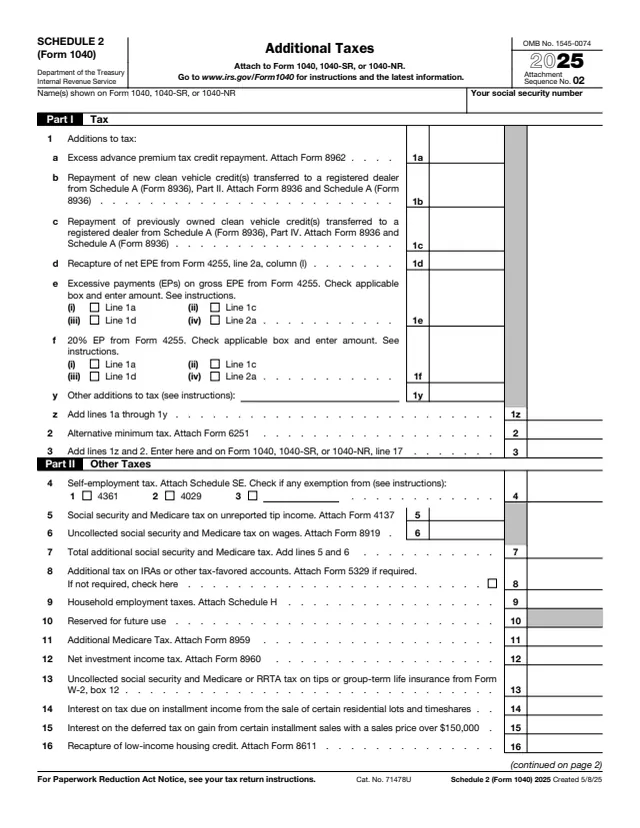
Attach Form 8866 to the income tax return. The instructions say no signature is needed then, and give where the interest goes, for example 2025 Schedule 2 (Form 1040), Part II, line 17n, or Form 1065, line 25.
Do not attach it to the return. File it separately: individuals to Department of Treasury, Internal Revenue Service, Philadelphia, PA 19255-0001; all others to Department of Treasury, Internal Revenue Service, Cincinnati, OH 45999-0001.
The instructions say to file Form 8866 by the date the income tax return is due, including extensions, and to keep a copy with any attached schedules.
The instructions say a corrected form is filed only if the line 6 amount for a prior year changes because of an error, an income tax examination or an amended tax return.
The instructions say line 9a interest is reported as interest income when received or accrued. Corporations other than S corporations may deduct line 10 interest; for individuals and other taxpayers it is not deductible.
1040
63 fields, 2 pages
1120
481 fields, 6 pages
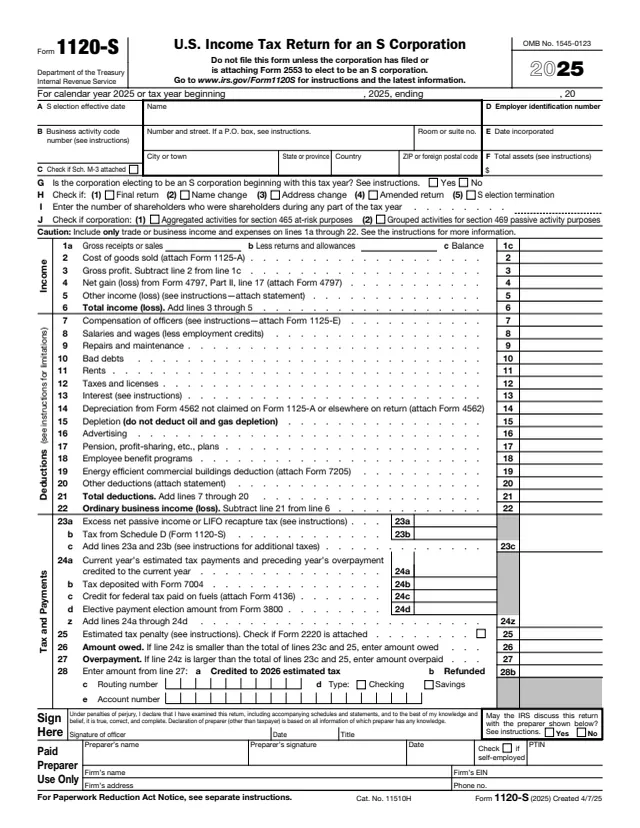
1120-S
390 fields, 5 pages
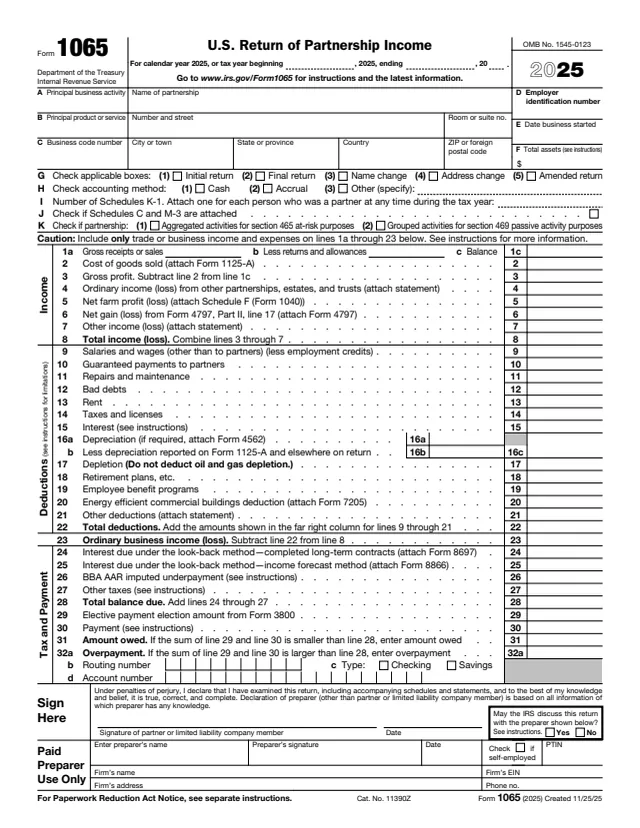
1065
440 fields, 6 pages
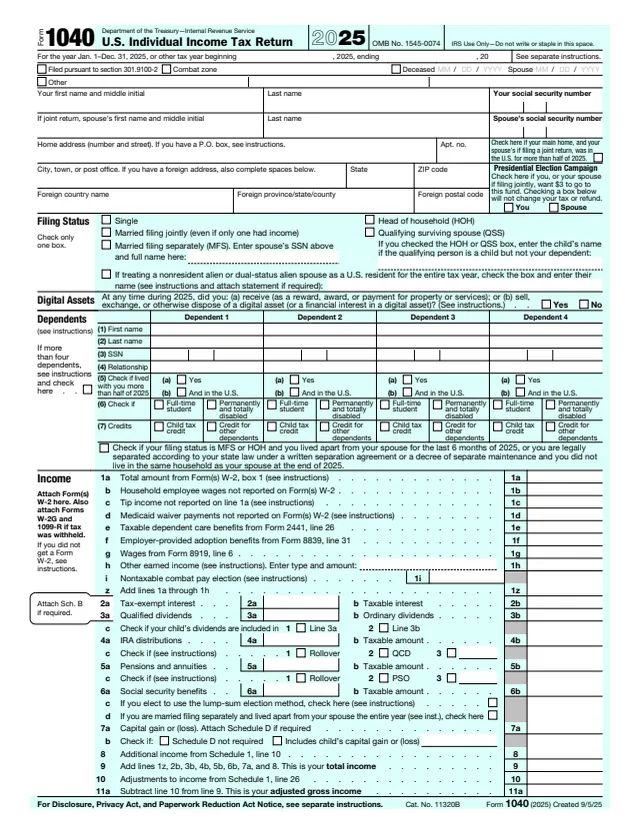
1040
199 fields, 2 pages
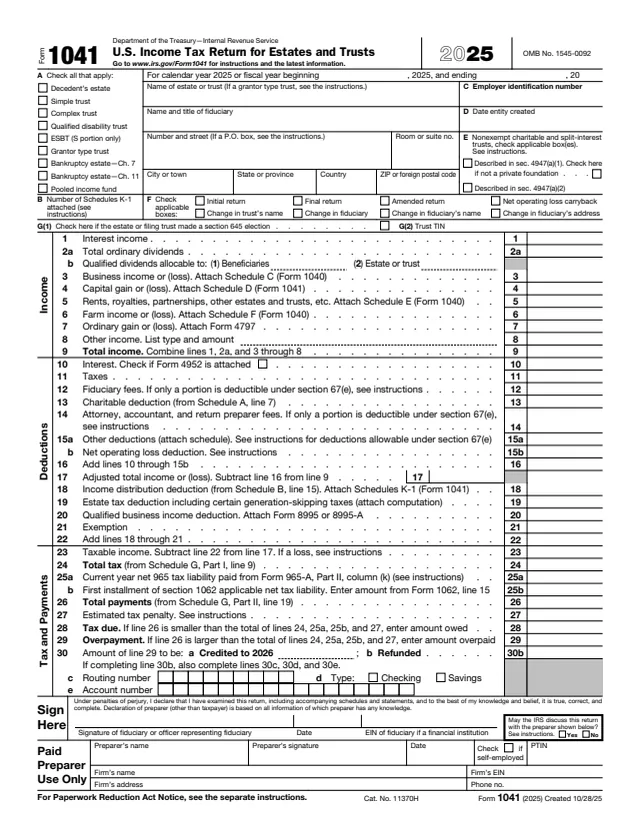
1041
173 fields, 3 pages
The instructions say Form 8866 generally is filed for each recomputation year by a taxpayer that depreciates property placed in service after September 13, 1995, under the income forecast method.
No tool matches that search.
Property placed in service after September 13, 1995, depreciated under the income forecast method. The instructions say that method generally is limited to motion picture films, video tapes, sound recordings, copyrights, books and patents.
The instructions say it is generally the 3rd and 10th tax years after the tax year the property was placed in service. A year is not a recomputation year if actual income in each earlier year was within 10% of the estimated income used for depreciation.
The instructions say the look-back method does not apply to property with an unadjusted basis (total capitalized cost) of $100,000 or less at the end of the recomputation year.
Only when interest is owed or none is to be refunded. When interest is to be refunded, the instructions say to file it separately at the address listed for individuals or for all others.
The instructions say the overpayment rate under section 6621 is used, compounded daily, and they include rate tables for non-corporate and corporate taxpayers.
Attach additional Forms 8866. The instructions say to enter totals only in column (c) of the first form, and to sign only the first form when filing separately.