Top of the form
The filing year, name, address, identifying number (item A), type of taxpayer (item B), and the name and EIN of any pass-through entity holding the contracts (item C).
8697
Interest Computation Under the Look-Back Method for Completed Long-Term Contracts
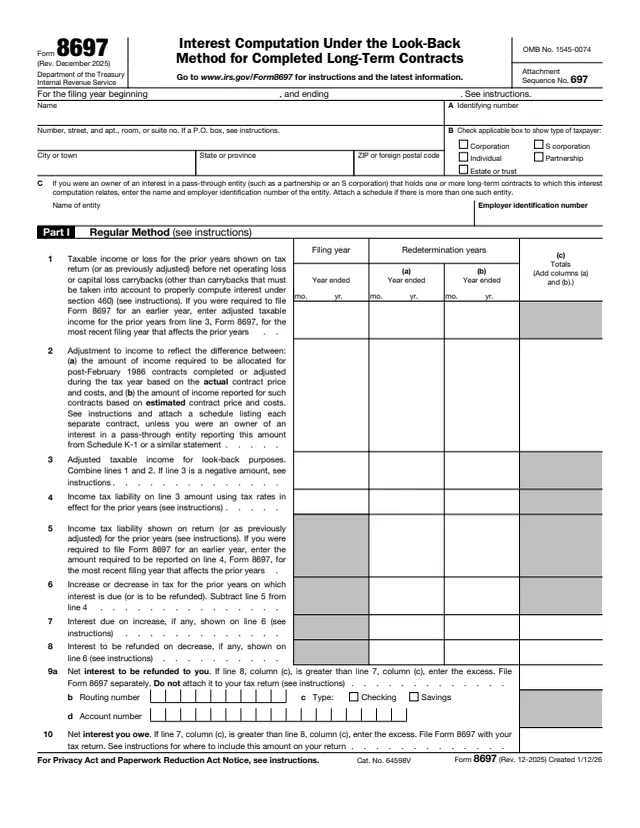
Form 8697, Interest Computation Under the Look-Back Method for Completed Long-Term Contracts, figures the interest due or to be refunded under the look-back method of section 460(b)(2) on certain long-term contracts accounted for under the percentage of completion method or the percentage of completion-capitalized cost method.
When such a contract is completed, or its price or costs are adjusted after completion, income reported in earlier years from estimated contract price and costs is compared with income allocated using the actual amounts. The form recomputes the tax for those prior years and figures interest on the difference, using the regular method in Part I or the simplified marginal impact method (SMIM) in Part II.
The instructions say the form is attached to the income tax return when interest is owed, and filed separately when interest is to be refunded. You can fill out Form 8697 free in your browser on this page and download the result without an account.
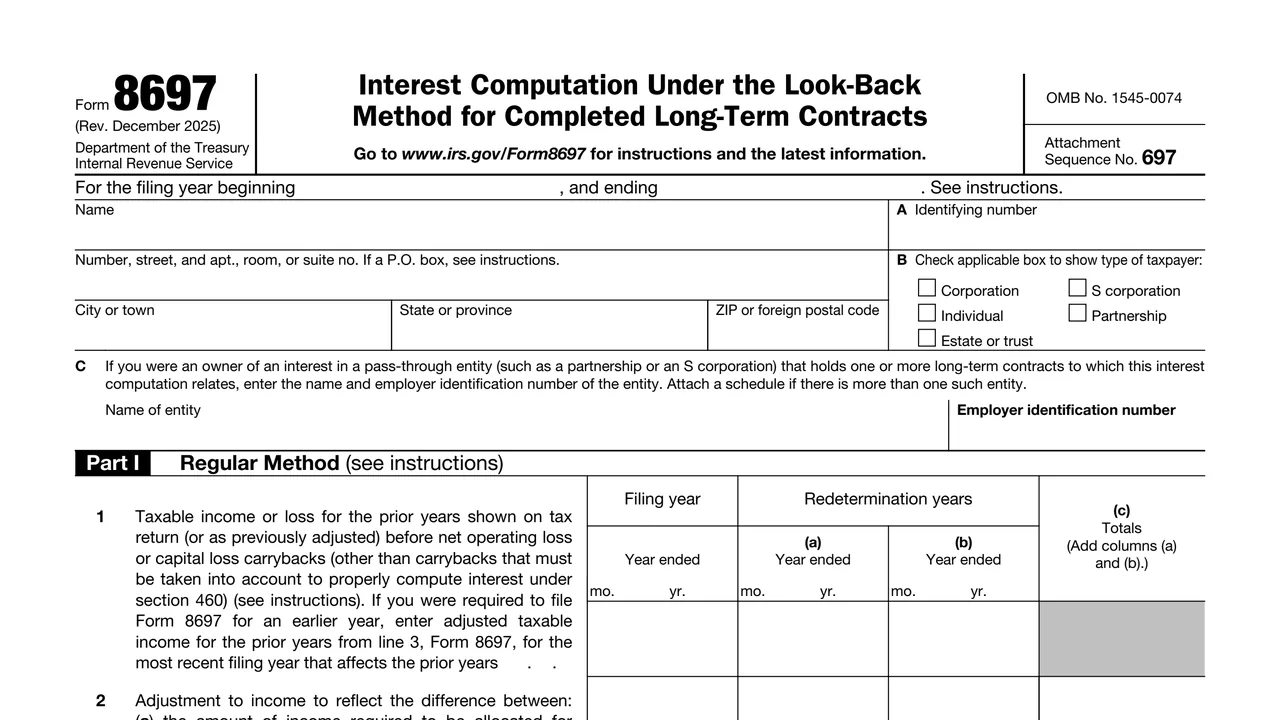
The filing year, name, address, identifying number (item A), type of taxpayer (item B), and the name and EIN of any pass-through entity holding the contracts (item C).
Prior years' taxable income, the look-back adjustment, adjusted taxable income, tax recomputed at prior-year rates, tax shown on the return, and the increase or decrease in tax.
Interest due on any increase and to be refunded on any decrease, net interest to be refunded on line 9a with direct deposit lines 9b to 9d, and net interest owed on line 10.
Adjustments to regular taxable income and alternative minimum taxable income, the tax change at the applicable regular and AMT rates, the larger of the two, the overpayment ceiling, and the increase or decrease in tax.
Interest due and interest to be refunded, net interest to be refunded on line 10a with direct deposit lines 10b to 10d, and net interest owed on line 11.
Lines for the taxpayer, a spouse on a joint return, and a paid preparer. The form says to complete it only when filing the form by itself and not with the tax return.
Enter the filing year in which the contracts were completed or adjusted and the name shown on the federal income tax return. Individuals enter an SSN, other filers an EIN. The instructions say to enter an address only when filing the form separately.
Part I is used unless the taxpayer elects, has an election in effect, or is required to use the SMIM. Part II is for pass-through entities applying the method at the entity level and taxpayers using the SMIM.
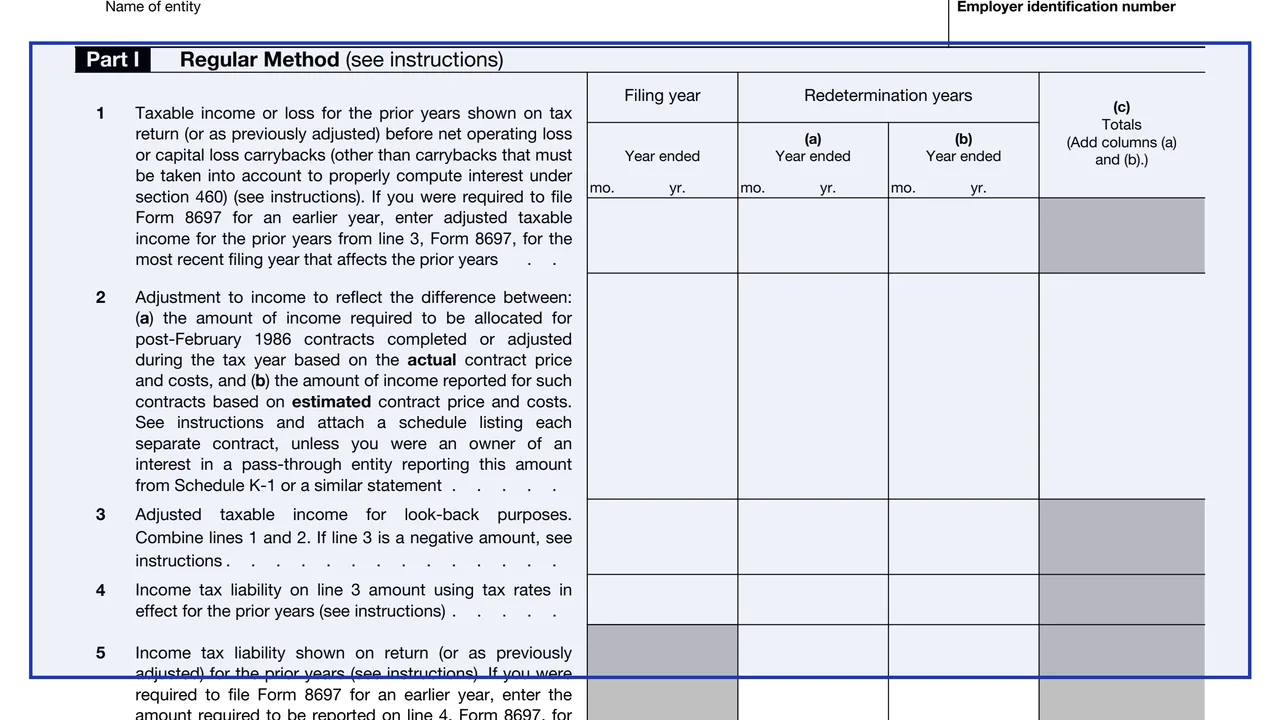
Enter the ending month and year of each prior year at the top of the columns. Attach a schedule listing each contract unless line 2 comes from Schedule K-1 or a similar statement. More than 2 prior years need additional Forms 8697.
The instructions say interest is figured at the overpayment rate under section 6621, compounded daily, generally from the due date of each prior year's return to the earlier of the filing year's due date or the date that return is filed and its tax paid.
If interest to be refunded is larger, enter the excess on Part I line 9a or Part II line 10a and add direct deposit details. If interest owed is larger, enter it on Part I line 10 or Part II line 11.
Sign only when filing the form by itself. On a joint return both spouses sign, and when additional Forms 8697 show more than 2 redetermination years, only the first is signed.
You get the real form, filled in a browser tab, with nothing standing between you and the finished PDF.
Attach Form 8697 to the income tax return. The instructions give examples of where the interest goes: 2025 Schedule 2 (Form 1040), Part II, line 17n; Form 1065, line 24; 2025 Form 1120-S, line 23c; 2025 Form 1120, Schedule J, line 9c.
File the form separately, not with the return. Individuals: Department of Treasury, Internal Revenue Service, Philadelphia, PA 19255-0001. All others: Department of Treasury, Internal Revenue Service, Cincinnati, OH 45999-0001.
The instructions say to file Form 8697 by the date the income tax return is required to be filed (including extensions), and to keep a copy with any attached schedules.
A corrected form is filed only if the amount on Part I, line 6, or Part II, line 7, for any prior year changes because of an error, an income tax examination or an amended tax return.
The instructions say look-back interest owed is not subject to the estimated tax penalty.
Corporations other than S corporations may deduct interest owed as interest expense; for individuals and other taxpayers it is not deductible. Interest refunded is reported as interest income for the year it is received or accrued.
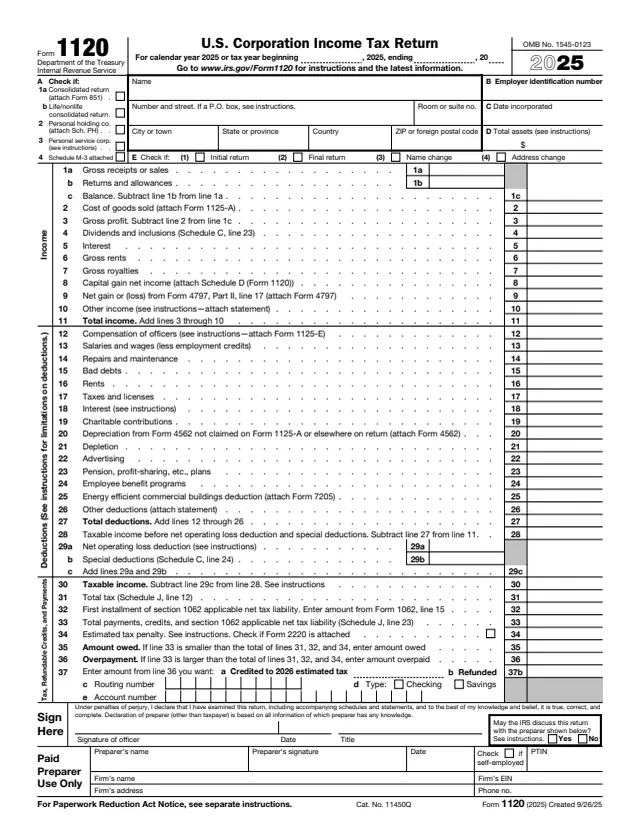
1120
481 fields, 6 pages
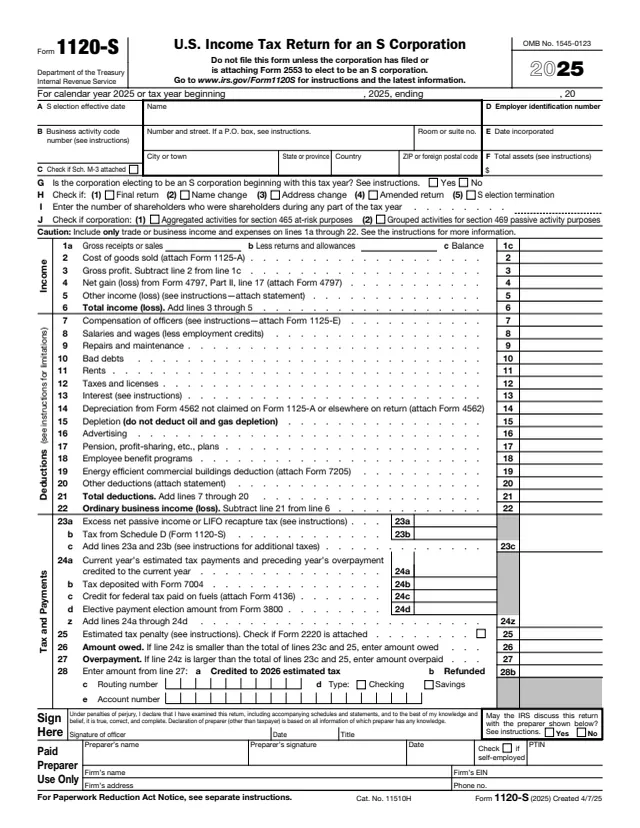
1120-S
390 fields, 5 pages
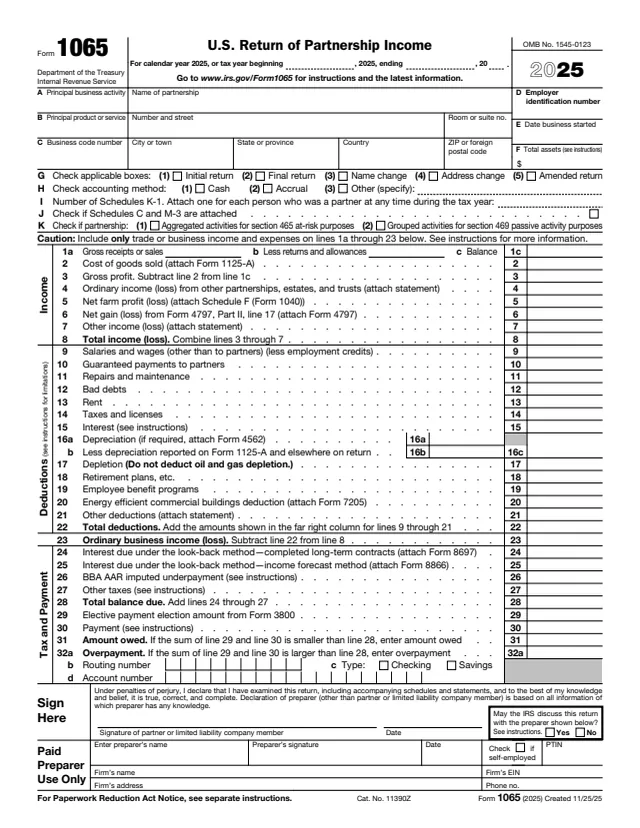
1065
440 fields, 6 pages
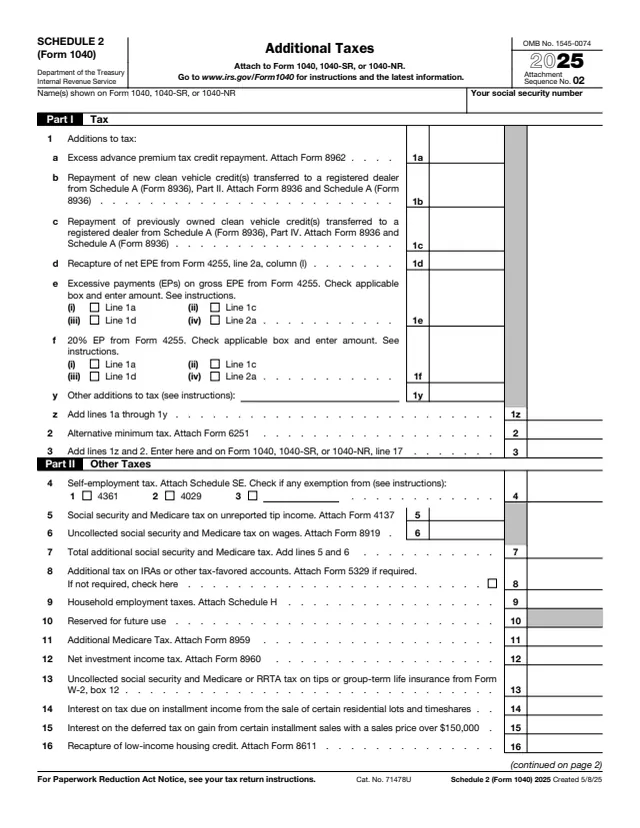
1040
63 fields, 2 pages
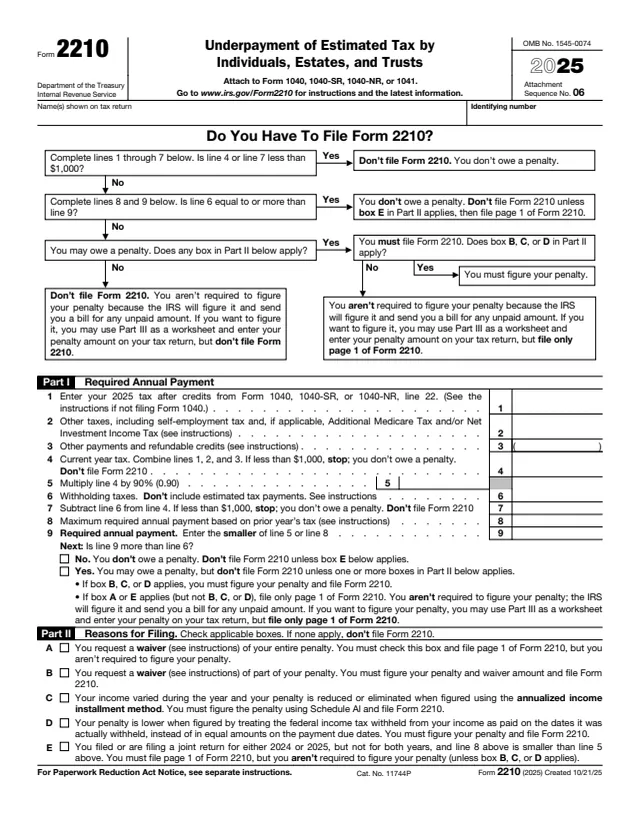
2210
199 fields, 3 pages
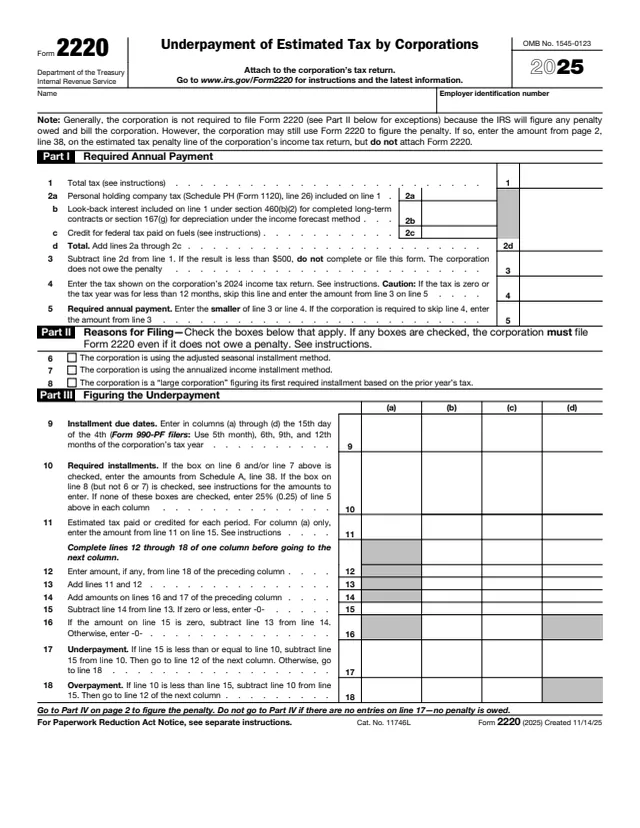
2220
322 fields, 4 pages
The instructions say the form is filed for each tax year in which a long-term contract entered into after February 28, 1986, and accounted for under either percentage of completion method, was completed, and for later years in which its price or costs are adjusted. Item B lists corporation, S corporation, individual, partnership, and estate or trust.
No tool matches that search.
The instructions describe it as the method of section 460(b)(2) for long-term contracts accounted for under the percentage of completion method or the percentage of completion-capitalized cost method. Prior years' income from estimated contract price and costs is compared with income based on the actual amounts.
When interest is owed, or none is to be refunded, yes. When interest is to be refunded, the instructions say to file it separately at the Philadelphia or Cincinnati address they list.
The form says to complete the signature section only if filing it by itself and not with the tax return.
The instructions describe exceptions for home construction contracts, certain construction contracts expected to be completed within 2 years by taxpayers under a gross receipts test, small contracts completed within 2 years, and an elective de minimis exception.
The instructions say to attach additional Forms 8697 and to enter totals only in column (c) of the first Form 8697.
No. The instructions say look-back interest owed is not subject to the estimated tax penalty.