Items 1 to 5: the claimant
Name and address of claimants, telephone number, best time to call, amount of claim, and social security or employer identification number, which the form says is voluntary.
8546
Claim for Reimbursement of Bank Charges
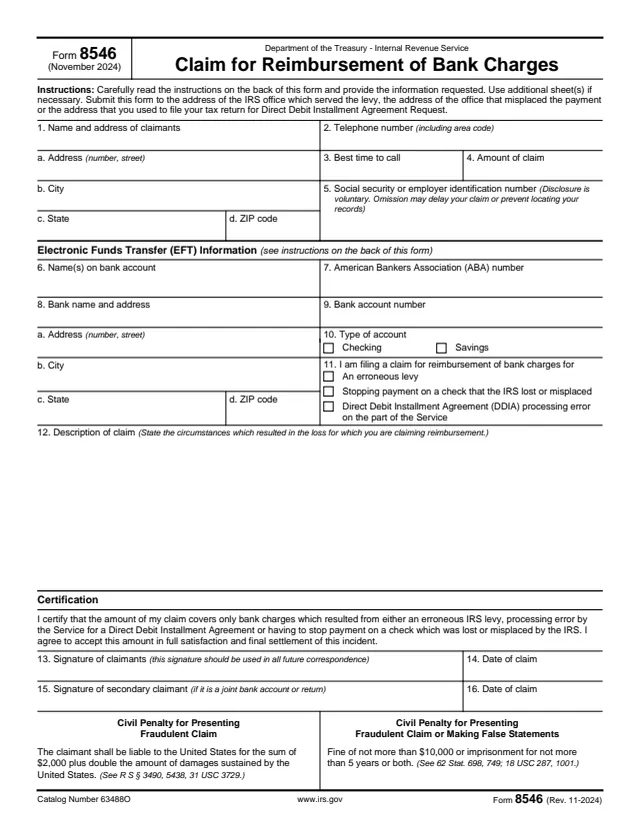
Form 8546, Claim for Reimbursement of Bank Charges, is the IRS form for claiming bank charges caused by the IRS. The instructions say to use it only for reimbursement of bank charges for an erroneous levy, stopping payment on a check that the IRS lost or misplaced, or a Direct Debit Installment Agreement (DDIA) processing error on the part of the Service.
The front collects the claimant's contact details, the amount of the claim, bank details for an electronic funds transfer (EFT), the type of claim and a description of what happened, followed by a certification and signatures. The back has the instructions and Internal Revenue Policy P-5-39, which lists the criteria for each kind of case.
The instructions say claims must be made within one year of the date the claim accrues and are limited to $1,000. You can fill out Form 8546 free in your browser on this page and download it without an account.
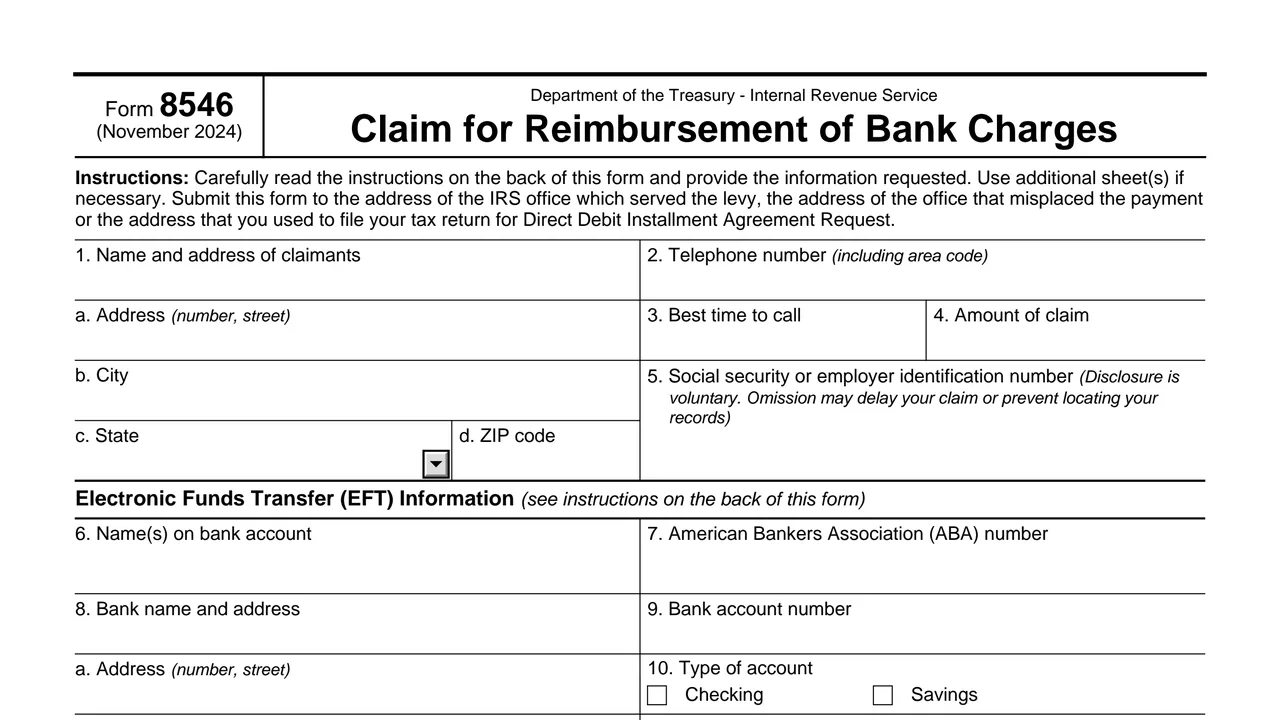
Name and address of claimants, telephone number, best time to call, amount of claim, and social security or employer identification number, which the form says is voluntary.
Names on the bank account, American Bankers Association (ABA) number, bank name and address, account number, and checking or savings.
Boxes for an erroneous levy, stopping payment on a check the IRS lost or misplaced, or a DDIA processing error on the part of the Service.
The circumstances that resulted in the loss being claimed.
A certification that the claim covers only these bank charges and is accepted in full settlement, then signatures and dates of the claimant and any secondary claimant.
What to attach, who signs, how payment is made, and the criteria for erroneous levy, lost check and DDIA cases.
The instructions say to complete all blocks and write "NONE" if a block does not apply.
Enter the claimant's name and address, phone number, best time to call, the amount of the claim and the SSN or EIN.
Enter bank details to be paid by EFT. The instructions say the ABA number is the first nine digits in the number at the bottom of your checks, and a check is sent if items 6 to 10 are left blank.
Check the type of claim and describe the circumstances that caused the loss.
Attach verification of the amount, a copy of the levy if it applies, records showing the bank charges and that they were paid, including bank statements and correspondence.
The claimant signs items 13 and 14. A secondary claimant signs items 15 and 16 for a joint bank account or return.
You get the real form, filled in a browser tab, with nothing standing between you and the finished PDF.
The form says to submit it to the address of the IRS office which served the levy, the address of the office that misplaced the payment, or the address used to file the tax return for a Direct Debit Installment Agreement Request.
The instructions say claims must be made within one year of the date the claim accrues and are limited to $1,000 (31 USC 3723).
The instructions say to contact the IRS office that issued the levy or requested the replacement check, at the address on the copy of the levy or request. For DDIA questions they give 1-800-829-1040 or the address used to file the return.
If the IRS approves the claim, the money can be sent to the bank by EFT or by check. The instructions say EFT will be faster, safer, and more convenient.
Policy P-5-39 says the charges must have been paid by the taxpayer and must not have been waived or reimbursed by the financial institution.
The form lists a civil penalty of $2,000 plus double the amount of damages for a fraudulent claim, and a fine of not more than $10,000 or imprisonment for not more than 5 years or both for a fraudulent claim or false statements.
9465
66 fields, 2 pages
433-D
168 fields, 4 pages
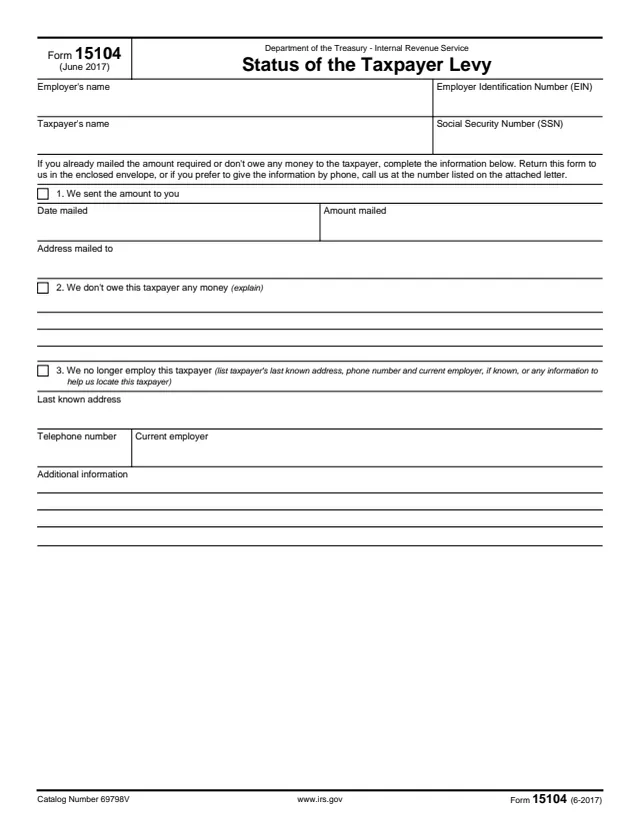
15104
15 fields, 1 page
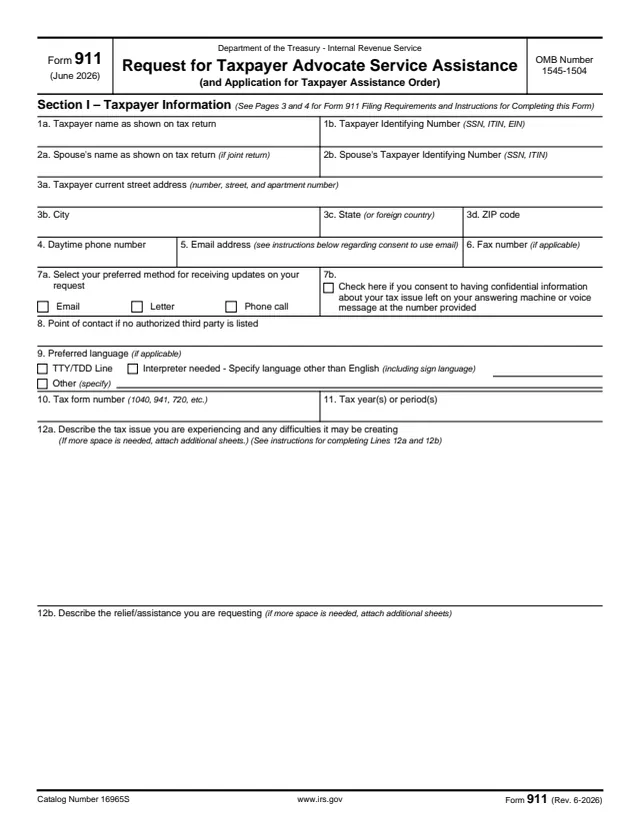
911
57 fields, 4 pages
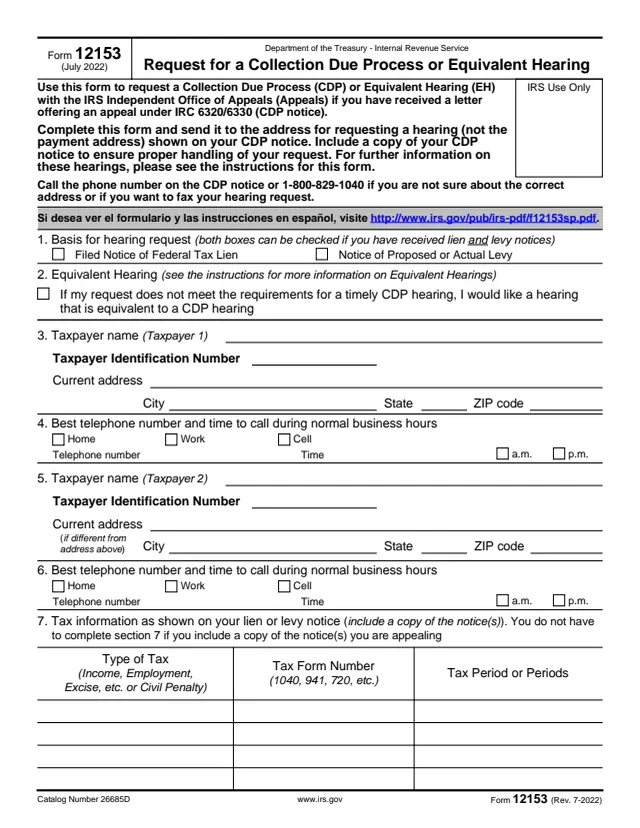
12153
79 fields, 4 pages
The claimant files it with the IRS office connected to the error, and the instructions say the claimants sign it.
No tool matches that search.
The instructions say only charges from an erroneous levy, stopping payment on a check the IRS lost or misplaced, or a DDIA processing error on the part of the Service.
The instructions say claims must be made within one year of the date the claim accrues and are limited to $1,000.
By electronic funds transfer to the bank in items 6 to 10, or by check if those items are left blank.
For an erroneous levy, each owner of a joint account signs as a claimant. DDIA processing error claims on joint returns also require both spouses' signatures.
The instructions say it is the first nine digits in the number at the bottom of your checks. Without a checking account, they say to ask the bank.
Verification of the amount, any documents explaining or acknowledging the IRS error, a copy of the levy if it applies, and records of the charges and their payment, including bank statements and correspondence.