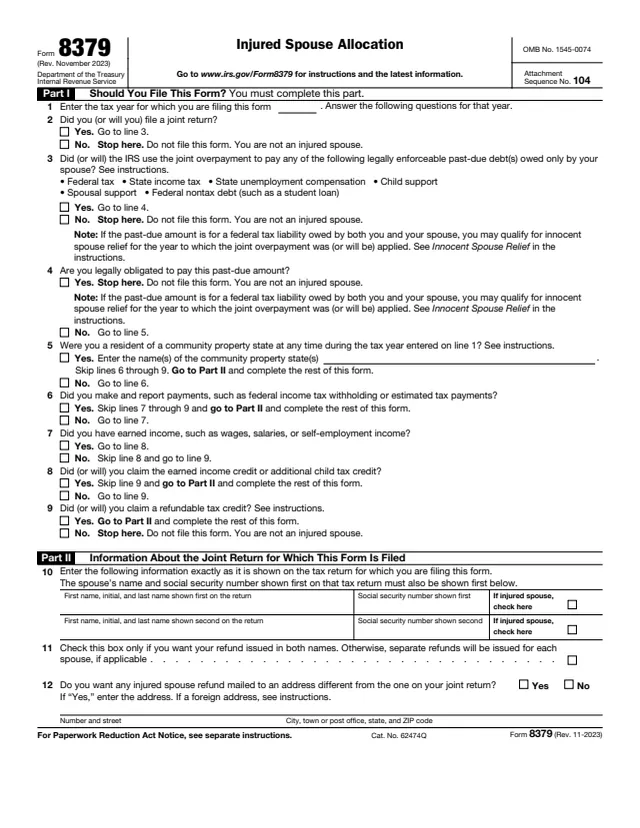
Part I: Should you file this form?
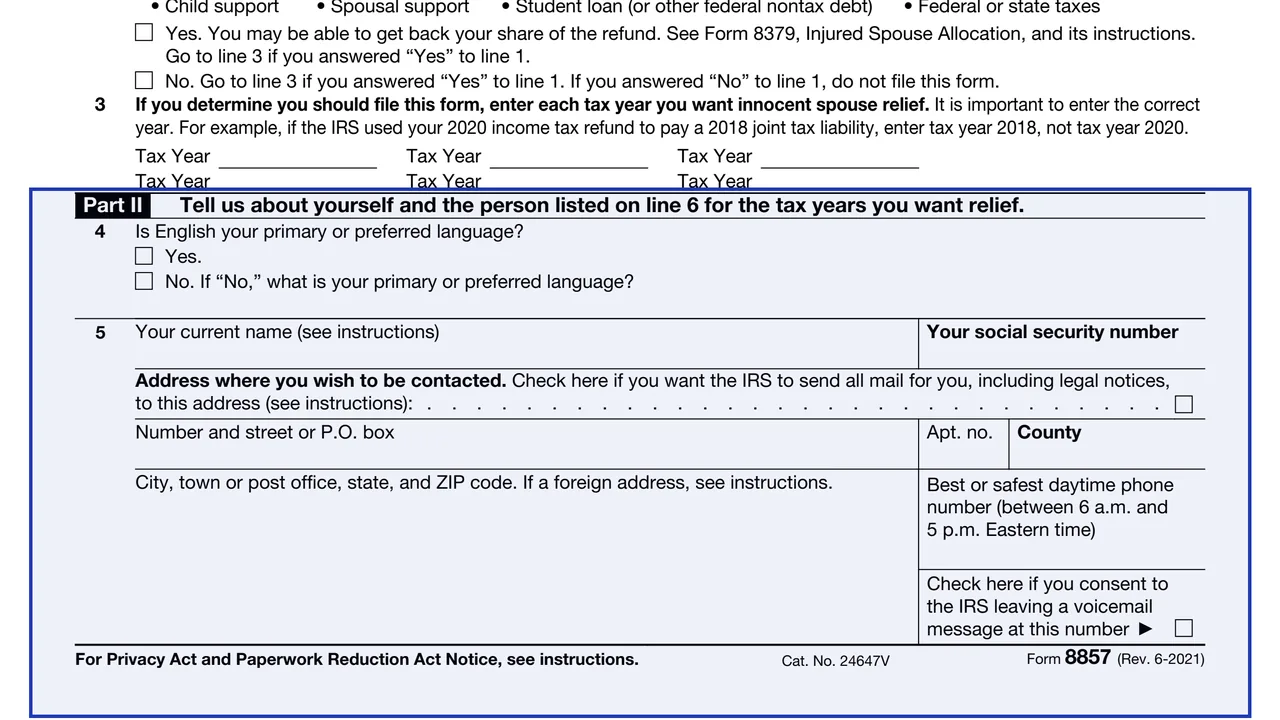
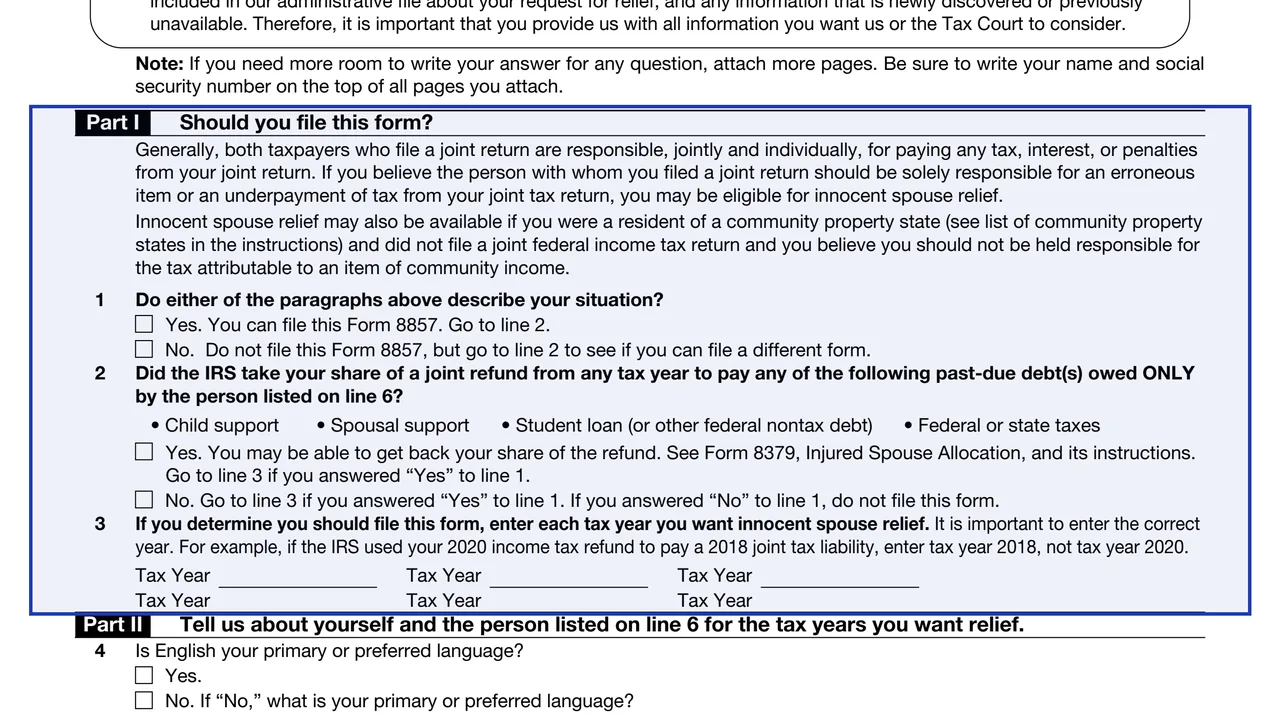
Lines 1 to 3 check whether Form 8857 or Form 8379 fits your situation and list each tax year for which you want relief.
8857
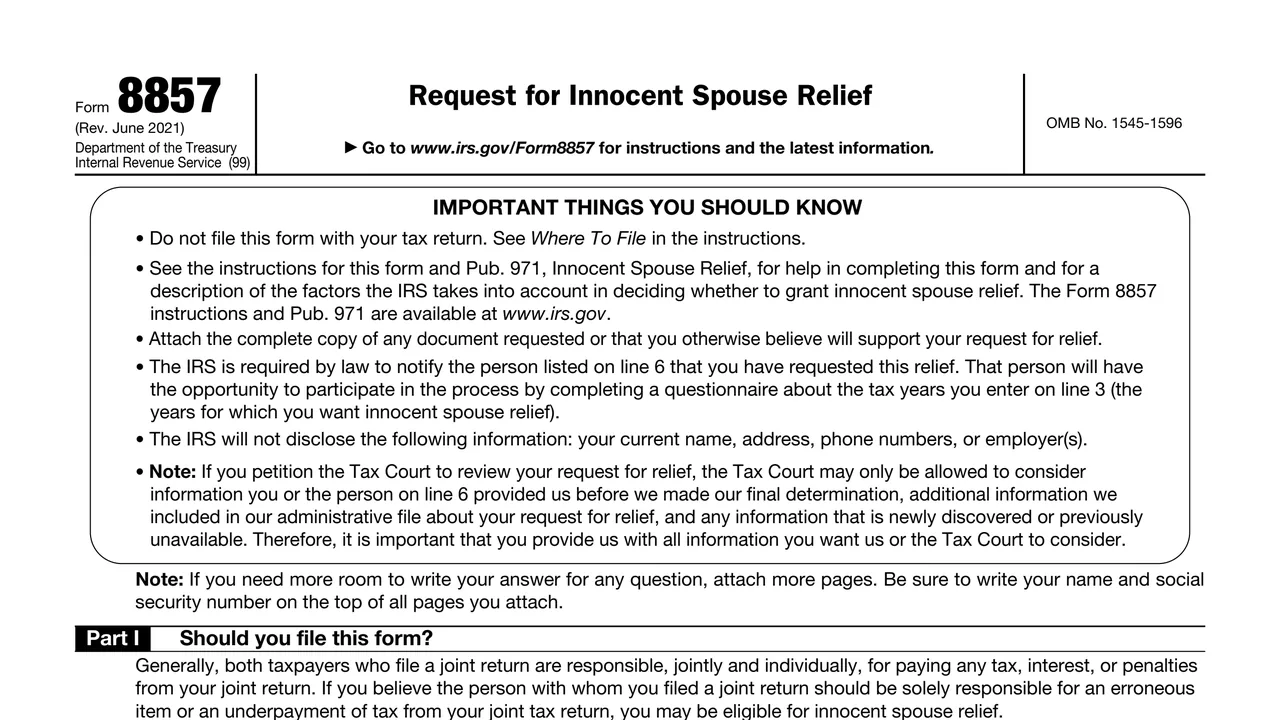
Request for Innocent Spouse Relief
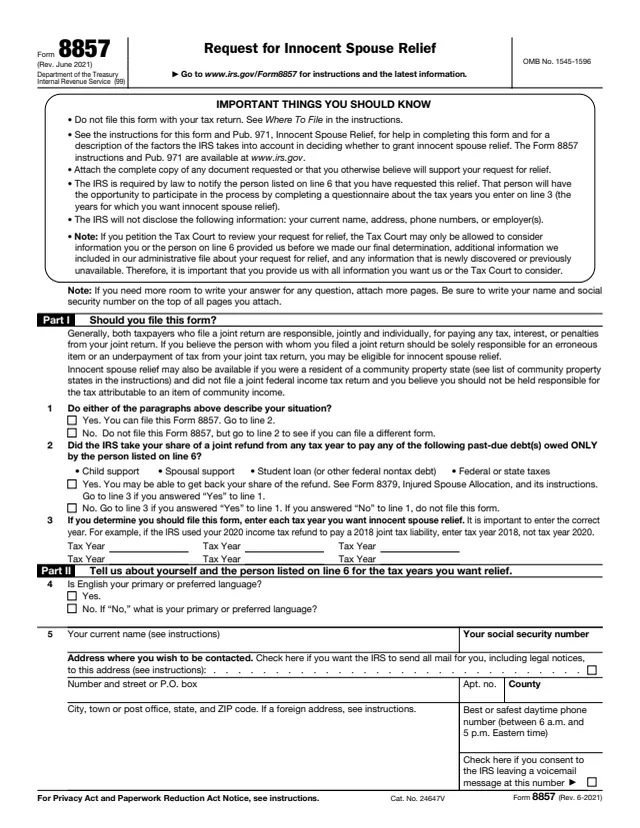
Form 8857 is the request for innocent spouse relief. The IRS page says taxpayers file it to request relief from tax liability, plus related penalties and interest, when they believe only their spouse or former spouse should be held responsible for all or part of the tax.
The instructions explain that a joint return makes both spouses responsible for the entire tax liability, called joint and several liability, even after a divorce decree assigns the tax to one of them. They list four types of relief: innocent spouse relief, separation of liability relief, equitable relief, and relief from liability for tax attributable to an item of community income.
The form asks about your situation, your involvement with the returns and household finances, your current income and expenses, and, if it applies, domestic violence or abuse. By law the IRS contacts the person listed on line 6. You can fill out the PDF free in your browser on this page and download it without an account.
Lines 1 to 3 check whether Form 8857 or Form 8379 fits your situation and list each tax year for which you want relief.
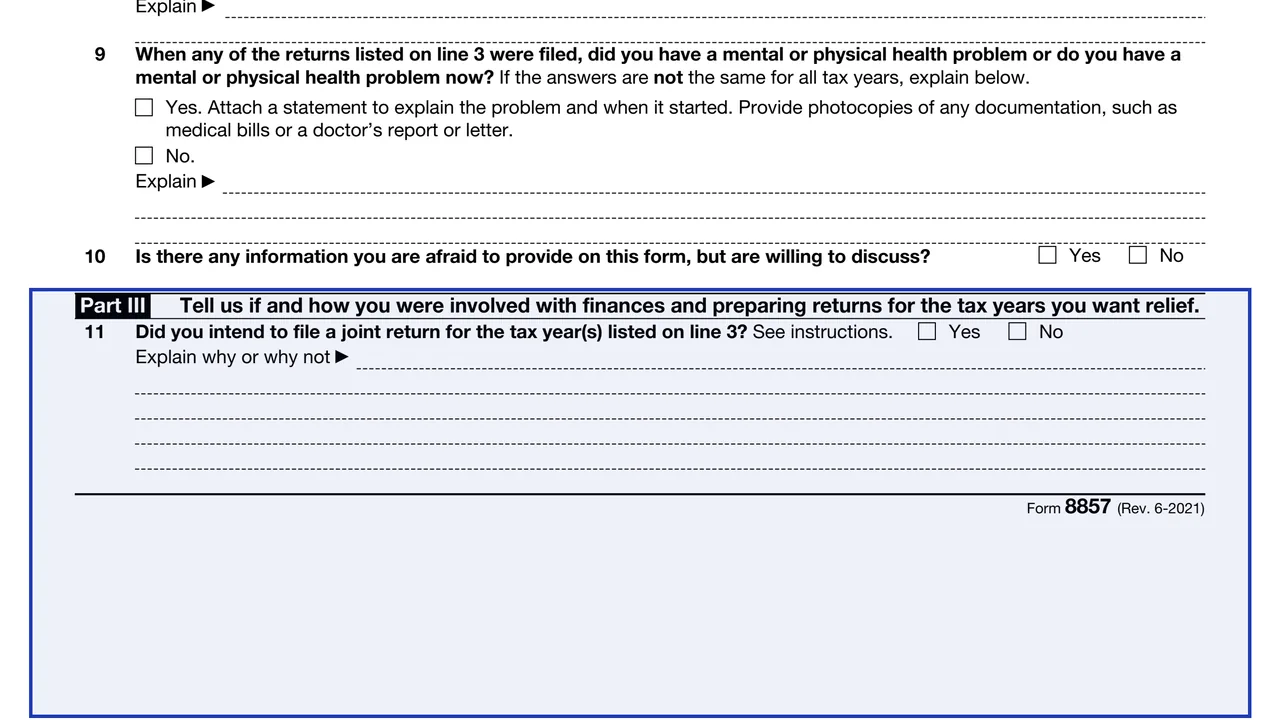
Lines 4 to 10 ask for your language, name, address and phone, the spouse's details, marital status, education, health problems and any information you want to discuss rather than write.
Lines 11 to 19 ask whether you intended to file jointly, how you were involved in preparing returns, what you knew about income and balances due, large purchases and asset transfers.
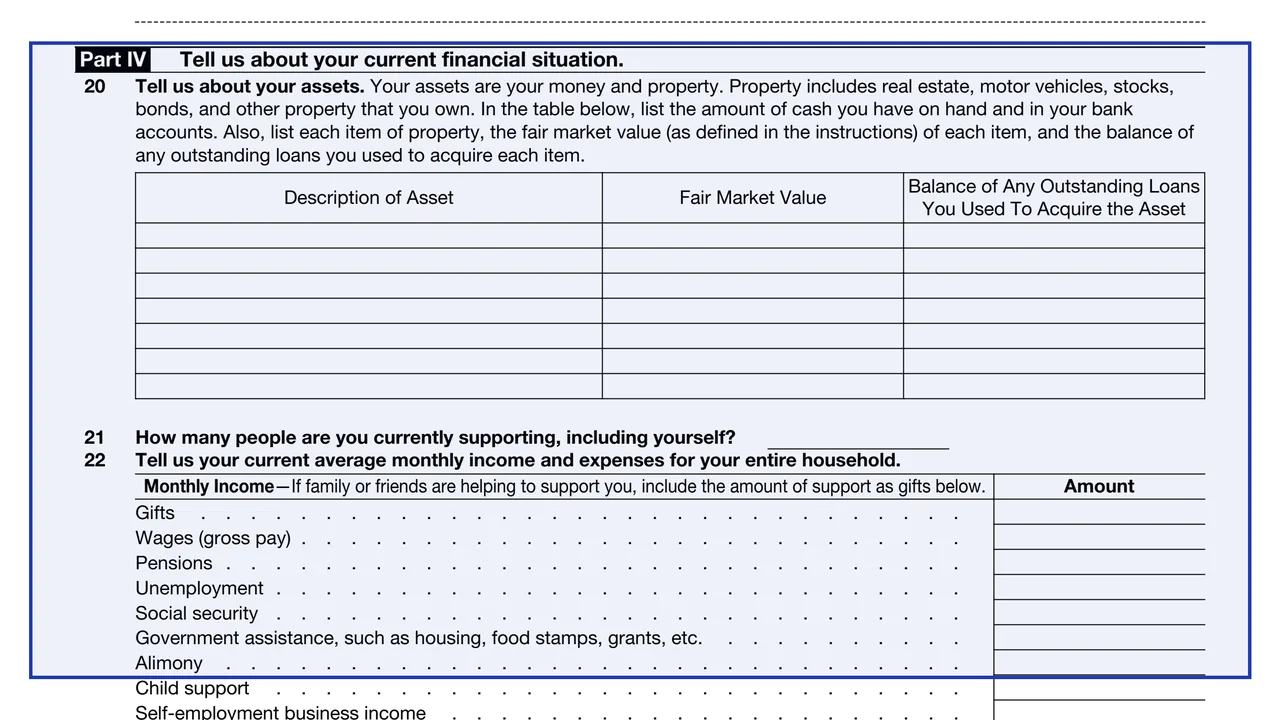
Lines 20 to 22 list your assets with fair market value and loan balances, the people you support, and your household's average monthly income and expenses.
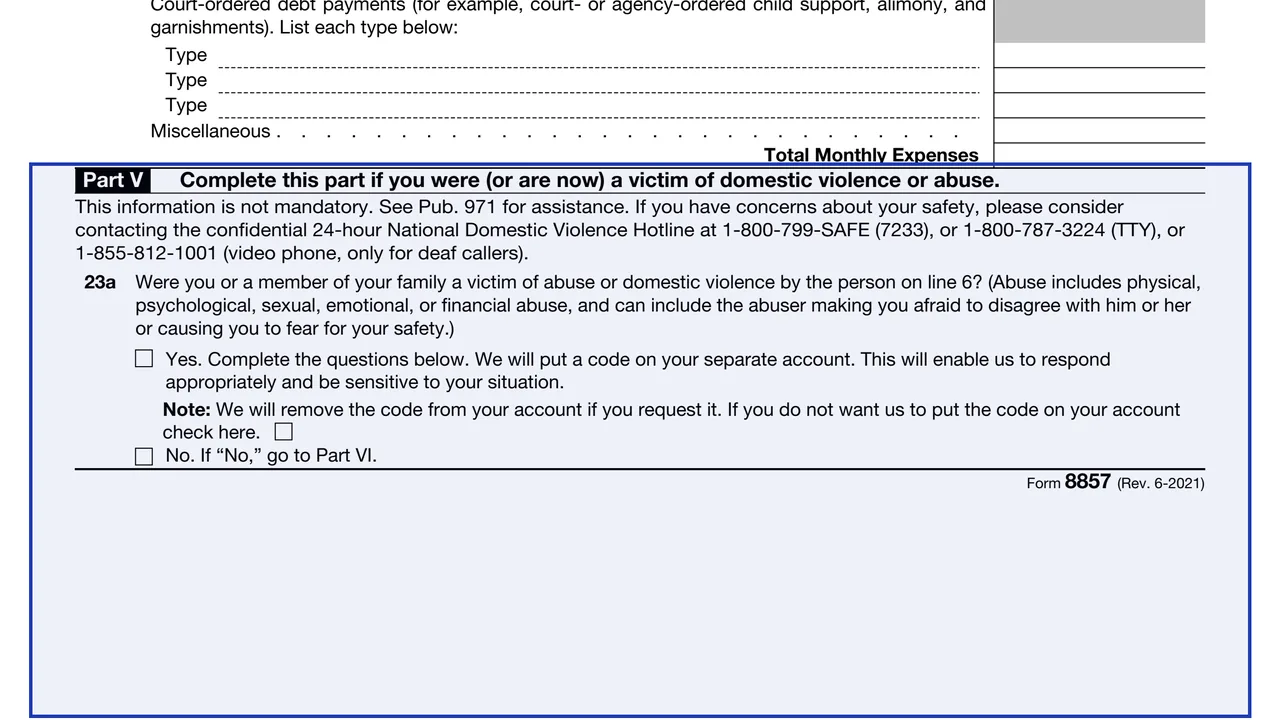
Line 23 asks about abuse by the person on line 6. The form says this information is not mandatory and lists documents that can support a claim.
Line 24 holds any other information to consider. Line 25 is the box to request a refund if you qualify and already paid. Then the signature and paid preparer area.
Answer lines 1 and 2, then enter each tax year for relief. The form's example: if the IRS used your 2020 refund to pay a 2018 joint liability, enter 2018, not 2020.
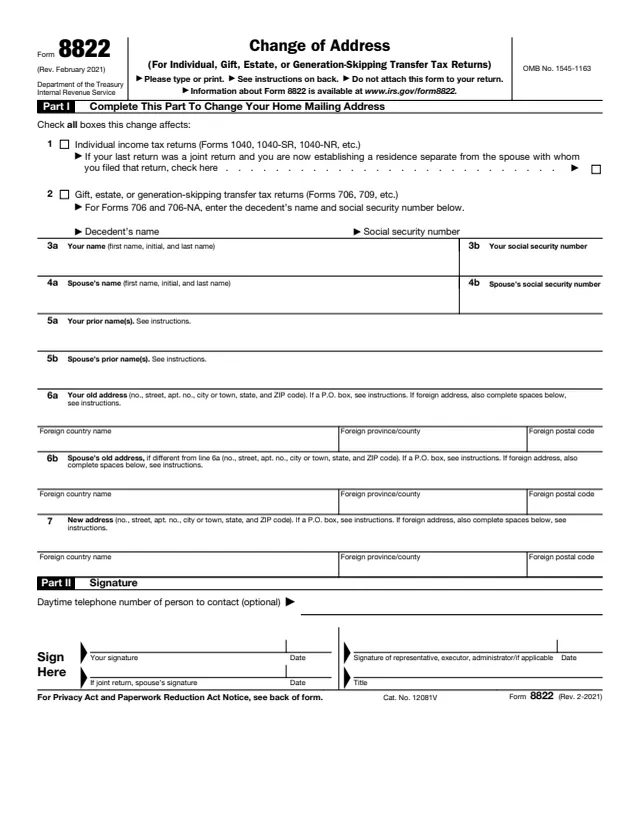
Enter your current name, SSN, address with county and a daytime phone. Check the box if all IRS mail, including legal notices, goes to this address. A former name goes in parentheses.
Enter the person you were married to at the end of the years on line 3. The form says to file a separate Form 8857 for years with different spouses. Then check the marital status.
Explain in your own words. The instructions say to explain on line 11 if you believe your signature was forged or you signed under duress. Attach pages with your name and SSN if you need more room.
List assets and monthly household income and expenses. Part V is optional. If line 23a is Yes, the IRS puts a code on your account, and the form has a box to decline it.
Check line 25 to ask for a refund of payments made with your own money. Sign and date. The instructions say an unsigned form is returned, and a paid preparer signs with a PTIN.
You get the real form, filled in a browser tab, with nothing standing between you and the finished PDF.
Not with your tax return or the Tax Court. The instructions list Internal Revenue Service, P.O. Box 120053, Covington, KY 41012 by mail, or 7940 Kentucky Drive, Stop 840F, Florence, KY 41042 by private delivery service.
The instructions say the form and attachments can be faxed to 855-233-8558, even if you are working with an IRS employee on an examination, appeal or collection.
The instructions say as soon as you become aware of the liability, and generally no later than 2 years after the first IRS attempt to collect the tax from you, with different deadlines for equitable relief and community income relief.
The instructions say the IRS contacts the person on line 6 with no exceptions, but will not disclose your current name, address, phone numbers or employer.
The instructions say the IRS cannot collect from you for that year while the request is pending, but interest and penalties continue to accrue.
The instructions say a petition is filed no later than the 90th day after the IRS mails a final determination letter, or may be filed if no letter arrives within 6 months.
The person asking for relief completes, signs and files the form. The IRS then contacts the spouse or former spouse named on line 6.
No tool matches that search.
The instructions say injured spouse relief is different from innocent spouse relief and is requested on Form 8379. Form 8379 is about a joint refund taken for a spouse's past-due debt. Some people file both.
Yes. The form says the IRS is required by law to notify the person on line 6, who can take part by completing a questionnaire. The IRS will not disclose your current name, address, phone numbers or employer.
The form says a divorce decree stating that a former spouse pays all taxes does not necessarily mean you qualify for relief. The instructions say joint and several liability can remain after a divorce.
Line 25 asks for one. The instructions say refunds are permitted under innocent spouse and equitable relief, not under separation of liability relief, and only for payments made with your own money.
No. The form says not to file it with your tax return. The instructions give a mailing address, a private delivery address and a fax number.
No. The form says the domestic violence and abuse information is not mandatory, and it lists the National Domestic Violence Hotline at 1-800-799-SAFE (7233).
The instructions say generally 10 years, and that the period is extended by the time the request was pending plus 60 days.