Header and items A to E
Shareholder name and identifying number, the S corporation's name and EIN, the stock block (item C), how the stock was acquired (item D), and a box for a Regulations section 1.1367-1(g) election (item E).
7203
S Corporation Shareholder Stock and Debt Basis Limitations
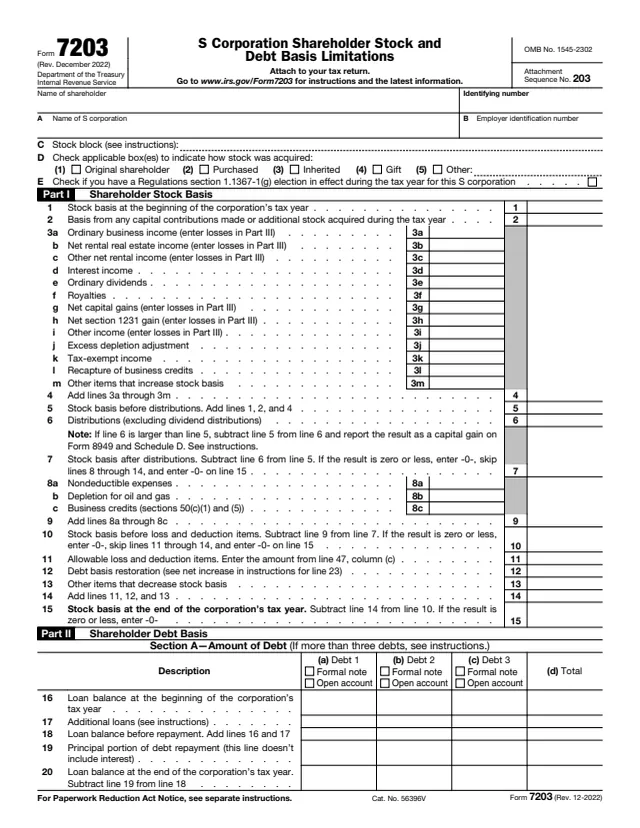
Form 7203 is S Corporation Shareholder Stock and Debt Basis Limitations. The IRS says S corporation shareholders use it to figure the potential limitations of their share of the S corporation's deductions, credits, and other items that can be deducted on their individual returns.
The form has three parts: stock basis, debt basis for loans the shareholder made to the corporation, and allowable loss and deduction items. The instructions say the deduction for a shareholder's share of losses and deductions on Schedule K-1 (Form 1120-S) is generally limited to the basis of the stock and loans to the corporation, and amounts not allowed can be carried forward indefinitely. Form 7203 replaced the worksheet for figuring stock and debt basis formerly in the Shareholder's Instructions for Schedule K-1 (Form 1120-S).
The form says to attach it to the tax return. You can fill out Form 7203 free in your browser on this page and download the result without an account.
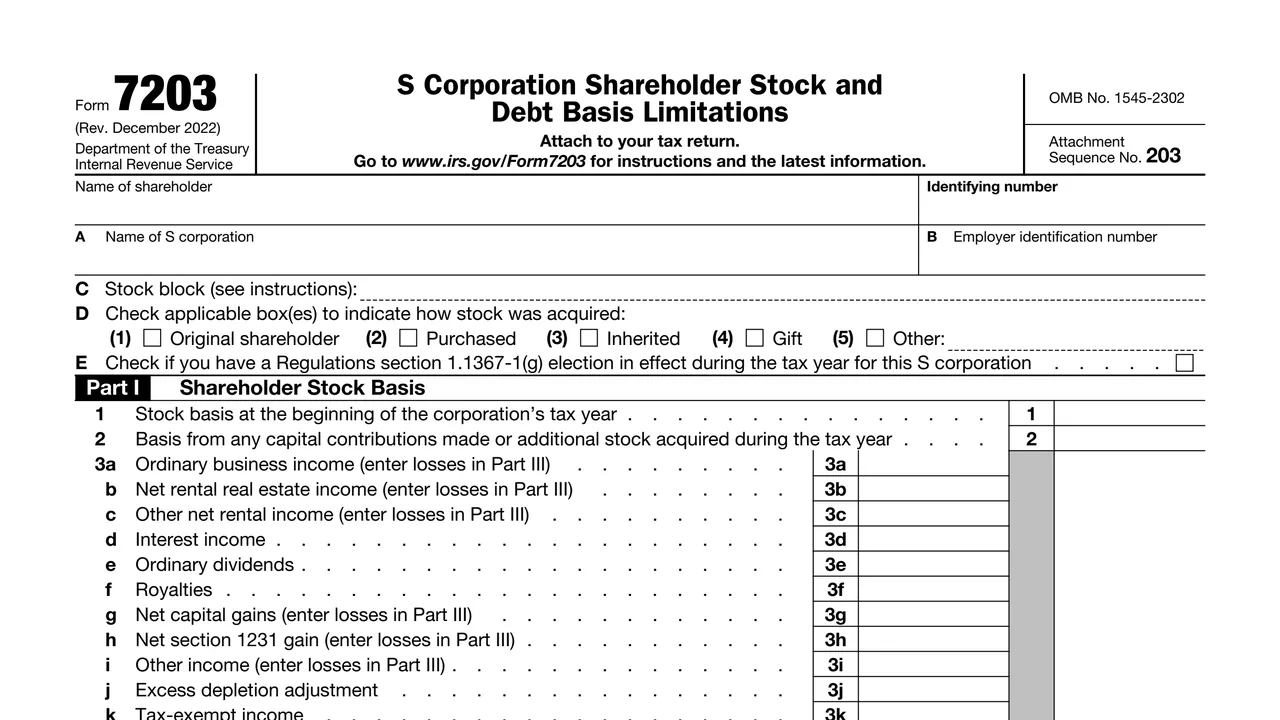
Shareholder name and identifying number, the S corporation's name and EIN, the stock block (item C), how the stock was acquired (item D), and a box for a Regulations section 1.1367-1(g) election (item E).
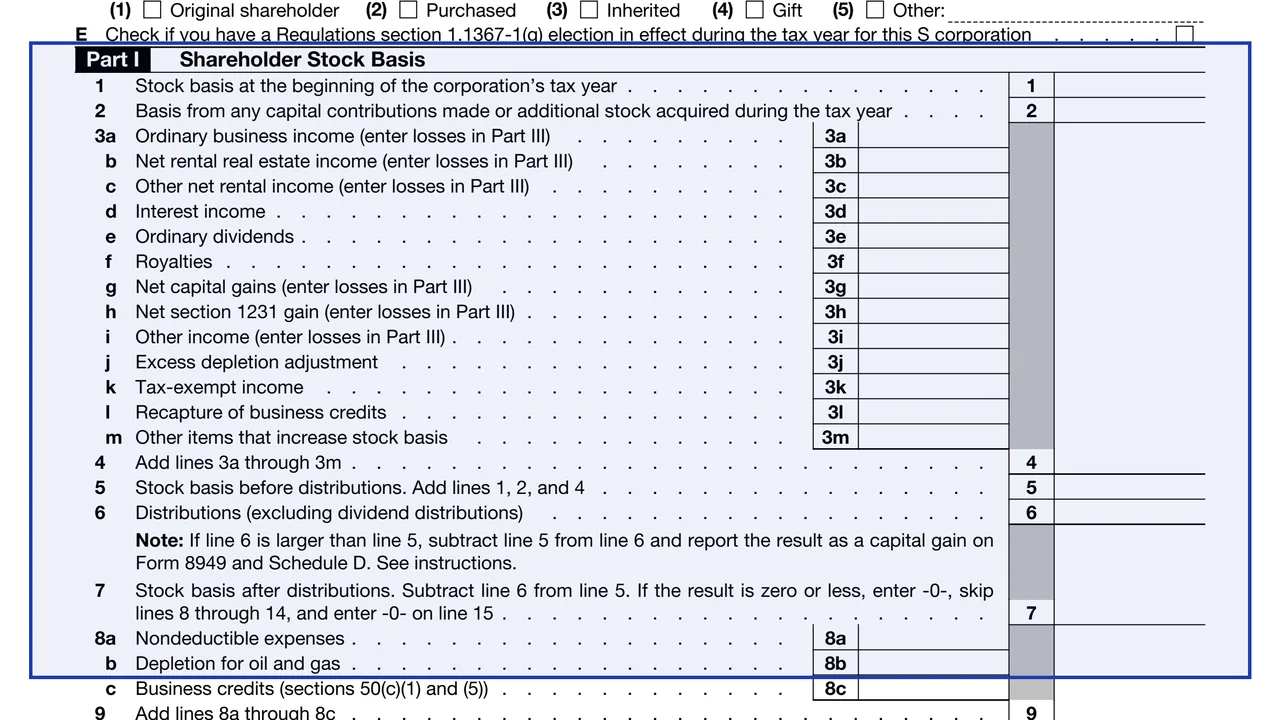
Lines 1 to 15 start with stock basis at the beginning of the corporation's tax year, add contributions and income items on lines 3a to 3m, subtract distributions, nondeductible expenses and allowable losses, and end with stock basis at year end.
Lines 16 to 20 track up to three loans, each a formal note or open account, from the beginning balance through repayments to the year-end balance.
Lines 21 to 31 adjust debt basis for new loans, restoration, nontaxable repayments, nondeductible expenses and losses in excess of stock basis.
Lines 32 to 34 subtract nontaxable repayments from the repayment to show reportable gain.
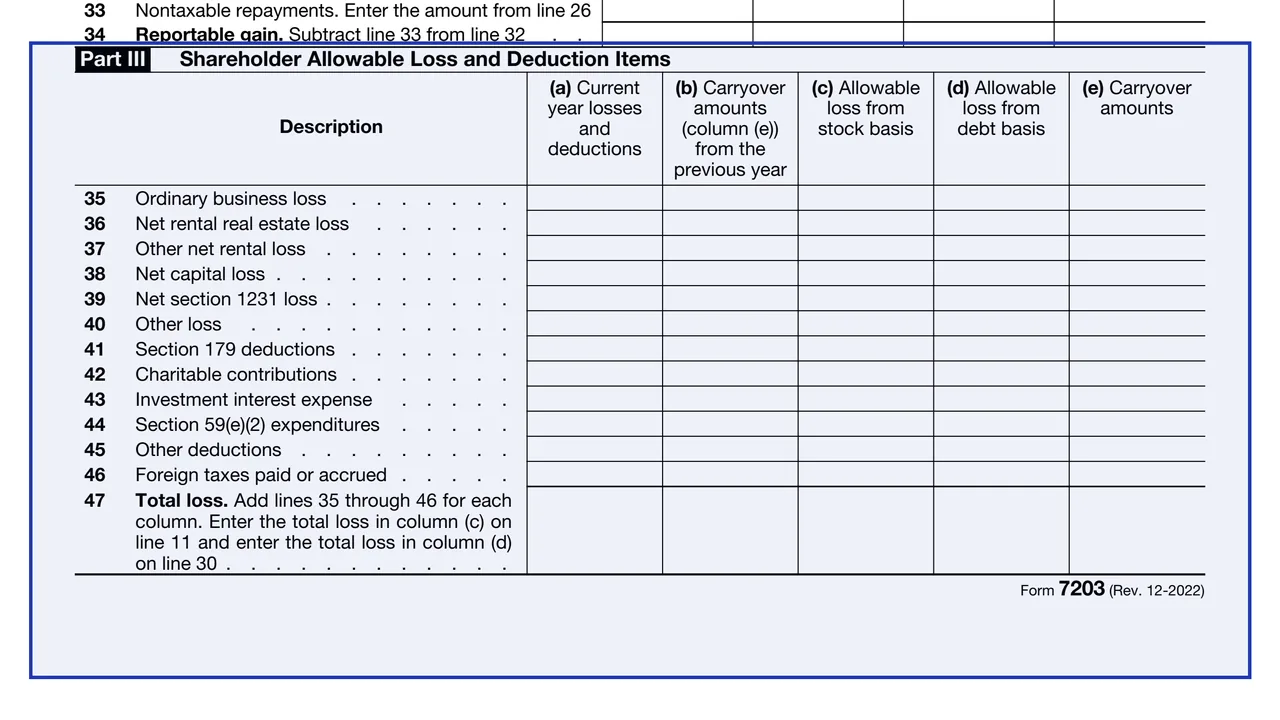
Lines 35 to 47 list each loss and deduction item in columns for current year amounts, carryover from the previous year, the loss allowed from stock basis and from debt basis, and carryover amounts.
Enter the name shown on Schedule K-1 (Form 1120-S) and the S corporation's name and EIN. Use item C for a stock block, check how the stock was acquired in item D, and check item E if a Regulations section 1.1367-1(g) election is in effect.
Line 1 is stock basis at the start of the corporation's tax year, which the instructions say should match the prior year's ending basis unless it is the first year. Line 2 adds capital contributions or stock acquired, not loans. Lines 3a to 3m take only positive income amounts from Schedule K-1 (Form 1120-S).
Line 6 is distributions from Schedule K-1 (Form 1120-S), box 16, code D. If line 6 is larger than line 5, the form says to report the excess as a capital gain on Form 8949 and Schedule D. Then subtract nondeductible expenses, allowable losses and other decreases to reach line 15.
The instructions say Part II is completed for money personally loaned to the corporation, with each formal note in its own column. An open account debt with a year-end balance of more than $25,000 is classified as a formal note at the start of the next tax year.
Enter each loss and deduction from Schedule K-1 (Form 1120-S) in column (a) and prior-year carryovers in column (b). Columns (c) and (d) allocate them against stock basis and debt basis, pro rata when basis is not enough, and column (e) holds the amount carried forward.
The instructions say gain on repayment of a formal note is capital gain reported on Form 8949 and Schedule D, and gain on open account debt is ordinary gain reported on Form 4797.
You get the real form, filled in a browser tab, with nothing standing between you and the finished PDF.
The form says to attach it to the tax return. It is not filed on its own.
The instructions list the order: basis limitations (Form 7203), at-risk limitations (Form 6198), passive activity loss limitations (Form 8582) and excess business loss limitations (Form 461).
If part of the stock is redeemed, sold or otherwise disposed of during the year, the instructions say to attach two separate forms: one for stock basis at the date of sale and one for stock and debt basis at year end.
The instructions say loans a shareholder guarantees or co-signs are not part of loan basis except to the extent the shareholder makes a payment on them.
The instructions say the shareholder is responsible for keeping the information needed to figure the basis of the stock.
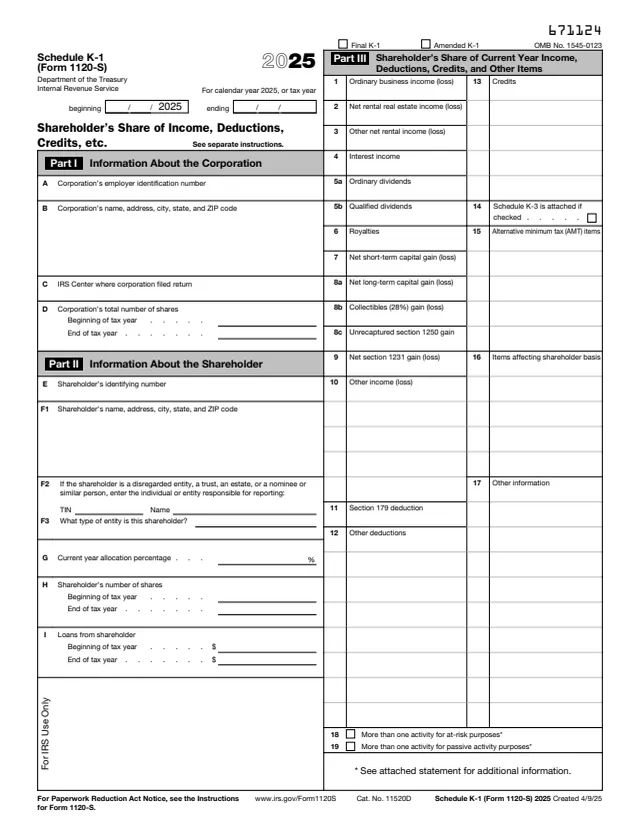
1120-S
114 fields, 1 page
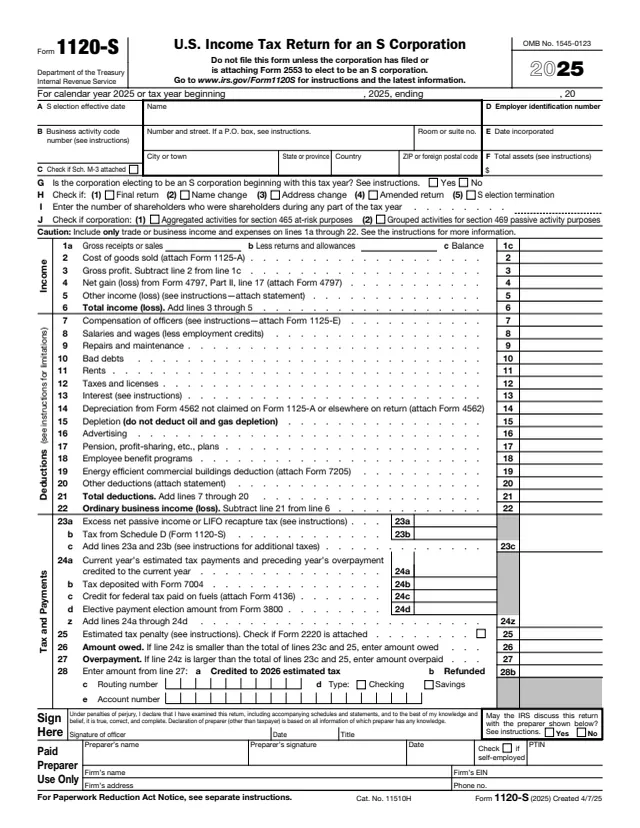
1120-S
390 fields, 5 pages
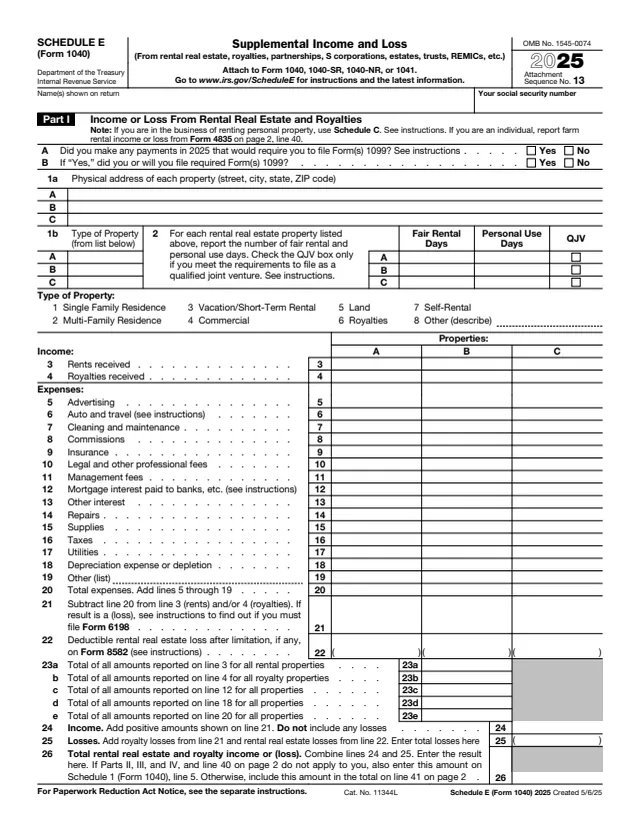
1040
185 fields, 2 pages
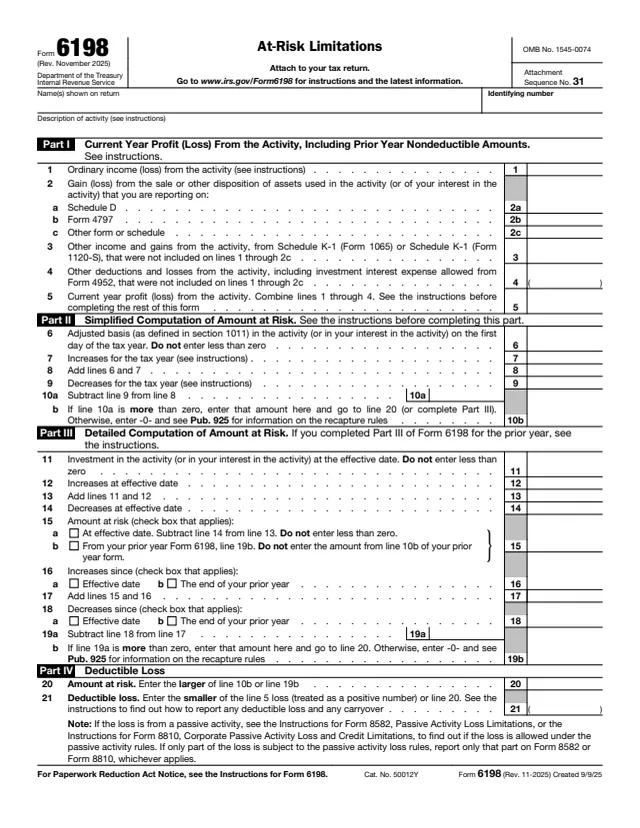
6198
34 fields, 1 page
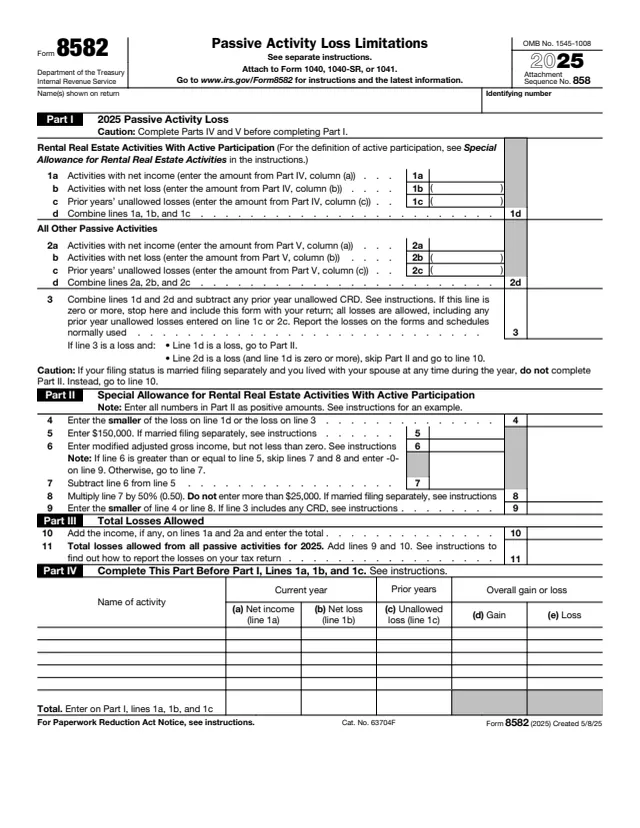
8582
205 fields, 3 pages
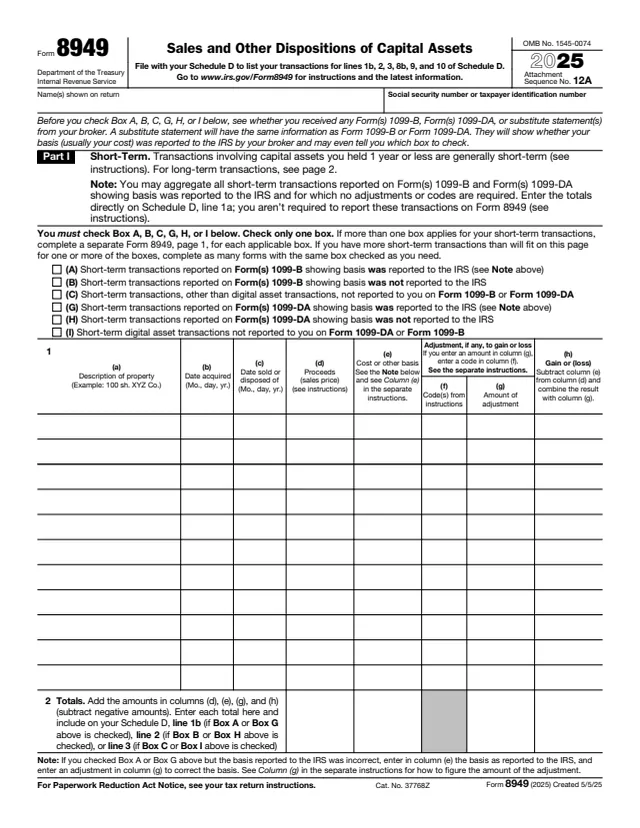
8949
202 fields, 2 pages
The instructions say Form 7203 is filed by S corporation shareholders in these situations.
No tool matches that search.
The instructions list S corporation shareholders who claim a deduction for their share of an aggregate loss, received a non-dividend distribution, disposed of stock, or received a loan repayment from the S corporation.
The form says to attach it to the tax return.
The instructions say losses and deductions in excess of basis are suspended and carried forward indefinitely, and keep their character. Part III, column (e) tracks the carryover.
The instructions say loans a shareholder guarantees or co-signs are not part of loan basis except to the extent the shareholder makes a payment on them.
The form says to subtract line 5 from line 6 and report the result as a capital gain on Form 8949 and Schedule D.
No. If each spouse received a Schedule K-1 (Form 1120-S), the instructions say to complete a separate Form 7203 for each spouse.