Page 1 header
Names, address, SSN or TIN for you and your spouse, phone numbers, county of residence, the number of people in the household under 65 and 65 or older, and self-employment business details.
433-F
Collection/Information Statement (Spanish Version)
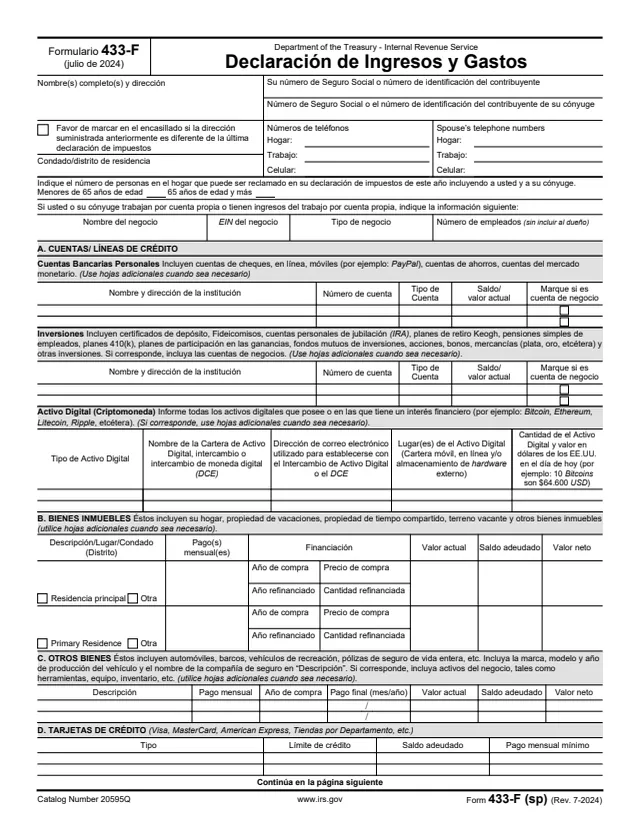
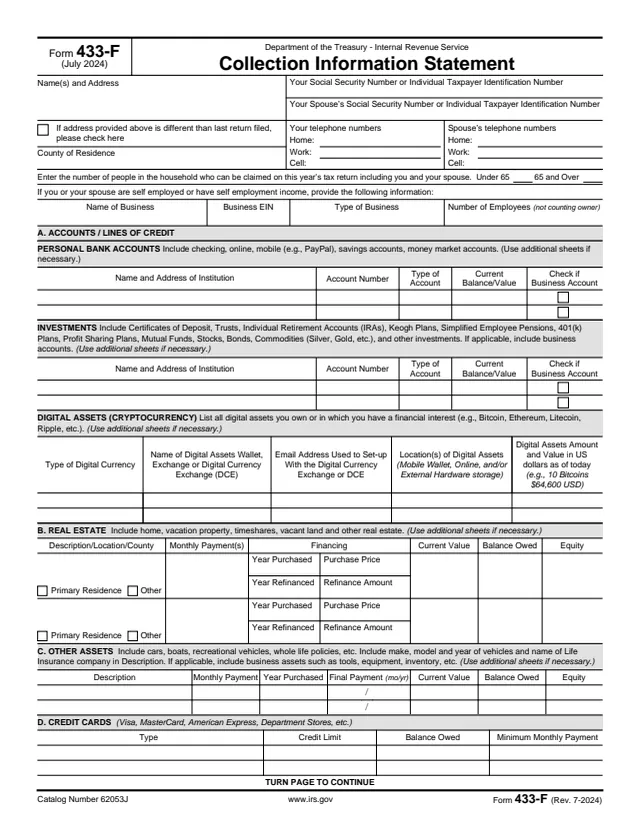
Form 433-F (sp) is the Spanish version of Form 433-F, Collection Information Statement. The Spanish PDF is titled "Declaración de Ingresos y Gastos" (Statement of Income and Expenses) and dated julio de 2024 (Rev. 7-2024). Pages 1 and 2 hold the form and pages 3 and 4 hold its instructions, "Instrucciones para el Formulario 433-F(SP)", in Spanish, for people who read Spanish. A couple of labels, such as Spouse's telephone numbers, stay in English.
The instructions say the form collects the current financial information needed to decide how a wage earner or a self-employed person can pay an outstanding tax debt. It lists bank accounts, investments, digital assets, real estate, other assets, credit cards, business information, employment, other household income and necessary monthly living expenses.
The instructions ask you to keep a copy of the completed form and supporting documents, because the IRS may contact you for more information after it reviews the form. The English edition, Form 433-F, has its own page. You can fill out this Spanish PDF free in your browser on this page and download it without an account.
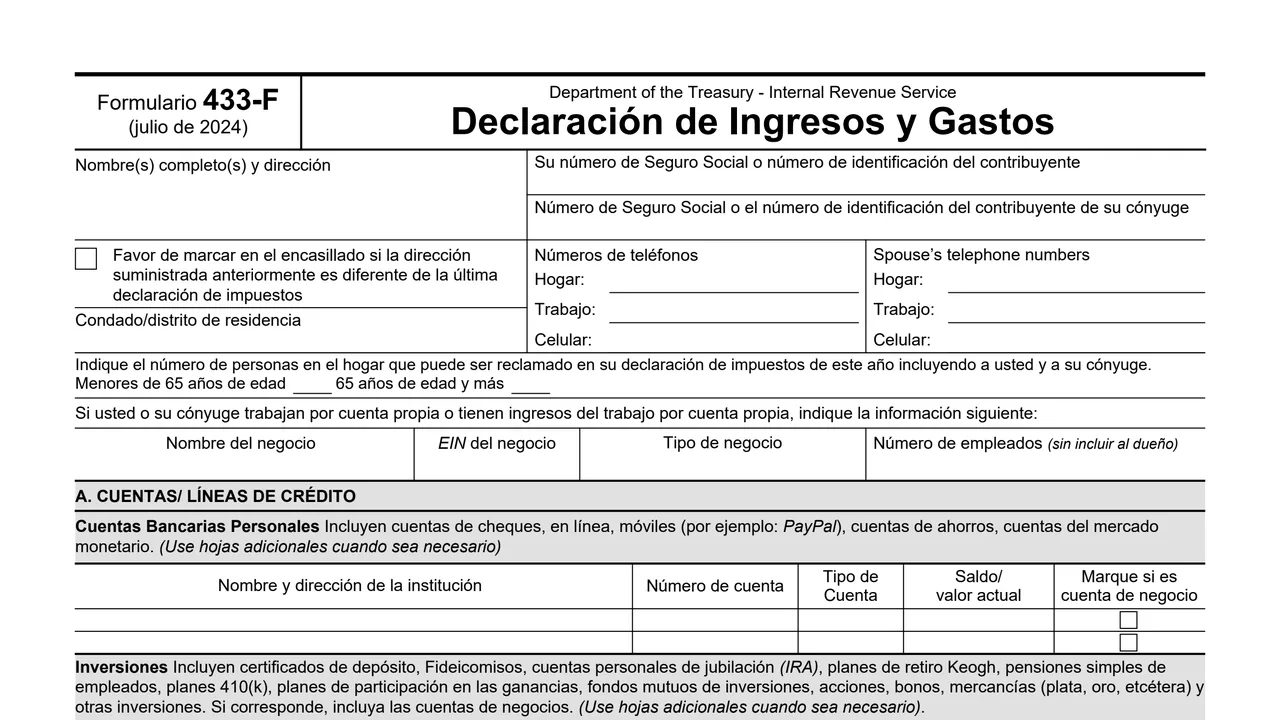
Names, address, SSN or TIN for you and your spouse, phone numbers, county of residence, the number of people in the household under 65 and 65 or older, and self-employment business details.
Personal bank accounts including online and mobile accounts such as PayPal, investments and retirement accounts, and digital assets such as Bitcoin with the wallet or exchange used and the value in U.S. dollars.
Real estate with purchase and refinance details, current value, balance owed and equity; other assets such as vehicles, boats and whole life insurance; and credit cards with limit, balance and minimum payment.
E1 lists accounts receivable owed to you or your business. E2 lists credit card merchant accounts and any digital asset wallet or exchange the business uses to take payments.
Your and your spouse's employers, pay frequency, gross pay and taxes per pay period, and monthly non-wage income such as alimony, child support, rental, unemployment, pension, interest and Social Security.
Food and personal care, transportation, housing and utilities, medical and other expenses, each with a column for your actual amount and one for the IRS allowed amount, then the signatures and date.
The instructions say to list all accounts even with no current balance, not to include bank loans here, to include business accounts if they apply, and to enter N/A for a question that does not apply.
List all real estate you own or are buying and other assets. For equity, subtract the amount owed from the current fair market value. For a leased vehicle, the instructions say to write "arrendado" in the year purchased column.
List every credit card and line of credit, even those with no balance owed.
Skip Section F if you attach a current pay stub. For net self-employment or rental income, enter the monthly amount after expenses, attach a current profit and loss statement, and enter "0" if it is a loss.
For bills not paid monthly, the instructions say to divide quarterly amounts by 3, multiply weekly amounts by 4.3, every two weeks by 2.17, and twice a month by 2.
Sign and date under penalties of perjury, with your spouse's signature where it applies, and keep a copy of the completed form and supporting documents.
You get the real form, filled in a browser tab, with nothing standing between you and the finished PDF.
The form does not print a mailing address or a deadline. It is a statement for the IRS, which the instructions say may contact you after it reviews the form.
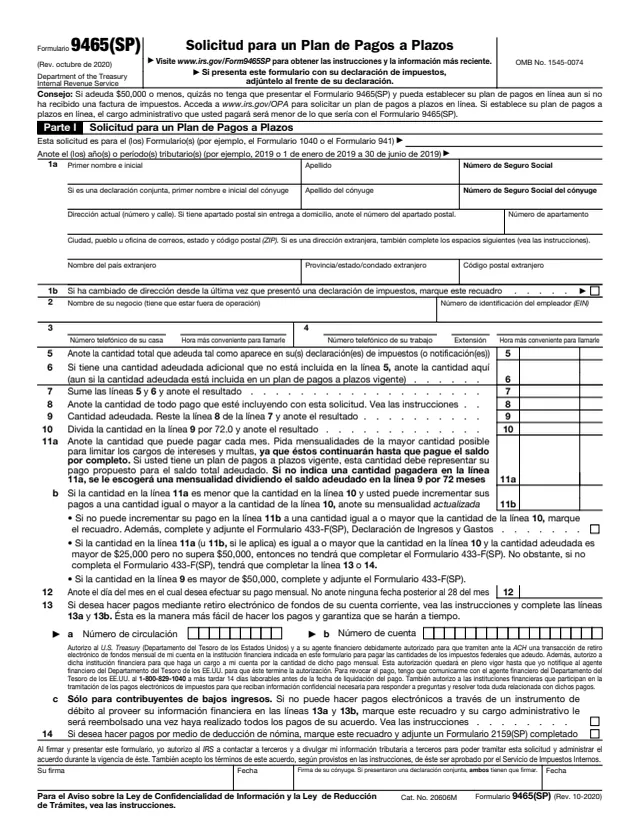
The Spanish instructions say that a person requesting an installment agreement submits Form 9465(SP) with Form 433-F(SP), and that a large down payment could ease the process and reduce penalties and interest.
The instructions list bank, pay, investment and loan statements and bills for recurring expenses. Proof may be required for any expense above the standard amount.
For court ordered payments, the instructions say to be ready with the court order and proof of payment. Student loan minimum payments may be allowed when the loans are guaranteed by the federal government.
The instructions say other expenses may be allowed in certain cases, for example when needed for the health and welfare of the taxpayer or family, or to produce income.
If you cannot reach the IRS website to see the allowable standards, the instructions say to list your actual expenses, and the IRS will ask for more proof if needed.
433F
214 fields, 4 pages
9465
79 fields, 2 pages
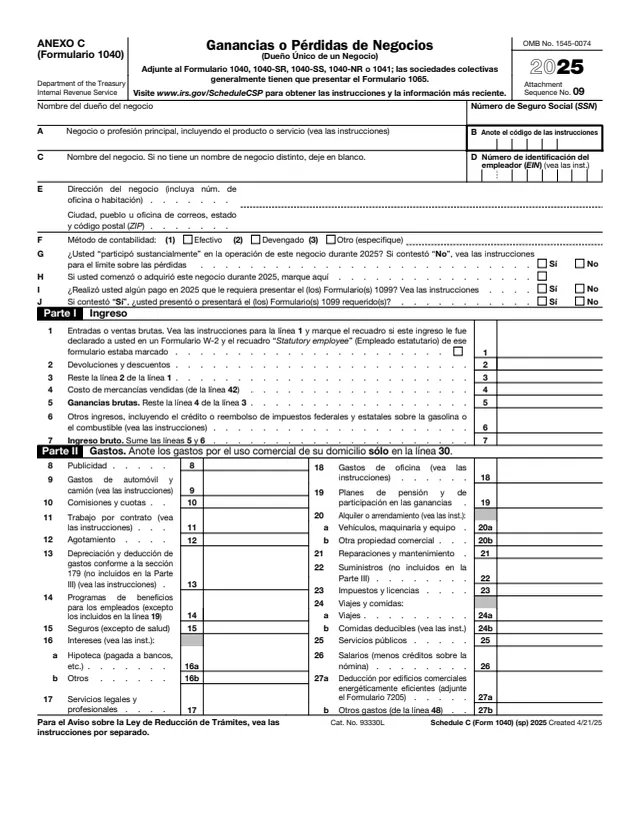
1040
105 fields, 3 pages
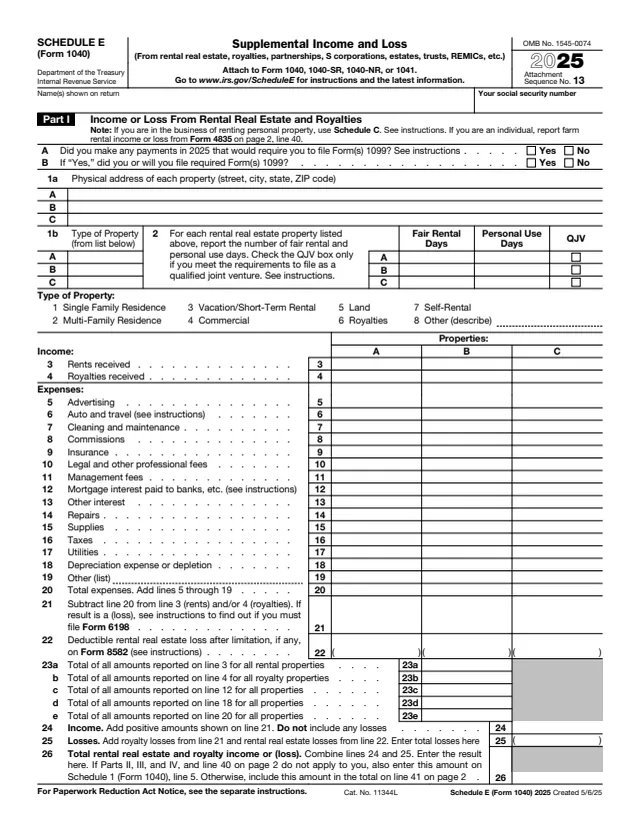
1040
185 fields, 2 pages
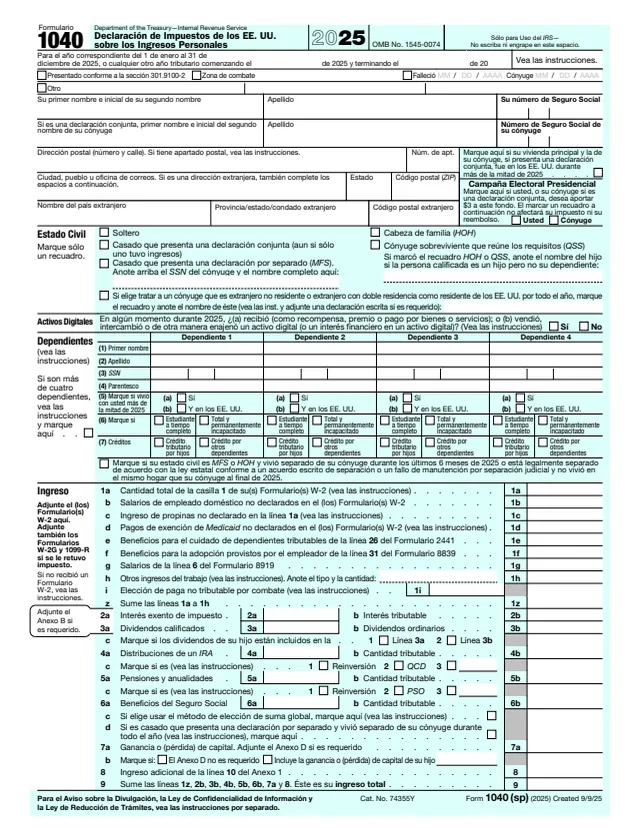
1040
199 fields, 2 pages
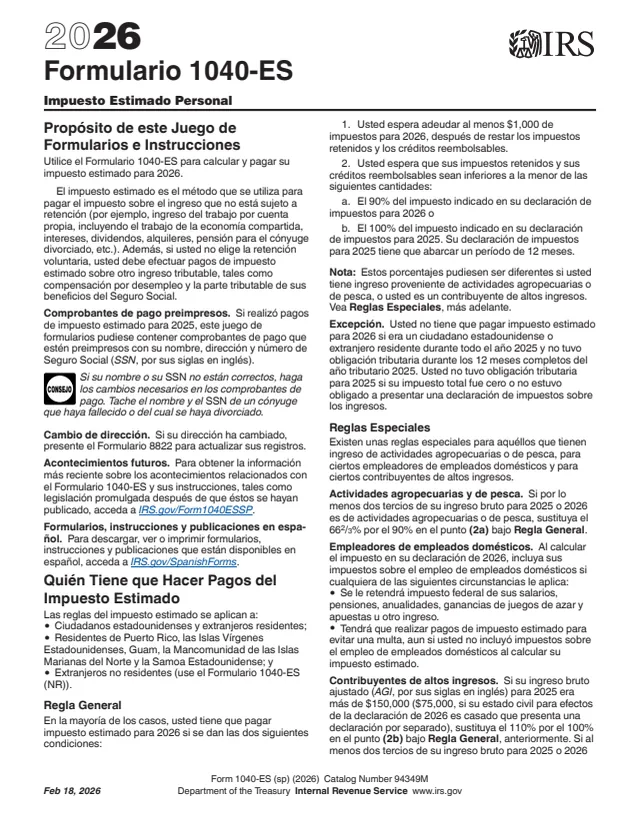
1040ESS
118 fields, 20 pages
The instructions say the form is for wage earners and self-employed people with an outstanding tax debt. The completed statement goes to the IRS.
No tool matches that search.
Spanish, including the two pages of instructions. A couple of labels stay in English. This page about it is in English.
The Spanish PDF is titled "Declaración de Ingresos y Gastos", Statement of Income and Expenses. The IRS listing names it Form 433-F (sp), Collection/Information Statement (Spanish Version).
Yes. The English edition is Form 433-F, Collection Information Statement, which has its own page.
The Spanish instructions say that if you request an installment agreement, you submit Form 9465(SP) together with Form 433-F(SP).
Yes. The instructions say to list all accounts in Section A and all credit cards and lines of credit in Section D, even with no balance.
The instructions say to enter "0" for net self-employment income or net rental income that is a loss.