Part 1, lines 1 to 3
The payee's name and address, the payee's taxpayer identification number and the calendar year of the payments.
4669
Statement of Payments Received
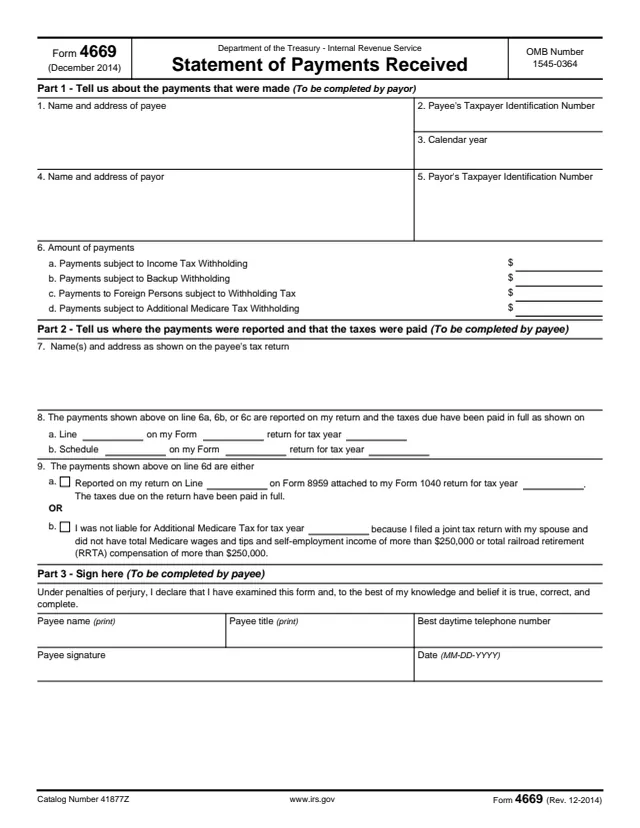
Form 4669, Statement of Payments Received, supports a payor's request for relief from paying withholding tax that it did not withhold. The instructions say a payor who fails to withhold the required tax from a payee may be entitled to relief under sections 3402(d), 3102(f)(3), 1463 or Regulations section 1.1474-4, if the payor can show that the payee reported the payments and paid the corresponding tax. Form 4669 is used by a payor to show that it is entitled to such relief.
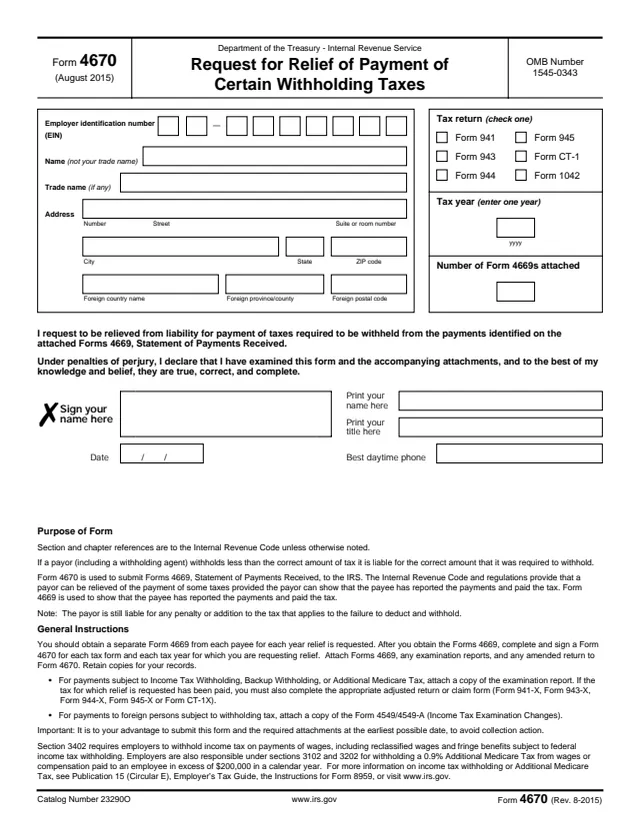
Two parties fill it out. The payor completes Part 1 with the payee, the calendar year and the payment amounts. The payee completes Part 2 to show where the payments were reported and signs Part 3. The payee returns the signed form to the payor, and the payor sends the Forms 4669 for each tax year to the IRS with Form 4670.
You can fill out Form 4669 free in your browser on this page and download it without an account.
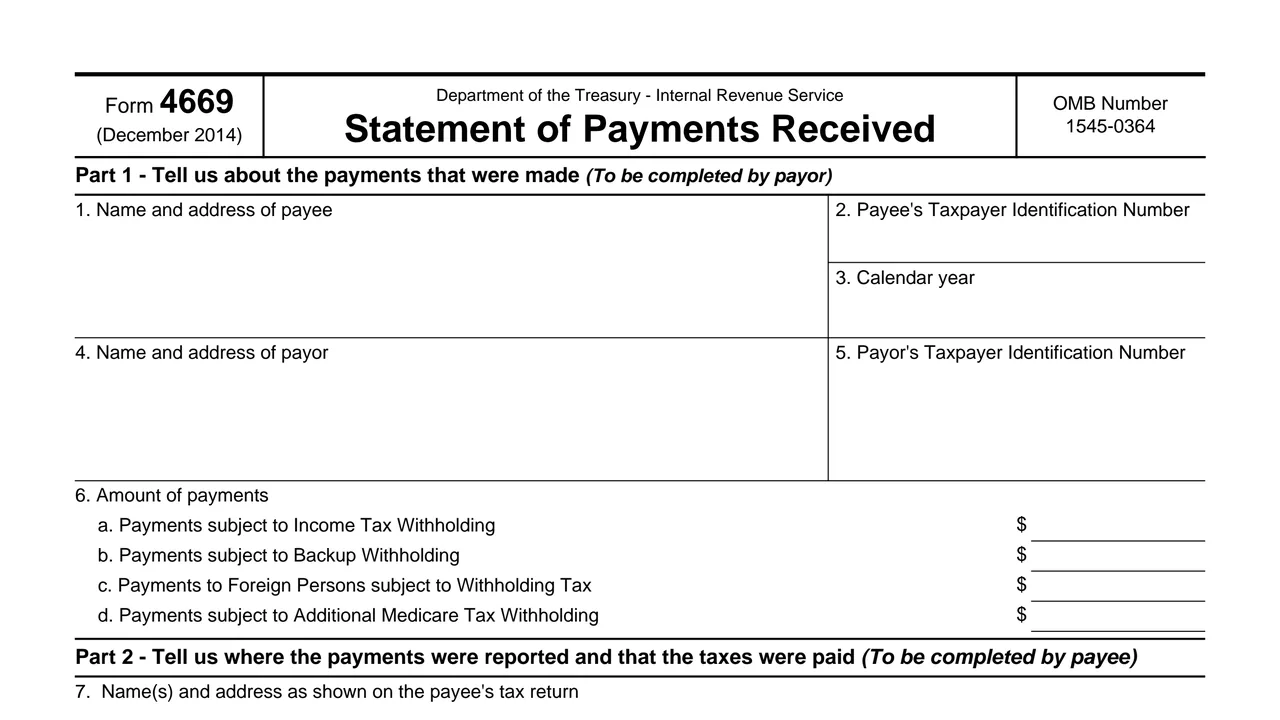
The payee's name and address, the payee's taxpayer identification number and the calendar year of the payments.
The payor's name and address and the payor's taxpayer identification number.
Payments subject to income tax withholding, backup withholding, withholding tax on foreign persons, and Additional Medicare Tax withholding.
The name and address as shown on the payee's tax return, and the line or schedule, form and tax year where the payments on line 6a, 6b or 6c were reported.
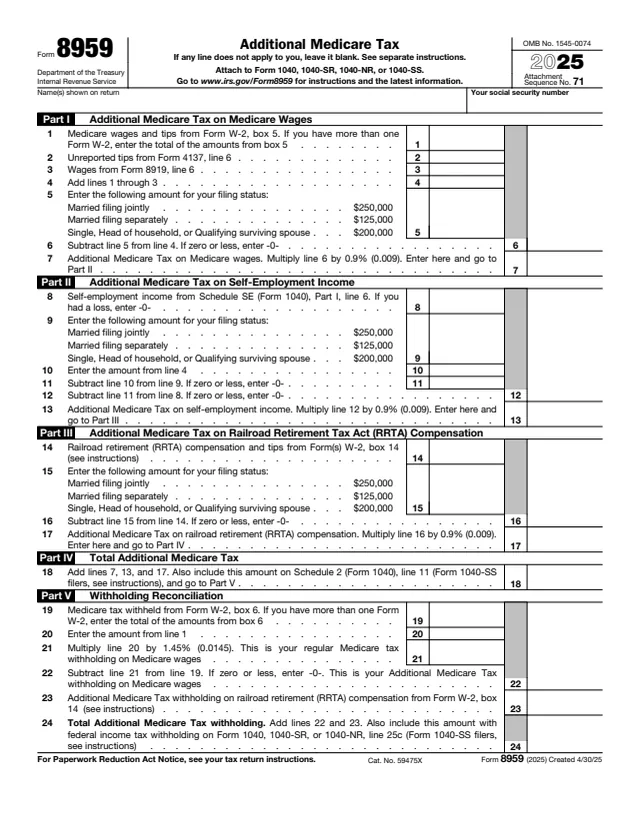
Either the line on Form 8959 where the line 6d payments were reported, or a statement that the payee was not liable for Additional Medicare Tax.
A declaration under penalties of perjury with the payee's printed name and title, best daytime telephone number, signature and date.
Enter the payee's name and address, the payee's SSN, EIN or ITIN, and the calendar year in which the payor made the payments.
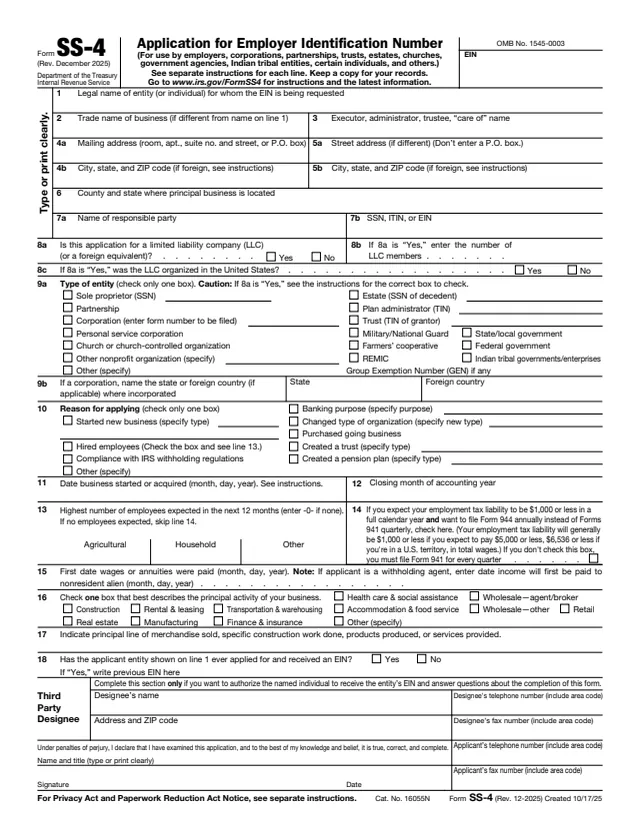
Enter the payor's name and address, generally the legal name used on Form SS-4, and its EIN. The instructions say not to use the payor's SSN or ITIN. Then enter each amount on lines 6a to 6d.
If any information in Part 1 is incorrect, the instructions say to cross it out, enter the correct information and ask the payor to correct its records.
Enter the name and address exactly as on the payee's tax return. For payments on line 6a, 6b or 6c, complete line 8a or 8b with the form, line or schedule and tax year.
For line 6d payments, check 9a if they were reported on Form 8959 attached to Form 1040. Check 9b if the payee filed jointly and did not have total Medicare wages and tips and self-employment income of more than $250,000 or total RRTA compensation of more than $250,000.
Sign and date the form, print the payee's name and title if applicable, and return the signed form to the payor. The instructions say a daytime phone number may help speed processing.
You get the real form, filled in a browser tab, with nothing standing between you and the finished PDF.
The payee returns the signed form to the payor. The instructions say Form 4670 is used to transmit the Forms 4669 for each tax year to the IRS.
The instructions say a separate, completed Form 4669 is obtained by the payor from each payee for each year relief is requested.
The instructions say a payor should retain a copy of this information for its files.
The instructions say Form 4669 is subject to review by the IRS.
The privacy notice says the payee is not required to provide this information to the payor, but not providing it, or providing incomplete information, may delay or prevent the payor's request for relief.
The form is split between the payor and the payee. The payee does not file it with the IRS.
No tool matches that search.
The payor. The payee signs the form and returns it to the payor, which transmits the Forms 4669 for each tax year with Form 4670.
The privacy notice says the payee is not required to provide this information to the payor. Not providing it, or providing incomplete information, may delay or prevent the payor's request for relief.
The instructions tell the payee to cross out the incorrect information, enter the correct information and ask the payor to correct its records.
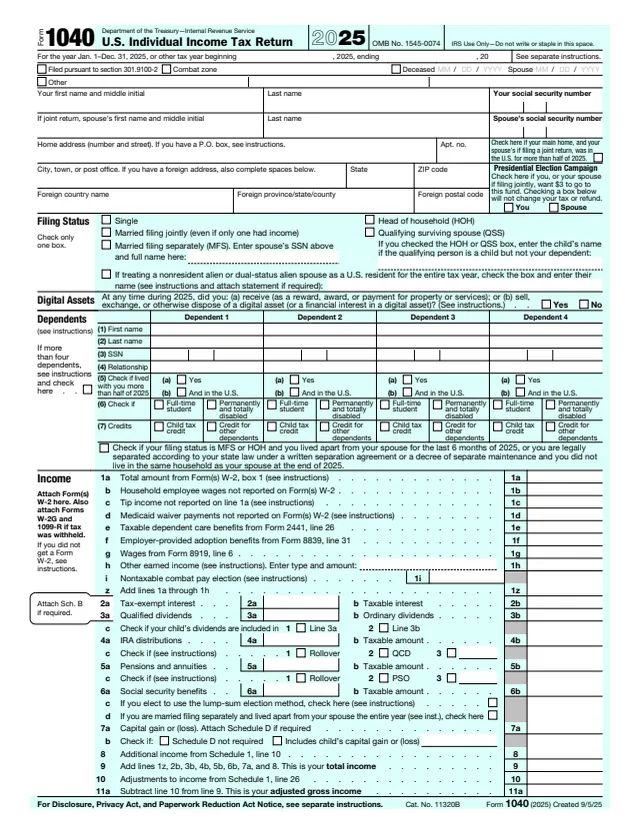
The instructions say any reference to Form 1040 includes any return in the Form 1040 series, for example Form 1040, Form 1040NR, Form 1040-SS and Form 1040-PR.
No. The instructions say the payor obtains a separate, completed Form 4669 from each payee for each year relief is requested.